You are reading:
You are reading:
03.03.26
9 minutes readSend your questions to:
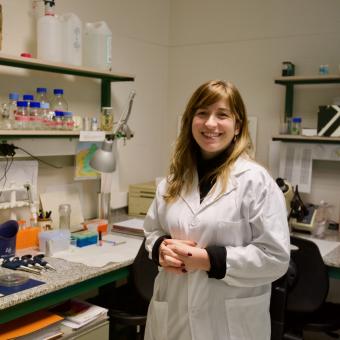
Assistant professor (PhD) in the Department of Anatomy and Cell Biology at the University of Cantabria and member of Gynetools SL
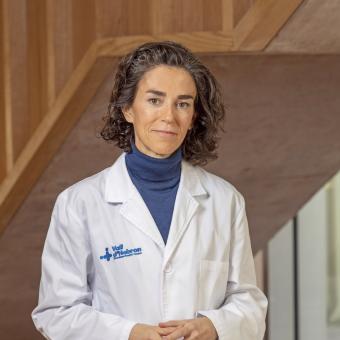
Request interviewHead of the Neurology Service, Vall d’Hebron University Hospital, director of the Migraine Adaptive Brain Center, leader of the VHIR Headache and Neurological Pain Research Group, and coordinator of the Brain, Mind and Behaviour Area at VHIR
Request interviewFor decades, biomedical research has taken the male body as the reference point, leaving many of women’s specific health needs unaddressed. Today, although the situation has improved, only 7% of research resources is directed towards health issues that affect women exclusively or with greater prevalence, such as endometriosis or migraine. Through its Health Research and Innovation Calls, the ”la Caixa” Foundation supports projects linked to women’s health that contribute to reversing this lack of equity.
For decades, medical research has taken the male body as its reference point, which has meant that many conditions affecting women specifically or predominantly, such as endometriosis or migraine, have been underdiagnosed.
This lack of perspective is explained largely by women’s limited representation in science: today, only 33% of research staff are women, and a mere 5% of available medicines have been properly tested, monitored and labelled with safety information for use during pregnancy and breastfeeding.
This structural bias is compounded by insufficient funding: according to the World Economic Forum, only 7% of research resources is directed towards health issues that affect women exclusively.
Despite living an average of five years longer than men, women spend 25% more of their lives in poor health or with some degree of disability. Closing this gap could give each woman an additional seven days of health per year and generate up to one trillion dollars in annual global gross domestic product (GDP) by 2040.
The result of this gap is poorer health outcomes for women worldwide and limited progress in key areas, with advances moving much more slowly than in other biomedical fields.
Promoting STEM vocations among girls and young women and decisively supporting projects led by female researchers or focused on women’s health are some of the initiatives that can help reverse this situation. In this spirit, the ”la Caixa” Foundation has been promoting initiatives for years that place women’s health at the centre of biomedical research and innovation and help move towards greater equity.
Endometriosis is one of the least well-known diseases, yet it has one of the greatest impacts on patients’ lives. It is characterised by the abnormal presence of endometrial glands and stroma outside the uterus, causing chronic inflammation in the pelvic and abdominal cavities.
It currently affects 190 million women worldwide, around 10% of the global female population, though the true figure could be much higher. Until very recently, it was dismissed as “normal period pain”, which has led to diagnosis delays of eight to ten years.
The condition is a focus of interest for the ”la Caixa” Foundation, because the biological mechanisms that cause it are still not understood. For this reason, on 11 March at 7 p.m., researchers María Luisa Sánchez-Ferrer (Virgen de la Arrixaca University Clinical Hospital in Murcia), Francisco Carmona (Hospital Clínic de Barcelona) and Juan García-Velasco (IVI Madrid) will discuss key aspects in the online debate Endometriosis: a silent disease that affects one in ten women.
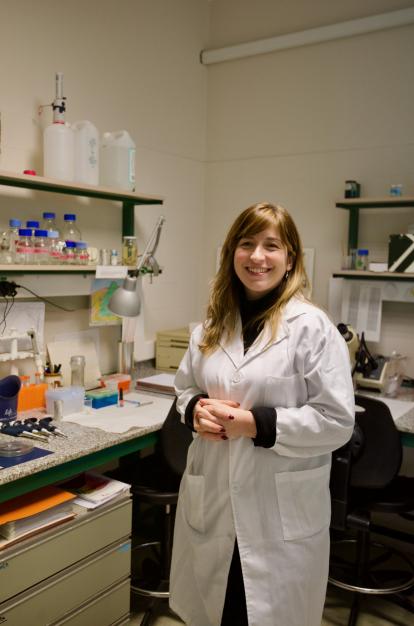
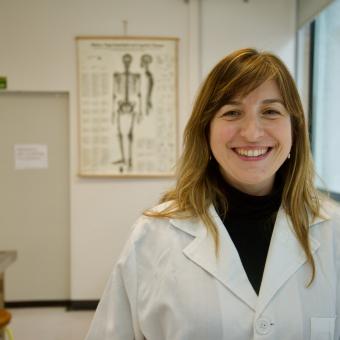
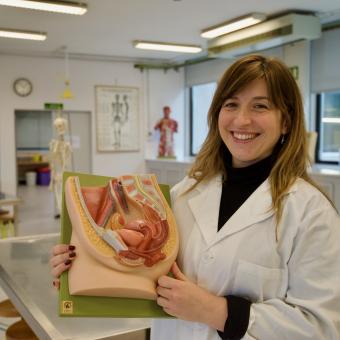
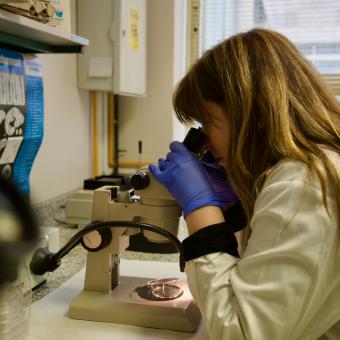
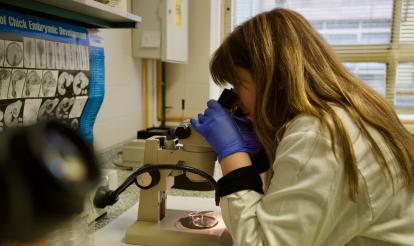
Sánchez is one of the gynaecologists involved in the DUFIC project, which received funding from the CaixaImpulse Health and Innovation calls in 2023 and 2025. Development of the device began as part of Analuce Canha’s doctoral thesis under the supervision of Professor Pilar Coy and Professor Rafael Latorre at the University of Murcia. The project is now being taken into the clinical and industrial sphere through the company Gynetools, whose CEO is Rafael Latorre, co-inventor of the device alongside Analuce Canha.
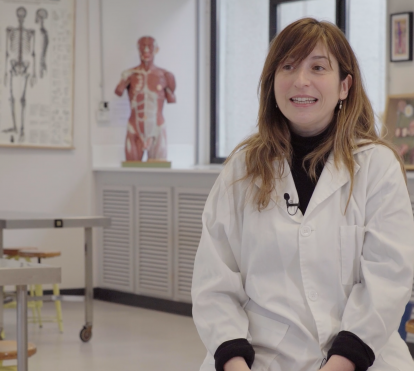
Until now, biopsy has been the standard procedure for identifying these conditions, but it has significant limitations. “It often causes pain, and the tissue collected is not always sufficient to obtain an accurate diagnosis,” explains researcher Analuce Canha. “All of this delays diagnosis.”
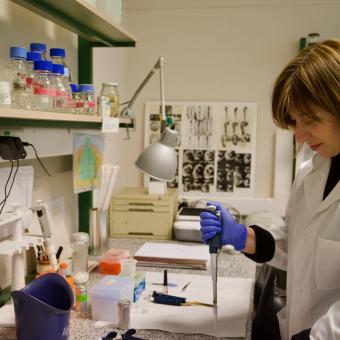
In response to that clinical need, the team devised a less invasive and potentially more informative alternative. “The uterus produces uterine fluid, which provides us with a wealth of information about its condition. Our team developed a catheter to collect samples of uterine fluid in a minimally invasive manner,” says Canha.
Support from the CaixaImpulse call “was essential” in driving the project forward: “We were able to move from an idea developed in the laboratory to an approach with clinical potential,” says Analuce Canha. The first catheter prototypes were produced using 3D printing in collaboration with the University of Murcia, and they are now being manufactured on an industrial scale with the support of Eurecat and Innovamed.
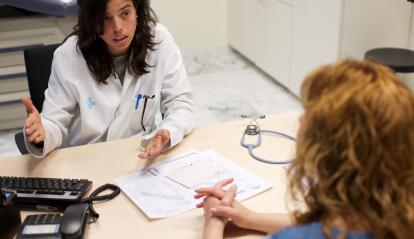
Although more funding is now available, biomedical research has traditionally lacked a gender perspective. For Analuce Canha, it is necessary to study diseases that are exclusive to women and, equally, for healthcare professionals not to minimise women’s pain. “If the pain is debilitating, it must be taken seriously and the necessary tests carried out until a clear diagnosis is reached.”
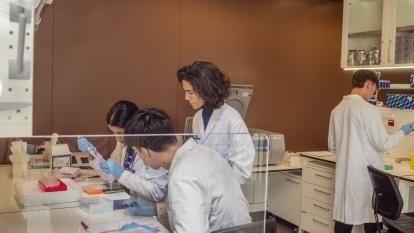
This is not the only CaixaImpulse project focused on the endometrium. Researcher Laura Costas, from the Bellvitge Biomedical Research Institute (IDIBELL), is working on a pioneering technique to diagnose endometrial cancer using a simple urine sample, while Dr Francisco Carmona, from Hospital Clínic de Barcelona, leads ENDO-HEALTH, a project to raise awareness and improve understanding of endometriosis.
Beyond the female reproductive system, the ”la Caixa” Foundation also supports new lines of research in diseases such as breast cancer, which affects one in eight women.
One of the most innovative projects is led by Ana Vivancos and Cristina Saura at the Vall d’Hebron Institute of Oncology (VHIO), studying how to detect the disease through breast milk. It is already producing encouraging results and has shown for the first time that the breast milk of patients with breast cancer contains tumour DNA, known as circulating tumour DNA (ctDNA).
The gender gap in health is not limited to gynaecological health; it also extends to conditions that affect both sexes but are more prevalent in women. A 2023 analysis in Nature revealed that research into diseases that predominantly affect women – such as chronic fatigue, anxiety disorders or lupus (which is eight times more common in women) – receives far less funding than would reflect their true impact.
One of the clearest examples is migraine, a condition that affects women at a ratio of 3 to 1 compared to men. Only 7% of migraine trials publish sex-specific results. This lack of data makes it difficult to design effective, targeted interventions that reflect each woman’s unique experience of the disease.
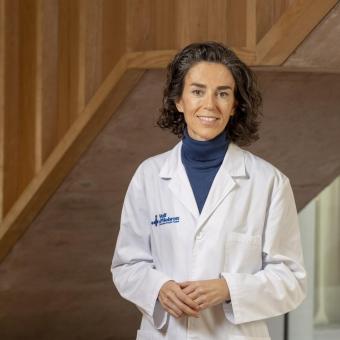
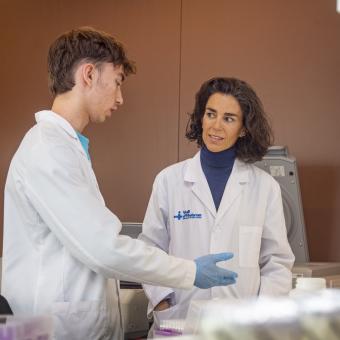
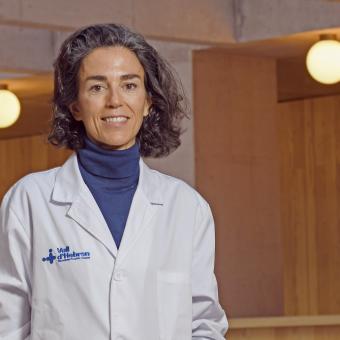
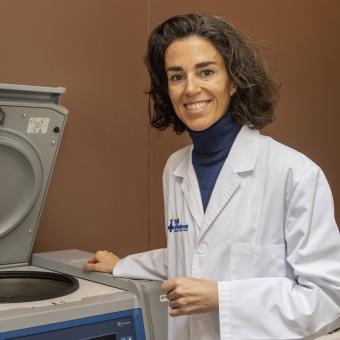
“Our hormones cycle; they’re present in different amounts and proportions, and they’re expressed differently. From a scientifical perspective, this constant fluctuation poses a challenge,” explains Dr Patricia Pozo-Rosich, director of the Migraine Adaptive Brain Center, supported by Vall d’Hebron Hospital and the ”la Caixa” Foundation.
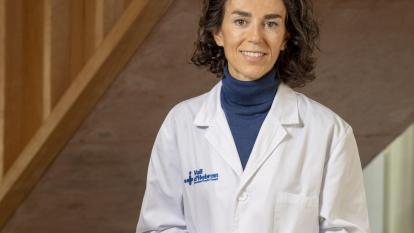
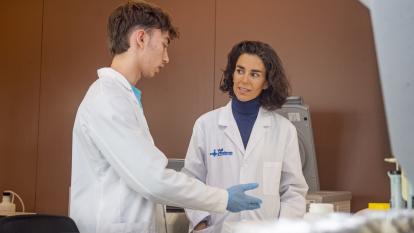
For Pozo-Rosich, who also received a ”la Caixa” Foundation fellowship, 21st-century science faces two major challenges: “Understanding our brain better and understanding the impact hormones have on our body.” These two “highly complex” issues are closely linked to migraine, which, according to figures from the Spanish Society of Neurology (SEN), affects 18% of women worldwide.
Incidence of the condition skyrockets with puberty and fluctuates sharply during the menstrual cycle, pregnancy and menopause. Yet it remains difficult to make the condition tangible. “The fact that there are still people who say, ‘I can’t move because I have a problem in my head that nobody can see’ highlights that the visibility of the disease is poor,” says the doctor.
Her centre is currently studying migraine in a holistic, multidisciplinary way through three main approaches: preclinical models; translational work to understand processes occurring at different stages; and molecular studies seeking biomarkers in saliva, tears or blood to move towards diagnoses that are no longer subjective.
As Dr Pozo-Rosich, director of the Headache and Neurological Pain Research Group at the VHIR, concludes, these diagnostic biomarkers would help treat the disease through technology and epigenetics. “It will be the great revolution nobody is expecting,” she says.
Hormonal influence is also key in multiple sclerosis and other autoimmune diseases. As Dr Mar Tintoré Subirana noted in the most recent CaixaResearch debate, “the fact of being a woman clearly increases the risk.” And although the differentiating factor is not entirely clear, “the role of hormones is almost certainly crucial. In fact, this disease often begins in adolescence and, during periods when a woman has oestrogenic predominance hormonally, the disease is more frequent. But it’s not clear what that differentiating factor really is, whether it’s only oestrogens or whether there are other factors as well.”
That “differentiating factor” is also being investigated to explain why women living with chronic pain suffer more than men. According to a recent study published in Science Immunology, the answer may lie in the fact that the immune systems of men and women react differently to pain. The study, conducted on mice, suggests that the lack of testosterone reduces the activity of monocytes, immune cells responsible for producing interleukin-10. This molecule appears to be linked to the neurons that transmit pain.
Millions of women face medical decisions every year without options grounded in scientific evidence. Correcting gender bias in clinical research is no simple task. It requires not only investment, but also a shift in the outlook of doctors, researchers and regulators so that conditions such as endometriosis or migraine stop being made invisible during school years or working life.
Ensuring that medicine finally has two faces is the only way for 8 March to be, as well as a social demand, a scientific and medical achievement of real significance.