Philanthropy and science: an expanding model to strengthen research in Europe
24.04.26
6 minutes readScientific philanthropy is steadily gaining ground in Europe, as demonstrated in Barcelona by the meeting of more than twenty European foundations to discuss their role in the creation and management of research centres. Within this framework, the CaixaResearch Institute, promoted by the ”la Caixa” Foundation, stands out as a leading example of philanthropic commitment to the establishment of centres of excellence endowed with greater autonomy, strategic vision and a vocation for social impact.
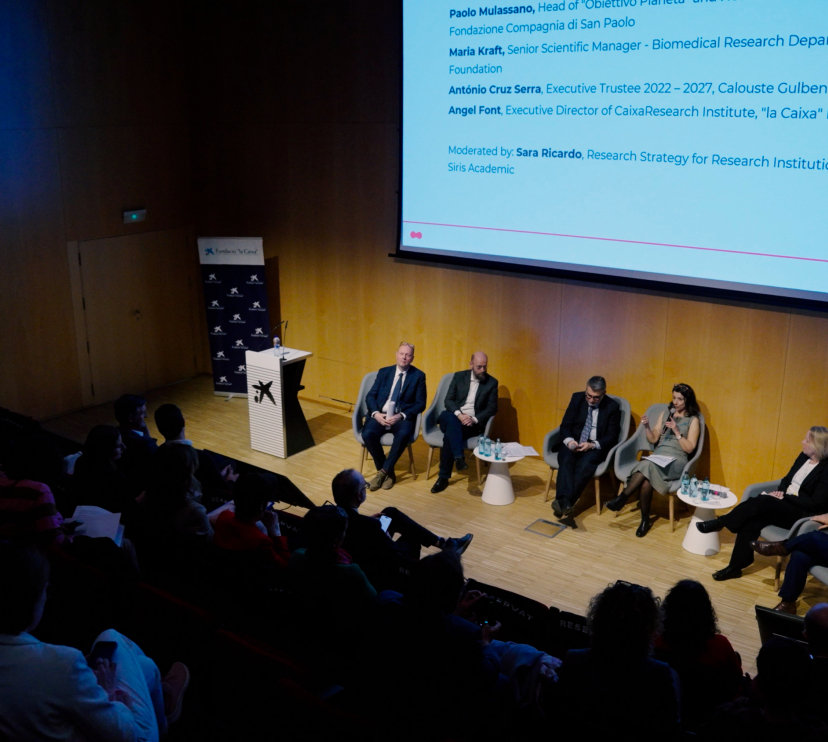
More than twenty European foundations committed to science and innovation gathered at a meeting organised by Philea (Philanthropy Europe Association) and hosted by the ”la Caixa” Foundation at the CosmoCaixa Science Museum. The forum, held last March, highlighted the momentum behind the creation of new in-house research structures, with greater autonomy and a long-term vision, supported by philanthropic funding. During the sessions, participants discussed different models of foundation involvement in the governance of research institutes, as well as the challenges and opportunities presented by these long-term collaborations.
It is in this context that the opening of the CaixaResearch Institute takes place, a new research centre promoted by the ”la Caixa” Foundation that aspires to become an international benchmark in immunology and biomedical research. Conceived as a space where scientific excellence, interdisciplinary collaboration and the capabilities of philanthropic management come together, the institute is part of this approach to research, which is already becoming established in Europe and is characterised by more autonomous and flexible organisational models, with a stronger catalytic role and greater capacity for long-term strategic definition.
Philanthropy as a strategic driver
In Europe, a number of foundations are strengthening their involvement in research through the development of their own centres. Among them, the Lundbeck Foundation (Denmark), the Novo Nordisk Foundation (Denmark), the Calouste Gulbenkian Foundation (Portugal), the Compagnia di San Paolo (Italy) and the ”la Caixa” Foundation, all of which took part in the Philea meeting and share, despite their individual characteristics, a commitment to research structures geared towards the generation of knowledge and its social impact.
In this context, independent research centres, or those established in collaboration with academic institutions, are emerging as key players within the scientific ecosystem. Their ability to operate with greater autonomy, integrate disciplines and combine basic and applied research enables them to address complex challenges through more flexible approaches. Àngel Font, assistant general manager of Research and Fellowships at the ”la Caixa” Foundation, executive director of the CaixaResearch Institute and president of Philea, states that “these spaces broaden the diversity of scientific approaches and help to strengthen Europe’s competitiveness in an increasingly demanding global environment.”
One of the distinctive features of philanthropic funding is its long-term orientation. In contrast to the shorter cycles of public funding or market-driven dynamics, foundations are able to sustain stable scientific agendas in priority areas, take on risks that other actors may find difficult to assume, and act swiftly at critical stages of projects. This capacity is reflected, for example, in support for infrastructure, technological platforms or intermediate stages of research that are essential for progress towards innovation.
Danielle Kemmer, director of corporate affairs at the Novo Nordisk Foundation, sums up this role by noting that philanthropy “can adopt a mission-driven, long-term approach in priority research areas, independently of the shorter political and funding cycles.”
Added to this is its role in fostering collaboration between scientific institutions. Far from operating in isolation, foundations tend to act as spaces for connection between universities, hospitals, public administrations and the private sector, thereby encouraging strategic partnerships and attracting international talent. In this way, philanthropy can act as a catalytic factor, helping to bring together resources and capabilities around common goals.
The examples mentioned have illustrated this diversity of approaches for years. The Lundbeck Foundation has promoted specialised centres in neuroscience with a clear strategic focus, centred on advancing the understanding of brain diseases. Meanwhile, the Novo Nordisk Foundation has promoted initiatives such as the BioInnovation Institute in Copenhagen, aimed at accelerating the transfer of knowledge into biotechnology and life sciences applications by combining research, entrepreneurship and investment.
In the case of the Calouste Gulbenkian Foundation, a model has been developed based on sustained support for scientific institutions and the promotion of international networks, with particular attention to the autonomy of centres and to scientists’ capacity to define their own research agendas.
The ”la Caixa” Foundation also develops this type of approach through different lines of support for research, ranging from competitive calls to the promotion of centres and new scientific initiatives. Among them is the CaixaResearch Institute, a new centre that the Foundation is promoting with the ambition of contributing to this European ecosystem from its own distinctive perspective. The initiative draws on the learning accumulated by other European foundations by incorporating models and approaches that have already proved effective, and also aspires to become a benchmark for future initiatives.
A space for sharing experiences and challenges
The exchange of experiences between organisations is becoming particularly important, which is why spaces for discussion and dialogue, such as the forum organised by Philea last March, have become more frequent. These events are key to sharing lessons learned, comparing approaches and advancing the definition of sustainable models of governance, funding and scientific collaboration.
One of the most recurring debates revolves around the balance between the scientific autonomy of institutes and the strategic priorities of those who fund them. Although this is not a new issue, it continues to require clear governance frameworks and ongoing dialogue between the parties involved.
Another key point is added to this debate: the role of philanthropy in relation to traditional public funding. Far from replacing it, these initiatives are conceived as a complement that brings flexibility, the capacity to take risks and a long-term vision, thereby contributing to the development of a more dynamic, diverse and sustainable ecosystem.
Taken together, the development of this kind of initiative points to the consolidation of a European community of organisations which, from different approaches, share a common goal: to strengthen scientific research as a driver of development.
- Imágenes
- Videos
- Audios
- Notas de prensa
Barcelona24.04.26The ”la Caixa” Foundation inaugurates the CaixaResearch Institute, the first research centre specialising in immunology in Spain and Portugal
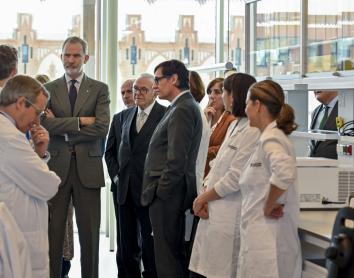
His Majesty King Felipe VI has today inaugurated the CaixaResearch Institute, the first centre dedicated entirely to the study of immunology in Spain and Portugal, and one of the first in Europe.
Read more
- Imágenes
- Videos
Barcelona24.04.26More than 120 years advancing research to transform society
The ”la Caixa” Foundation has built a solid model of support for research, health and talent. This trajectory began at the start of the twentieth century, and continues today with the development of the CaixaResearch Institute, led by Isidro Fainé.
Read more
- Imágenes
Barcelona24.04.26The CaixaResearch Institute, a new cog in the health research ecosystem
Specialising in immunology, the new centre is joining an established scientific network in Spain and Portugal, and strengthening Catalonia’s role as one of Europe’s most dynamic health hubs.
Read more