The CaixaResearch Institute, a new cog in the health research ecosystem
24.04.26
12 minutes readThe ”la Caixa” Foundation is bringing to fruition a decades-long strategy of supporting centres of excellence in biomedical research with the creation of the CaixaResearch Institute. Specialising in immunology, the new centre is joining an established scientific network in Spain and Portugal, and strengthening Catalonia’s role as one of Europe’s most dynamic health hubs.
Contemporary biomedicine presents challenges that go beyond the boundaries of any single discipline or institution. In this new landscape, collaborative working is no longer optional but has become an essential condition for scientific progress. The CaixaResearch Institute has been created precisely with this purpose in mind. Specialising in immunology and conceived as a cross-cutting project with a translational vision, the centre aims to advance research and the transfer of knowledge. This mission is complemented by its goal of integrating into an already established network in order to expand its capabilities and open up new avenues for cooperation.
Its creation is the result of the ”la Caixa” Foundation’s sustained commitment to strengthening biomedical research through ongoing support for leading institutions, helping to consolidate them and accompanying them as they grow. This has been complemented by support provided through competitive calls and research fellowships, which for years have helped to build a broad community of researchers in Spain and Portugal, foster talent, and identify emerging needs and areas where collaboration could generate greater impact.
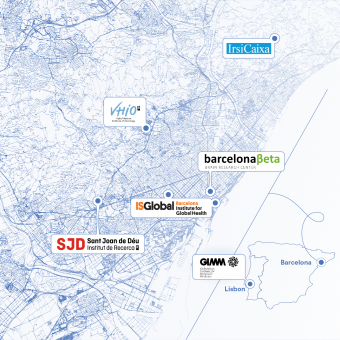
Over the course of this journey, the Foundation has supported the development of centres with highly distinctive scientific identities. The first step came more than three decades ago with the creation of IrsiCaixa, established to advance understanding of infectious diseases and the functioning of the immune system at a time when HIV represented one of the greatest global challenges. Years later, the focus broadened to translational oncology through collaboration with the Vall d’Hebron Institute of Oncology (VHIO). In 2010 it promoted the founding of the Barcelona Institute for Global Health (ISGlobal), aimed at understanding the influence of social and environmental factors on health worldwide. Shortly afterwards, the Foundation contributed to the creation of the BarcelonaBeta Brain Research Center (BBRC), focused on improving understanding of neurodegenerative diseases.
More recently, the network incorporated research into complex paediatric conditions through its support for the Institut de Recerca Sant Joan de Déu, and took a decisive step towards cutting-edge basic and translational biomedicine by participating in the creation of the Gulbenkian Institute for Molecular Medicine (GIMM) in Portugal, thereby completing an architecture of complementary scientific capabilities designed to interact with and reinforce one another. The directors of all these centres now sit on the Scientific Committee of the CaixaResearch Institute.
When the ”la Caixa” Foundation decided to move forward with the creation of the new institute specialising in immunology, it did so with the conviction that it should be a multidisciplinary and interdisciplinary centre, and therefore sought the collaboration of those six centres from the outset. They contributed to shaping the new project by identifying the areas in which it could add the greatest value to health research, as well as generate the greatest social impact. “The idea was to create something that would generate synergies with what already existed. That’s why the focus is on immunology, a cross-cutting field connected to cancer, infections, neurodegeneration and autoimmunity,” explains Àngel Font, executive director of the CaixaResearch Institute.
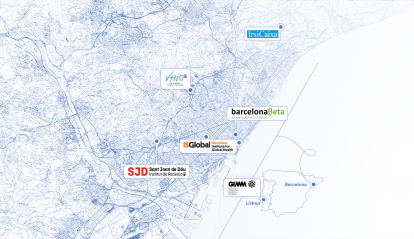
With the creation of the CaixaResearch Institute, this ecosystem, now comprising seven centres, is entering a new phase of shared growth. The new centre will bring fresh scientific and technological capabilities, specialised knowledge in immunology and new opportunities for connection across disciplines. This momentum will be accompanied by the development of shared cutting-edge infrastructures to facilitate knowledge transfer, the integration and use of large quantities of biomedical data, and dialogue between science and society.
At the same time, it will draw on the experience and track record of the institutions already forming part of this network of biomedical research institutes, which brings together more than 1,500 researchers working with a combined annual budget of over 200 million euros and which, last year, enrolled more than 5,700 patients in clinical trials of new treatments.
IrsiCaixa: at the forefront of infectious diseases and immunity
Since 1995, IrsiCaixa has helped to unravel how the immune system responds to threats such as HIV, emerging infections such as COVID, and immunopathologies such as cancer. IrsiCaixa coordinates, together with Utrecht University, the international IciStem consortium, which leads the world’s largest cohort of patients cured of HIV or in remission following a stem cell transplant. In addition, its advances in the study of the microbiome, therapeutic vaccines and immune ageing have built an essential body of knowledge for understanding the role of the immune system in disease.
Collaboration with the new CaixaResearch Institute will allow for a deeper exploration of immunological mechanisms that may lead to better preventive and therapeutic strategies for patients. “Studying the human immunodeficiency virus meant understanding how it destroyed the immune system and, therefore, learning how that system worked. These studies helped to shed light on processes shared with other viral diseases, but also with fields that at first sight seemed far removed, such as the response to vaccines, cancer, ageing or inflammatory processes,” says IrsiCaixa director Bonaventura Clotet.
ISGlobal: focused on the world’s major health challenges
The Barcelona Institute for Global Health (ISGlobal) has placed the major challenges of global health at the heart of scientific debate, with particular attention to the most vulnerable populations. Among its main achievements, ISGlobal took part in the design and implementation of a Phase 2b trial for the first licensed vaccine against a parasite, the one that causes malaria. This vaccine, the first against malaria to be approved by the World Health Organization, has been shown to reduce hospitalisations for severe cases of the disease by 30%.
Researchers at ISGlobal study the interaction between infections, non-communicable diseases and the environment, as well as the way in which diseases impact health. The arrival of the CaixaResearch Institute represents an opportunity to explore more deeply a question that spans many of these areas: how the immune system responds to environmental exposures like pollutants or lifestyle, and how these responses influence communicable diseases such as tuberculosis and COVID, as well as non-communicable conditions like cancer and cardiovascular disease.
In the words of Quique Bassat, director general of ISGlobal, “the great challenge is to ensure that advances in immunology are translated into real, accessible tools for all populations, including the most vulnerable, so that scientific progress contributes to reducing health inequalities.”
VHIO: personalised medicine against cancer
In the field of oncology, the interaction between the immune system and immunological treatments is already a reality in clinical practice. Indeed, the Vall d’Hebron Institute of Oncology (VHIO) has been a pioneer in incorporating personalised medicine into patient treatment and in understanding how the interaction between a tumour and the immune system shapes the course of the disease. At present, 25% of patients with solid tumours benefit from this knowledge of the immune system through novel drugs and cell therapies. However, it still remains to be determined how activation of the immune system could benefit the remaining 75% of patients.
In this regard, the CaixaResearch Institute arrives with the expertise and tools needed to explore in greater detail the role of immunology in the onset and progression of cancer and other diseases. It finds in the VHIO an ideal partner for interdisciplinary work, ranging from the discovery of new molecular or cellular mechanisms to the clinical validation of the treatments developed.
The VHIO plays a major leadership role at both the European and international levels, and currently chairs Cancer Core Europe, the largest European alliance for translational cancer research, which makes it possible to treat more than 60,000 new patients each year across seven countries. In addition, its experimental cancer clinical trials unit – the UITM CaixaResearch – is a leader internationally. Since its creation in 2010, it has enabled the development of more than 2,000 clinical trials, benefiting more than 10,800 patients from across Spain, most of whom had no other treatment options for their type of cancer.
As the director of VHIO, Josep Tabernero, emphasises: “Science is entirely collaborative, and to think otherwise is neither efficient, nor fast, nor fair.”
BBRC: a leading centre in the fight against Alzheimer’s
For its part, the Barcelonaβeta Brain Research Center (BBRC), the research centre of the Pasqual Maragall Foundation, has placed the study of Alzheimer’s and ageing-associated neurodegeneration at the heart of its activity. Its work focuses particularly on research into the preclinical stages of the disease, with the aim of identifying early biomarkers that will make it possible to develop strategies for early detection and prevention before symptoms appear.
As Arcadi Navarro, director of the BBRC, says: “We make a major effort to ensure that science reaches society in two ways: first, through outreach, because it’s essential that people understand what we do and what they can expect from it; and second, by ensuring that research has a real impact and transforms the lives of patients, their families and the healthcare system as a whole.”
Both strands come together in initiatives such as the ALFA Study, one of the largest cohorts in the world and the largest in Spain for Alzheimer’s research. It brings together more than 2,700 cognitively healthy volunteers with a family history of the disease who, entirely altruistically and in support of scientific progress, undergo regular clinical monitoring, neuroimaging tests and biological analyses. Thanks to their commitment, researchers have been able to identify biomarkers capable of predicting, with great accuracy, the risk of developing the disease years before the first symptoms appear. In recent years, scientific evidence has increasingly shown that inflammation and the immune system response play a highly significant role in neurological processes, opening up promising avenues for collaboration with the CaixaResearch Institute.
IRSJD: a pioneer in rare paediatric diseases
Research in paediatrics raises questions that cannot always be answered by extrapolating data from adults. The Institut de Recerca Sant Joan de Déu (IRSJD) has built its strength precisely around this distinctiveness: understanding how diseases originate and develop in childhood, especially rare conditions such as childhood cancer and genetic, metabolic or neurodevelopmental disorders. To this end, it promotes research that is closely linked to clinical practice, in keeping with its mission to offer the best possible treatment to patients and their families.
The incorporation of the CaixaResearch Institute opens up new opportunities to explore more deeply the immunological dimension of many of these conditions. In turn, researchers at the new institute will find in the IRSJD the right environment to direct part of their work towards the paediatric population and to explore how their advances can be translated into new diagnoses and therapies tailored to children.
As IRSJD director Joan Comella explains: “We have more than ten years of experience in building a complete research ecosystem in maternal-foetal and child and adolescent health. We have highly specialised clinical units, a paediatric clinical trials unit that’s a benchmark at the international level, innovation networks such as i4KIDS, and extensive participation in European projects on childhood cancer, rare diseases, neurodevelopment and mental health. Thanks to this foundation, we can serve as a natural bridge for translating the advances generated at the CaixaResearch Institute into clinical practice.”
GIMM: excellence in basic research
Lastly, the Gulbenkian Institute for Molecular Medicine (GIMM) extends this network beyond our borders and strengthens its European profile. The Portuguese institute, created in 2024 through the merger of two leading institutions in Portugal, was established with the aim of advancing cutting-edge basic and translational research in molecular medicine.
Its work on the fundamental processes of disease, including the study of the immune system, contributes essential knowledge to the ecosystem of centres supported by the ”la Caixa” Foundation. As the director of GIMM, Maria Mota, points out, “the immune system is at the centre of everything. It connects with the nervous system, with the gut and its microbiota, with the heart, with the muscles, and it helps to maintain homeostasis, that is, balance in the internal environment despite external changes. That’s why we’re focusing on it at GIMM.”
The connection with the CaixaResearch Institute will facilitate closer collaboration between countries and encourage the exchange of researchers, projects and technologies.
A well-established network within a mature system
The network of centres associated with the CaixaResearch Institute is part of the Catalan research ecosystem, an environment that over recent decades has become one of the most active and competitive in Europe. Within just a few kilometres, hospitals, research centres, universities, scientific and technical infrastructures, and a specialised business fabric coexist, ranging from emerging start-ups to the headquarters of major pharmaceutical and biotechnology companies.
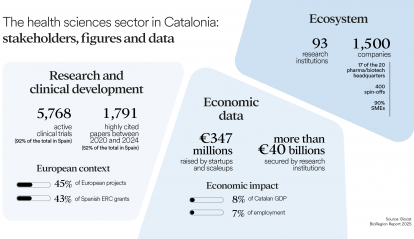
This proximity creates a multiplier effect. It facilitates talent mobility, speeds up the launch of projects, and allows advances to find their way into clinical practice more quickly. All of this has turned the region into a hub for attracting leading researchers and international funding, while also establishing it as a regular partner in major European and global scientific initiatives.
The addition of the CaixaResearch Institute brings a new layer of specialisation and interconnection to this landscape, and strengthens the positioning of Spain and Portugal as an environment equipped to address, from multiple approaches, the scientific challenges that will shape medicine in the coming decades.
- Imágenes
- Videos
- Audios
- Notas de prensa
Barcelona24.04.26The ”la Caixa” Foundation inaugurates the CaixaResearch Institute, the first research centre specialising in immunology in Spain and Portugal
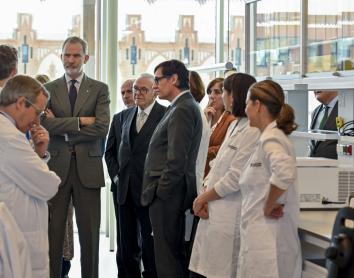
His Majesty King Felipe VI has today inaugurated the CaixaResearch Institute, the first centre dedicated entirely to the study of immunology in Spain and Portugal, and one of the first in Europe.
Read more
- Imágenes
- Videos
Barcelona24.04.26More than 120 years advancing research to transform society
The ”la Caixa” Foundation has built a solid model of support for research, health and talent. This trajectory began at the start of the twentieth century, and continues today with the development of the CaixaResearch Institute, led by Isidro Fainé.
Read more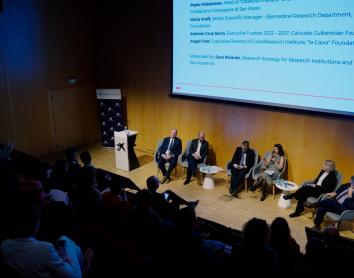
- Imágenes
Barcelona24.04.26Philanthropy and science: an expanding model to strengthen research in Europe
The CaixaResearch Institute, promoted by the ”la Caixa” Foundation, stands out as a leading example of philanthropic commitment to the establishment of centres of excellence endowed with greater autonomy, strategic vision and a vocation for social impact.
Read more