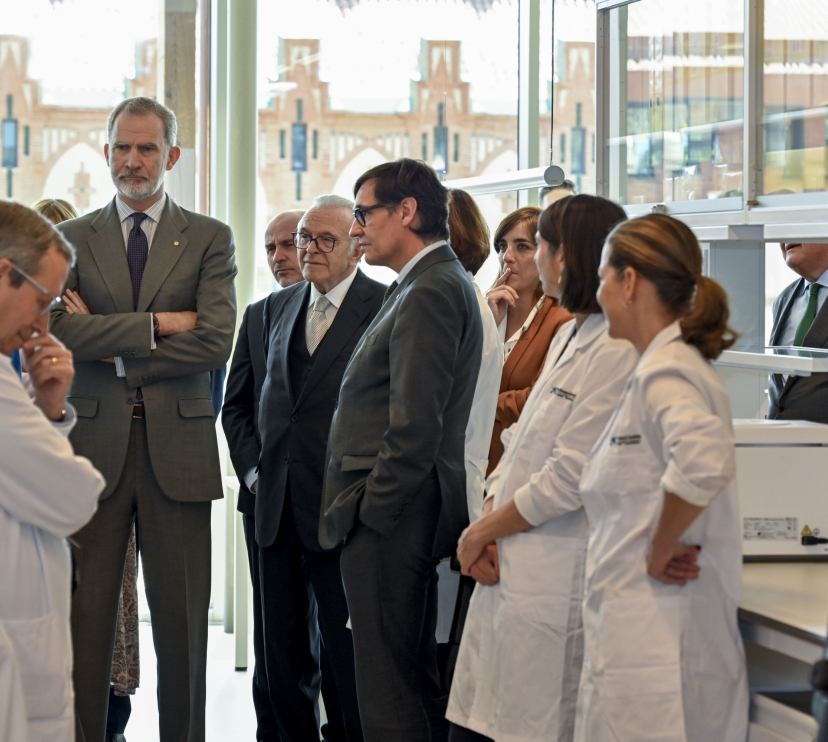
The ”la Caixa” Foundation inaugurates the CaixaResearch Institute, the first research centre specialising in immunology in Spain and Portugal
24.04.26
10 minutes read- His Majesty the King has inaugurated the new
CaixaResearch Institute in an official ceremony attended by the President of
the Government of Catalonia, Salvador Illa; the Minister of Health, Mónica
García; the Spanish Government Delegate in Catalonia, Carlos Prieto; and the
Chairman of the ”la Caixa” Foundation, Isidro Fainé.
- With an investment of 100
million euros, the new research centre will have 20,000 m² dedicated to
immunology and is expected to host 500 professionals, 425 of whom will be
scientists. Conceived as a space for collaborative creation with a
cross-disciplinary approach, the institute aims to bring its discoveries from
the laboratory to patients in the form of more precise diagnostics and better
therapies.
- The CaixaResearch Institute focuses its activity on
research and innovation in immunology. In recent years, the study of the immune
system has been opening up new avenues for the prevention, diagnosis and
treatment of diseases affecting millions of people, including cancer,
infections, inflammatory disorders and neurodegenerative diseases.
- With the creation of its own centre in Barcelona, one
of Europe’s most promising biomedical hubs, the ”la Caixa” Foundation brings to
fruition its century-long support for health research. Through the
CaixaResearch Institute, the institution seeks to help find answers to the
major biomedical challenges of the present and the future.
- The institute has announced the appointment of the biochemist
specialist in immunology and ageing, Maria Mittelbrunn, who will be one of its
senior group leaders, alongside Gabriel Rabinovich and Josep Dalmau.
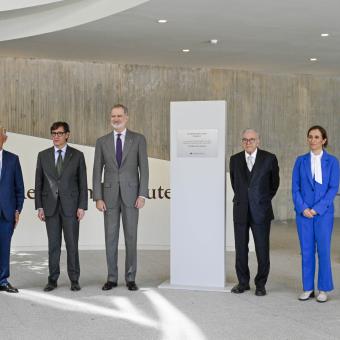
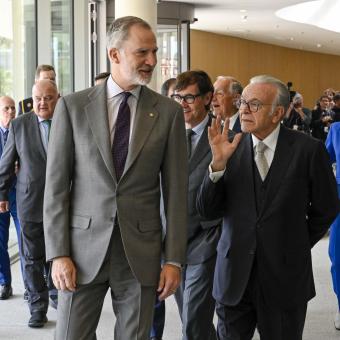
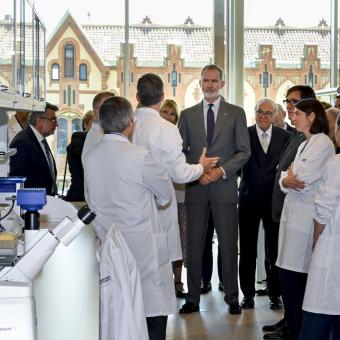
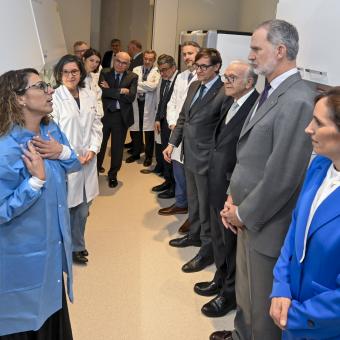
His Majesty King Felipe VI has today inaugurated the CaixaResearch Institute, the first centre dedicated entirely to the study of immunology in Spain and Portugal, and one of the first in Europe. The event was attended by the President of the Government of Catalonia, Salvador Illa; the Minister of Health, Mónica García; the Spanish Government Delegate in Catalonia, Carlos Prieto; and the Chairman of the ”la Caixa” Foundation, Isidro Fainé.
The new institute, whose construction has involved an investment of 100 million euros by the ”la Caixa” Foundation, aims to become a leading international centre for translational research in this discipline, which is redefining the way diseases are understood and addressed. Immunology lies at the heart of the study of complex conditions such as cancer, and neurological and infectious diseases, among others.
In the words of the President of the “la Caixa” Foundation, Isidro Fainé: “This is undoubtedly one of the most important initiatives the ‘la Caixa’ Foundation has ever undertaken. We share a very clear goal: to bring together as many resources as possible to make a meaningful improvement to people’s health and quality of life. It has been a priority for us to do this in line with our core values, starting from the ground up, taking a long-term approach, acting locally while maintaining a global outlook, and always keeping people and their wellbeing at the centre.”
The CaixaResearch Institute, created out of the ”la Caixa” Foundation’s century-long commitment to health research, aims to advance scientific knowledge and promote its transfer to society in the form of more precise or earlier diagnoses and treatments that improve people’s quality of life.
“This centre will focus on research that can deliver tangible improvements in people’s quality of life. We know this will be a challenging and complex journey; it will take time to see results, and there will be obstacles along the way. But we have the determination to overcome them, and we are confident that we have the resources, talent and experience needed to rise to this major new challenge, one that has not arisen spontaneously or been brought in from elsewhere,” said the president of the organisation.
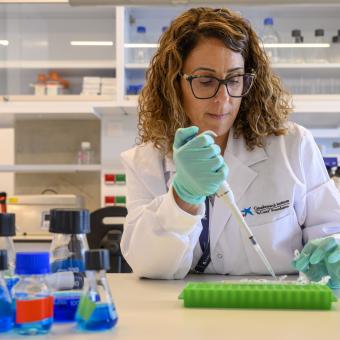
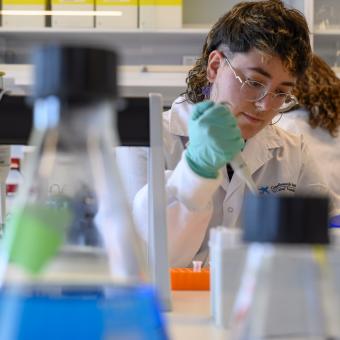
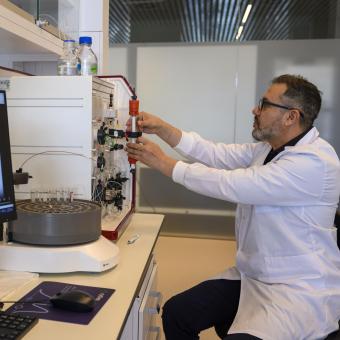
To this end, the Foundation has created a 20,000 m² centre equipped with cutting-edge facilities and with capacity to accommodate 500 professionals, 425 of whom are scientists. They will work in a cross-disciplinary way to unravel the keys to the functioning of our immune system – the body’s first line of defence – and its relationship with the most prevalent diseases. For 2026, the institute has a budget of 10 million euros dedicated to talent recruitment and scientific equipment, with the aim of consolidating its position as a leading centre in immunology.
The Scientific Committee of the ”la Caixa” Foundation, chaired by Javier Solana, has played a strategic role in defining the vision of the CaixaResearch Institute, which represents a further step forward in the Foundation’s commitment to science as a driver of transformation. In addition, the institute has its own Scientific Council, led by the oncologist Josep Tabernero, which ensures that its progress remains aligned with international standards of scientific excellence in immunology.
A number of collaborations with institutions and public authorities have also been essential in bringing the project to fruition: Barcelona City Council, which has provided support on urban planning matters; the Government of Catalonia, with which the ”la Caixa” Foundation established an agreement to foster synergies between the CaixaResearch Institute and the Catalan biomedical ecosystem; the Spanish Government, which supports the institute through its agencies promoting biomedical research; and the European Investment Bank, which signed a loan agreement with CriteriaCaixa to finance the construction of the building.
The CaixaResearch Institute is organised across two buildings. In the first, which is being inaugurated today, four group leaders, Dr Gabriel Rabinovich, Dr Josep Dalmau, Dr Gemma Moncunill and Dr Héctor Huerga Encabo are already carrying out their research. They will be joined in the autumn by Dr Maria Mittelbrunn, who has recently been recruited by the institute, and by Dr María Martínez, that will join in July.
The institute also already employs about twenty professionals. In the coming years, once the centre is fully operational, it will have capacity to house 45 research groups and units, thereby becoming a hub for attracting and retaining international talent.
Research: a cornerstone of the ”la Caixa” Foundation’s social action
The creation of the CaixaResearch Institute crystallises the historic commitment of the ”la Caixa” Foundation to biomedical research in the service of people’s health and wellbeing, a commitment that dates back to its founding more than 120 years ago.
Thanks to the social vision of the founder of ”la Caixa”, Francesc Moragas, the institution set out from the very beginning to improve health through research and knowledge. This is reflected in the creation of pioneering facilities such as the Anti-Tuberculosis Institute, which had one of the first electron microscopes in Spain; the Santa Madrona Maternity Clinic, which promoted maternal and child healthcare; and the Empar de Santa Llúcia Home, a residence for the care of blind girls and women.
The ”la Caixa” Foundation has continually adapted its support for research in response to the health challenges of each historical period. It currently allocates 20% of its annual budget (147 million euros in 2026) to this field. The institution’s firm commitment to research has taken many forms, including the creation of its own calls for proposals for Health Research and Innovation projects and initiatives to foster research talent, such as the INPhINIT doctoral fellowships and the Junior Leader postdoctoral fellowships.
In addition, for more than 30 years, the Foundation has worked to advance knowledge of the most widespread diseases through sustained support for centres associated with the ”la Caixa” Foundation that are leaders in the study of infectious diseases (IrsiCaixa), cancer (Vall d’Hebron Institute of Oncology) and neurodegenerative diseases (Barcelonaβeta Brain Research Center), as well as in understanding the social and environmental determinants of health on a global scale (Barcelona Institute for Global Health). More recently, the ”la Caixa” Foundation has expanded its support to paediatric rare diseases (Institut de Recerca Sant Joan de Déu) and to basic and translational biomedicine through the first research centre in Portugal to receive its support (Gulbenkian Institute for Molecular Medicine).
Together with all these institutions, the ”la Caixa” Foundation aims to build Europe’s first philanthropic ecosystem of biomedical and biotechnology research centres, led by the CaixaResearch Institute.
Cross-disciplinary and collaborative science
Immunology cuts across all medical disciplines and requires an interconnected approach, making it an integrative framework. On this basis, the CaixaResearch Institute is structured around three scientific pillars – immunology and disease, exposome sciences, and systems immunology and engineering – conceived as cross-cutting areas that are interlinked and work collaboratively with one another.
The commitment to a collaborative working model goes beyond internal exchange between research groups through the promotion of initiatives aimed at developing new therapies that benefit both the CaixaResearch Institute and the wider network of centres associated with the ”la Caixa” Foundation.
One example of this collaborative work is the Innovation Hub, a strategic initiative involving all the centres within this ecosystem and providing a space for sharing ideas in order to maximise the impact of their research on society. The hub includes the organisation of training activities, tailored support from experts such as consultants and mentors, and backing through specific funding for ideas that help validate the potential transfer of assets to the market. In the same vein, the CaixaResearch Institute will establish an Industrial Advisory Board made up of representatives from the pharmaceutical industry to provide guidance and ensure the real-world impact and transfer of the institute’s research.
Furthermore, the entire ecosystem is connected through another major node, the Biomedical Data Hub, an initiative designed to improve the management, integration and analysis of the biomedical data generated by the centres. This will be achieved by creating a shared framework that organises information, ensures its secure use, and enables different teams to work with harmonised and connected data, thereby fostering smoother collaboration across disciplines.
A sustainable building serving talent and ideas
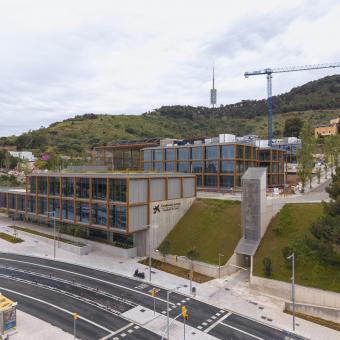
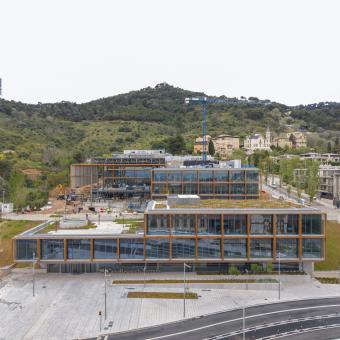
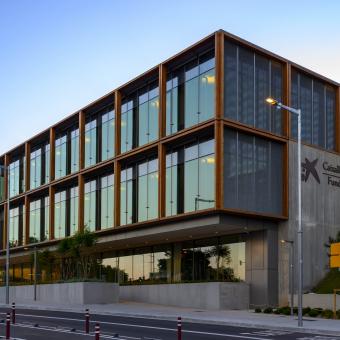
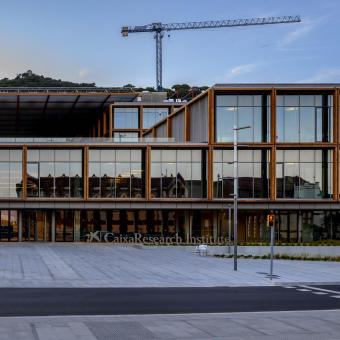
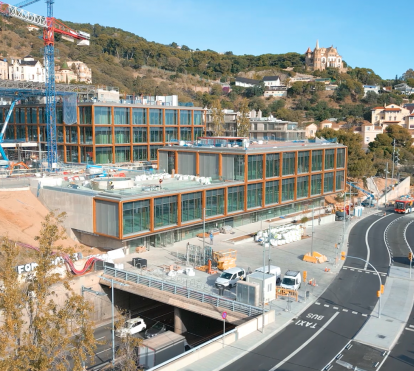
The new CaixaResearch Institute is located at the foot of the Collserola Natural Park, opposite the CosmoCaixa Science Museum, in an emblematic part of the city of Barcelona that is now regarded as one of Europe’s most vibrant biomedical hubs.
Thanks to the proximity of these two facilities, now linked by the new Francesc Moragas Gardens in tribute to the founder of ”la Caixa”, Barcelona gains a first-class scientific campus that will break down the boundaries between researchers and the public. To this end, the museum – a benchmark in bringing science closer to audiences of all ages and welcoming 1.2 million visitors a year – will host content on immunology and health, while researchers will have a unique space in which to bring their advances closer to society.
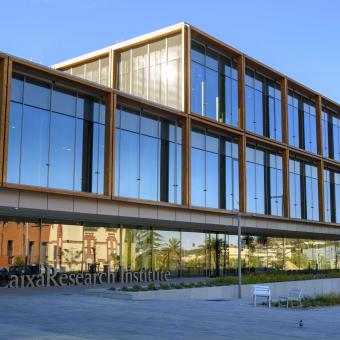
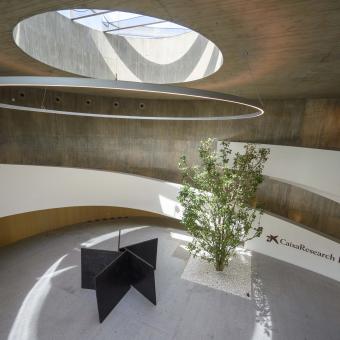
Designed by the TAC Arquitectes studio, led by Eduard Gascón, the institute has been conceived according to principles of maximum scientific functionality, dialogue with its surroundings and a strong commitment to sustainability, recognised with LEED Platinum accreditation. In this project, architecture has become a tool in the service of science.
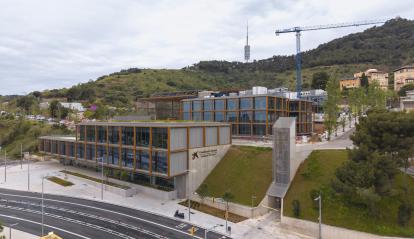
The institute is organised around shared areas and scientific platforms to optimise investment, ensure experimental capacity and foster collaboration. These shared areas will be located close to the laboratories, while the scientific platforms will be concentrated on the lower floor, where specialised infrastructure, high-end equipment and advanced computational capacity will be grouped together.
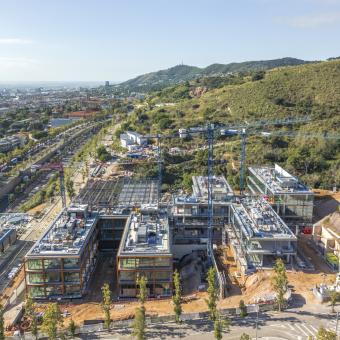
One of the architectural challenges of the project has been its location between the Collserola mountain rangearea of outstanding environmental value and the Ronda de Dalt, one of the main arterial roads of the city of Barcelona. For this reason, the architectural solution was inspired by the tradition of early twentieth-century hospital and hygienist architecture, characterised by independent pavilions open to the outside. The project has adopted a sequence of low-rise pavilions interwoven with courtyards and gardens, arranged in tiers to adapt to the natural slope of the site, allowing the building to blend into the landscape. In April 2026, the first of the two buildings of the CaixaResearch Institute was inaugurated, and the second is expected to begin to be occupied progressively over the course of 2027.
In addition, the new institute has been designed in accordance with criteria that prioritise sustainability and environmental protection, with renewable energy systems ranging from photovoltaic panels to geothermal probes. Rainwater harvesting and internal water reuse systems are also planned, with the aim of reducing energy consumption by 38% and water usage by 40%.
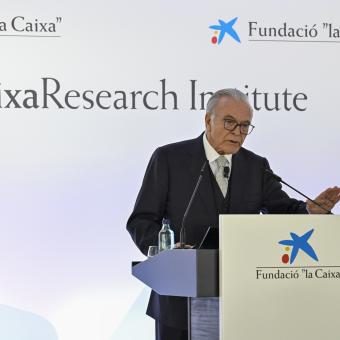
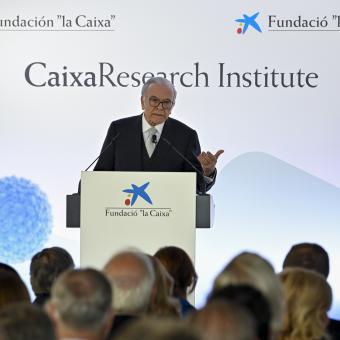
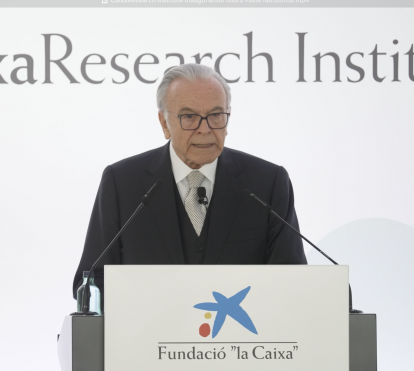
Statements by Isidro Fainé, Chairman of the ”la Caixa” Foundation (in Spanish)
Statements by Isidro Fainé, Chairman of the ”la Caixa” Foundation (vertical in Spanish)
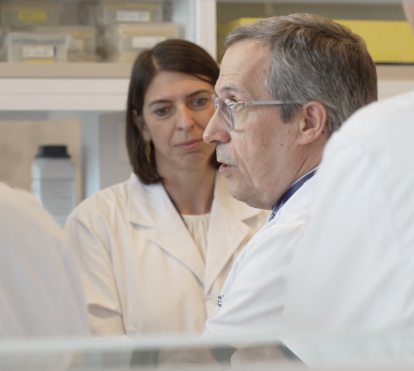
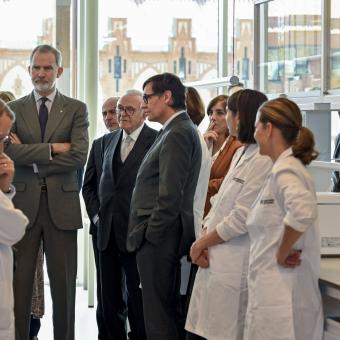
Raw images of the opening of the CaixaResearch Institute in Barcelona
Raw images of the opening of the CaixaResearch Institute in Barcelona (vertical)
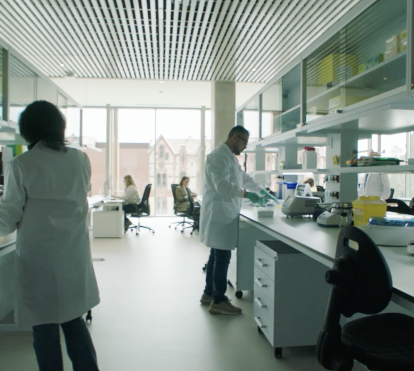
Raw images of the CaixaResearch Institute building - part 1
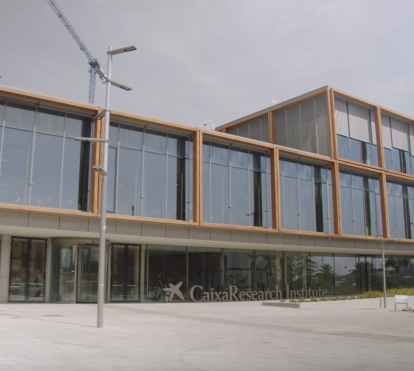
Raw footage of the CaixaResearch Institute building - part 2
Raw footage of the CaixaResearch Institute building - part 1 vertical
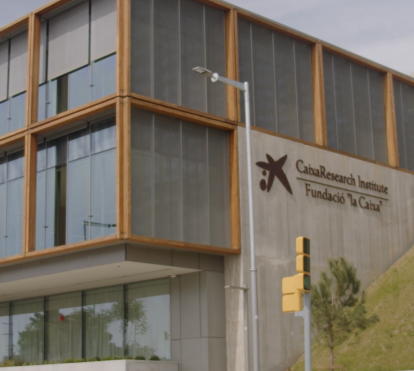
Raw footage of the CaixaResearch Institute building - part 2 vertical
Timelapse video of the CaixaResearch Institute construction works

- Imágenes
- Videos
Barcelona24.04.26More than 120 years advancing research to transform society
The ”la Caixa” Foundation has, over more than 120 years, built a solid model of support for research, health and talent. This trajectory began at the start of the twentieth century with the creation of ”la Caixa”, promoted by Francesc Moragas, and continues today with the development of the CaixaResearch Institute, led by Isidro Fainé. Under his chairmanship, the institution has steadily increased its annual budget in order to intensify its work in support of research into the most widespread diseases and the humanisation of healthcare.
Read more
- Imágenes
- Videos
- Audios
Barcelona24.04.26Immunology, interdisciplinarity and talent, the foundations of the CaixaResearch Institute
Placing immunology at the centre, harnessing the opportunities that arise from connecting biomedical research disciplines, and attracting scientific talent: these are the foundations upon which the CaixaResearch Institute is built. This new centre, promoted by the ”la Caixa” Foundation, is committed to cross-disciplinary science that is closely linked to clinical practice and focused on transforming knowledge into solutions for society.
Read more