The ”la Caixa” Foundation, in collaboration with Change Dyslexia, is making a digital tool for the detection and educational support of dyslexia among pupils, Dytective, available to all primary schools in Spain. The online platform, based on artificial intelligence, is available to all interested schools. The aim is to promote inclusive education, reduce school failure and ensure that all pupils have access to specialised resources.
Dyslexia affects approximately 10% of pupils, and when not detected in time can lead to poor academic performance and early school leaving. In an educational context with increasingly diverse classrooms, the absence of detection and intervention widens educational gaps, as reflected in the low levels of reading comprehension highlighted in international reports such as PISA.
This learning difficulty particularly affects pupils in vulnerable situations, who often do not receive a diagnosis and lack the financial resources to access specialist support. Such inequality creates an educational divide, making early detection and support for dyslexia essential for improving pupils’ academic performance and emotional wellbeing.
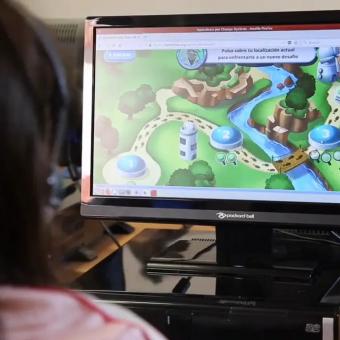
In this context, the ”la Caixa” Foundation, in collaboration with Change Dyslexia, is driving an initiative that enables primary schools across Spain to access Dytective, a digital tool based on artificial intelligence, free of charge. This scientifically validated platform facilitates the detection of dyslexia risk through a screening test and provides personalised activities to support the development of reading and writing skills.
Over the next five years, the ”la Caixa” Foundation will allocate up to 2.2 million euros to make the Dytective platform available to more than 14,000 primary schools in Spain, all of which will be able to access it completely free of charge. This initiative has the potential to benefit more than 2.7 million pupils enrolled throughout Spain and to mark a significant step forward in reducing the socioeconomic barriers that hinder access to detection and educational support for pupils with dyslexia. Since the start of the collaboration, over 1,500 schools have joined, with more than 430 already actively using the tool and over 3,400 students engaged.
AI to detect and support dyslexia in classrooms
Dytective is a platform designed to support schools in the early detection of dyslexia risk and in the development of pupils’ reading and writing skills. The tool was developed by Change Dyslexia, an organisation founded by Luz Rello (Madrid, 1984), a researcher, social entrepreneur and PhD graduate of Universitat Pompeu Fabra, who was diagnosed with dyslexia at the age of 10.
The Dytective tool emerged from more than ten years of research conducted at national and international universities, including Universitat Pompeu Fabra, Universitat Autònoma de Barcelona, Carnegie Mellon University and the London School of Economics and Political Science, among others. Researchers from these institutions have contributed to the development of this scientific tool, which combines artificial intelligence and neuroeducation to address dyslexia from an innovative and accessible perspective.
The Dytective platform makes it possible to carry out an online screening test for reading and writing difficulties in just 15 minutes and is aimed at pupils aged between 7 and 17. It also includes more than 42,000 personalised exercises designed to support the development of the cognitive processes involved in reading and writing, adapted to each pupil’s individual profile.
Thanks to its technological and pedagogical approach, the use of Dytective in schools has been shown through scientific research to improve results in external LOMCE (Organic Law for the Improvement of Educational Quality) assessments in Spanish language and English, both in Year 3 and Year 6 of primary education, in a study led by Almudena Sevilla and Ismael Sanz Labrador. In addition, improvements have been observed in non-cognitive aspects such as self-esteem, perseverance, self-control and increased aspirations among pupils following use of the tool.
With the aim of contributing to the academic success of all pupils, especially those who are most vulnerable, and ensuring that no-one is left behind due to undetected learning difficulties, EduCaixa and Change Dyslexia are joining forces to bring Dytective to thousands of schools. This initiative has the potential to benefit more than 2.7 million pupils by reducing the socioeconomic barriers that hinder access to early detection and educational support.
“At EduCaixa, we are convinced that making Dytective available to all schools will enable the educational community to access personalised resources that strengthen reading skills and help reduce school failure, especially among pupils in vulnerable situations,” says Maria Espinet, Director of EduCaixa at the ”la Caixa” Foundation.
“We want to ensure that no child is left behind because of an untreated learning difficulty. Thanks to the support of the ”la Caixa” Foundation, we can bring this tool to thousands of schools to break down socioeconomic barriers and promote equality of opportunity,” adds Luz Rello, founder of Change Dyslexia.
Implementation of Dytective
Some autonomous communities are already successfully implementing the Dytective tool. In the Community of Madrid, the Regional Department of Education, Universities and Science launched a pilot project in 2017 across 40 schools. Based on the results obtained, the collaboration has progressively expanded over the years, leading to the rollout of the tool in all state and state-subsidised schools, a total of 1,200 centres. In Murcia, meanwhile, the Regional Department of Education and Vocational Training has been using Dytective since 2017 through its educational guidance teams.
The expansion of Dytective in Spain represents a step forward in tackling school failure linked to learning difficulties such as dyslexia. Interested schools can register via the website educaixa.org to begin using Dytective straight away.

- Imágenes
- Videos
- Audios
Barcelona17.12.25Luz Rello: “Dyslexia made me tolerant of mistakes. Today I see it as a gift”
Luz Rello is the founder of Change Dyslexia and creator of Dytective, a tool which, with the support of the ”la Caixa” Foundation, is being made available to primary schools and social organisations throughout the country.
Read more