You are reading:
You are reading:

05.03.26
6 minutes readIn Bundelkhand, one of the most impoverished regions of Uttar Pradesh (India), hundreds of women farmers have chosen to organise in order to improve their living conditions. Thanks to the creation of the BASANT Farmer Producer Organisation, a company founded and run entirely by women with the support of the ”la Caixa” Foundation’s Work4Progress programme and ActionAid India, they now have employment and stable incomes, and have succeeded in redefining their role in the economic and social life of the community.
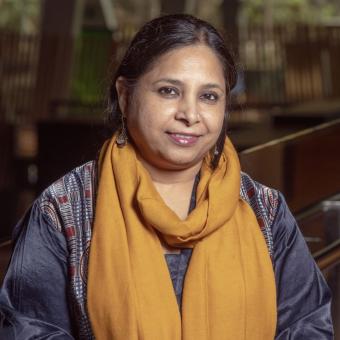
The rural region of Bundelkhand is known for its low employment levels, precarious wages and the migration of its population to urban centres. “A few years ago, almost 70% of families were working in the cities,” explains Dipali Sharma, Director of Organisational Effectiveness at ActionAid India, “but in the wake of the COVID-19 pandemic in 2020, these families were forced to return to their villages, where they found there were hardly any means of making a living.”
For women, the situation was even more complex. In addition to poverty and the lack of job opportunities, they faced severely limited mobility, serious difficulties in accessing markets, and limited information about prices and demand. “Bundelkhand’s society is highly feudal and deeply patriarchal,” Sharma warns, placing them in an even more vulnerable position.
In the face of this reality, ActionAid works alongside local communities to implement and adapt the Work4Progress strategy, which is geared towards creating quality jobs for women and young people. Funded by the ”la Caixa” Foundation, the programme operates not only in India, but also in Mozambique and Colombia.
Work4Progress is rooted in social innovation and starts out from a clear premise: solutions are only viable when they are designed on the basis of a deep understanding of the local context and co-created with the people who live there. “If we involve communities throughout the process, we build trust and leadership,” Sharma notes.
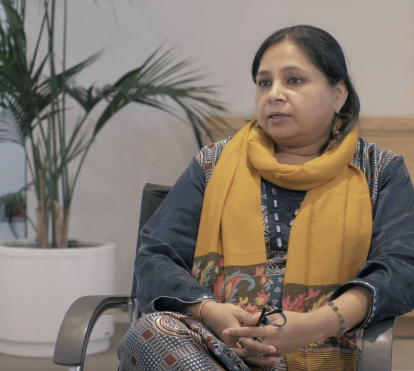
During the listening phase, the women told the organisation that “they knew how to cultivate the land or rear goats and poultry, but they didn’t have any resources of their own”, she recalls. These challenges were compounded by the conditions on the ground: poor-quality land, a region prone to drought, and a lack of money to buy seeds, fertilisers and the materials needed to fence off plots and protect them from wild animals.
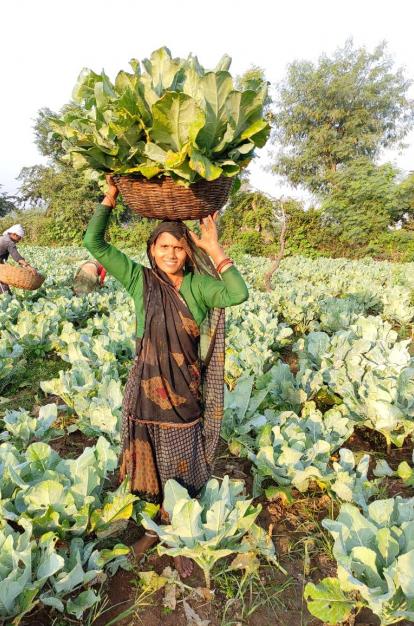
To overcome these challenges, ActionAid and the women farmers decided to establish a Farmer Producer Organisation (FPO) that would be led by the women themselves. Thus BASANT was born: a structure with ten boards of directors made up exclusively of women and 445 shareholders.
The organisation’s aim was to provide a comprehensive support system that would enable women farmers to prosper, negotiate directly and take part in policy advocacy initiatives, while also strengthening their economic autonomy and decision-making capacity.
BASANT works alongside government authorities and a range of local organisations: “This collaborative approach is what helps us bring about changes in perceptions and mindsets,” Sharma says.
Currently, the FPO has share capital of several million rupees and has achieved annual turnover approaching 50 million. Since it was established in 2020, the changes have also become visible in villages across the region: BASANT has provided women farmers not only with the resources to work their land, but also with economic independence for themselves and their families.
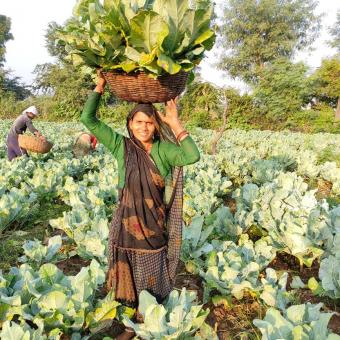
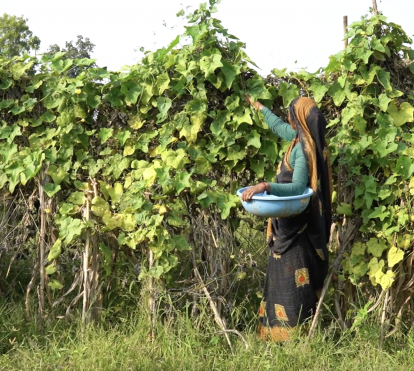
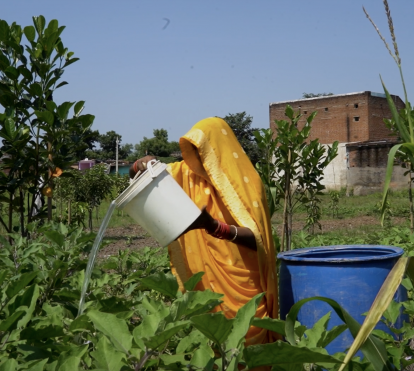
This is the case for Emrati, who lives in Khajuraha Bujurg and previously worked as a day labourer for very low pay. “Now I work for myself; before, my efforts were in vain,” she says. Through the organisation, she received seeds, wire and posts to fence off her kitchen garden, which has begun to bear fruit: “I’m expecting a good harvest next season and a good profit at the market.”
Rambhati, from the village of Koti, explains that the cooperative provided her with compost bins to make fertiliser, a sprayer and several plants she had never grown before, which allowed her to diversify her production and increase her income. “They gave me papaya, guava, lemon, pumpkin and aubergine plants, among others. Before, we only grew peanuts and black lentils,” she says.
She uses the money she earns to pay for her children’s education and to buy household supplies, and she has a clear message for other rural women: “Make the most of your land, work hard and grow your crops. That’s how you can achieve economic independence.”
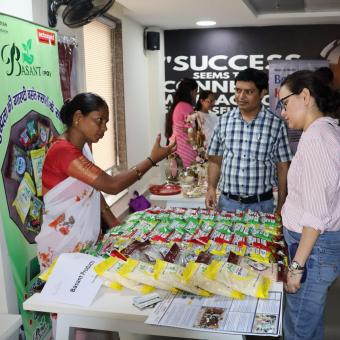
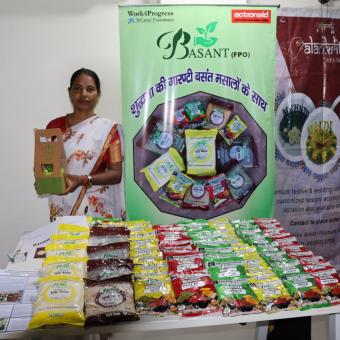
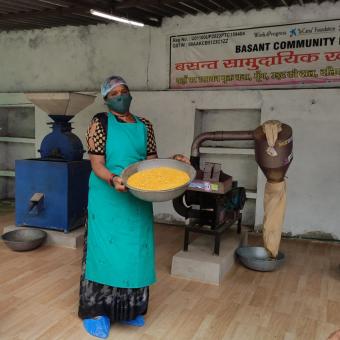
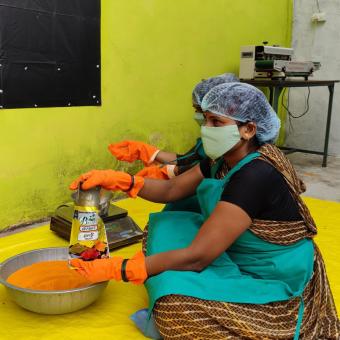
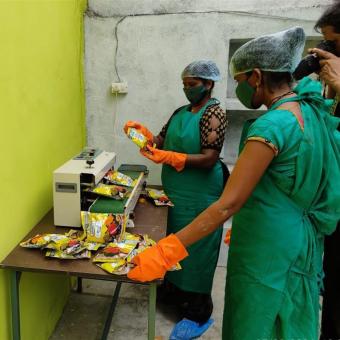
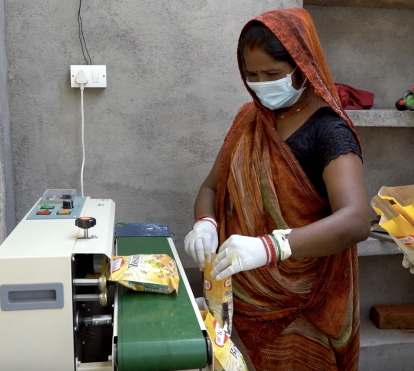
The FPO has also set up processing units where the farmers’ products are sorted, certified, stored and packaged.
“Fifteen women from the village are employed at the Bedora unit,” says Sanjay, the programme coordinator at ActionAid India, “and they’re obtaining significant benefits.” Neelam, one of these women, says that the unit enables them to earn money to support their livelihoods and their children’s education. “We’re very happy,” she adds.
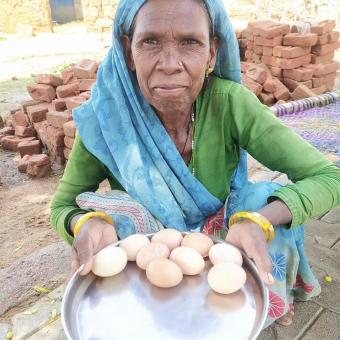
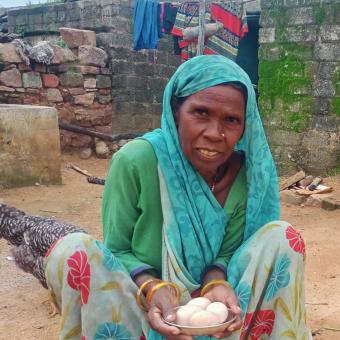
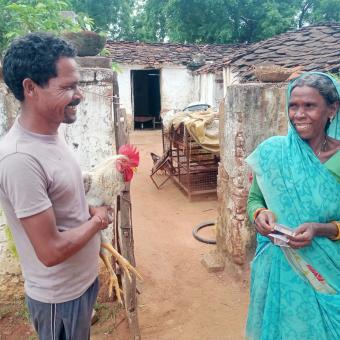
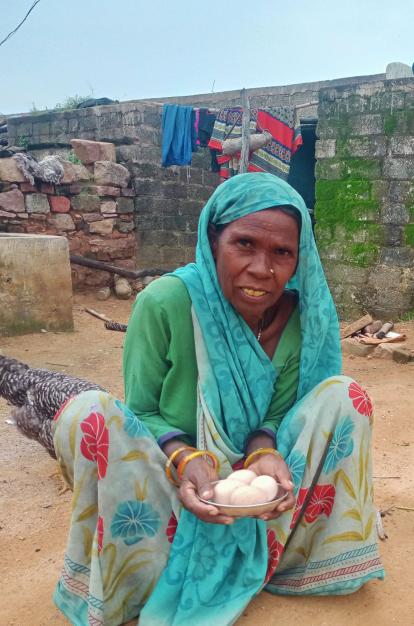
BASANT has also promoted non-agricultural activities, such as poultry farming, among the Sahariya tribe in the village of Sarwa. There, ActionAid’s intervention allowed local women to regain control over their livelihoods after the exploitation of the forest resources they depended on was curtailed by forest protection policies.
Siviya, 45, had learned the basics of poultry farming at her parents’ home and had always wanted to run a poultry farm. The programme provided her with 50 chicks and a three-tier cage. By selling the birds and eggs, she has been able to secure a regular income that allows her to cover household expenses and save, and she has inspired other women in the region to join the initiative.
In a region marked by deep-seated gender inequalities, the establishment of the BASANT Farmer Producer Organisation has represented a turning point. It has not only generated income and employment for many families, but has also changed family and community dynamics, contributed to the recognition of women’s work and capabilities, and redefined their role in Bundelkhand’s economic and social life.
The organisation enables them to manage their land, access the market and play an active role in decision-making. “People used to believe that women couldn’t do anything, let alone build an economic or business venture,” Sharma notes.
BASANT now places them at the heart of change, as they take on roles of power and influence: “These women have gone from being unable to participate or even speak in public to leading processes, running businesses and giving talks to audiences of 3,000 or 4,000 people.” As Sharma emphasises, “today they all say proudly that they are sending their daughters to school and want them to become senior civil servants or doctors.”
The experience of BASANT demonstrates that providing rural communities with comprehensive support and access to resources not only improves livelihoods, but also helps transform deeply-rooted social structures and create economic opportunities that are more inclusive, equitable and sustainable.
With an eye to the future, BASANT aims to consolidate itself as a self-sustaining organisation, capable of continuing to generate employment and opportunities for women in Bundelkhand, and to become a reference point for other rural regions committed to grassroots-led development with a feminist approach.