You are reading:
You are reading:

05.01.26
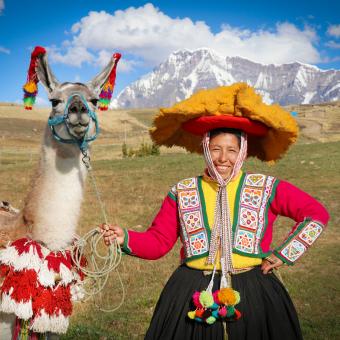
7 minutes readThe Inkac Purinan Tawantin Llaqta Tourism Association (ATIPTALLA), led by women from Peru’s Andean region, is transforming its cultural heritage into decent employment and future opportunities. Created under the umbrella of the ”la Caixa” Foundation’s Work4Progress programme and supported by CODESPA Peru, this community-based rural tourism initiative was recognised in 2025 as the winner of the Indigenous Tourism Challenge, organised by the Development Bank of Latin America and the Caribbean (CAF) and UN Tourism.
Work4Progress is a programme run by the ”la Caixa” Foundation aimed at generating quality employment for women and young people in India, Mozambique, Peru and Colombia. Its model, based on social innovation, starts from a clear premise: creating suitable jobs in vulnerable contexts cannot be achieved simply by designing solutions from the outside; it is essential to understand local realities and build alternatives together with the people who live there. Only in this way can sustainable projects with real, long-term impact be achieved.
The methodology is structured through collaborative platforms in which organisations, communities and experts work in a coordinated manner. These spaces are used to identify needs and opportunities, proposals are co-created, and their feasibility is tested through prototypes. The ultimate goal is to improve people’s lives in territories where opportunities are scarce.
In this context, in-depth knowledge of the local setting becomes crucial. And social organisations such as CODESPA Peru act as the link connecting global strategy with the everyday realities of the communities. Their role is to support these processes, turn ideas into results and ensure that proposals become genuine drivers of systemic change.

ATIPTALLA, with its community-based rural ecotourism proposal, is the result of that process: a project that began as a pilot and has now established itself as a solid, recognised initiative with prospects for growth. It shows that, to foster real change in rural areas through employment, listening to and involving the local population from the outset is not a methodological luxury, but an essential condition.
Judith Ljubica Jiménez Serrano, technical coordinator at CODESPA Peru, recalls that ATIPTALLA’s journey began in 2021 “with the aim of adding value to and making use of the resources available”. Based on a shared assessment process, significant potential was identified for “tourism that seeks to experience the ways of life of local communities,” given that “the tourism in the area up to that point had been of a traditional kind”.
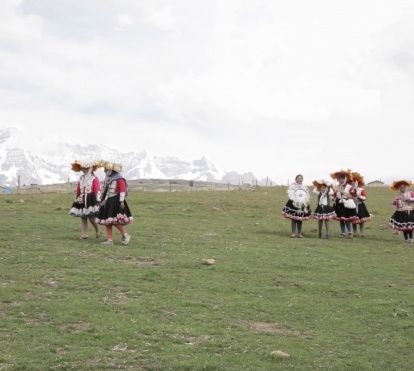
The opportunity was passed on to the families, who organised themselves to turn it into employment. “At the beginning, 33 families from four different communities decided to come together to work in community-based rural tourism,” Jiménez Serrano explains. This is how ATIPTALLA began to take shape in the communities of Pinchimuro, Marampaqui, Rodeana and Upis, in the district of Ocongate, Quispicanchi province, in the Cusco region.
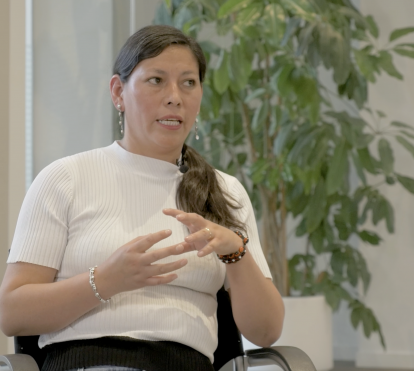
The collaborative process not only revealed tourism potential; it also brought a structural problem to light: violence against women. According to the technical coordinator of CODESPA Peru, “many cases of violence” were identified in Ocongate, linked to deep-rooted inequalities between men and women in access to education “in Peru in general, but even more so in rural areas”.
Jiménez Serrano explains that Andean women “don’t have paid work, cannot access decent employment and, as a result, are also more vulnerable to experiencing different forms of violence.” In this context, the creation of quality employment – in line with the principles of Work4Progress – also becomes a tool for preventing and responding to that violence.
Through ATIPTALLA, women not only earn an income but also gain autonomy. “Women become empowered as they receive training,” Jiménez Serrano explains. Today, she notes, “they can contribute to the household, they have a voice in decision-making because they provide financial support to their husbands and children, and as a result they’re more independent, their self-confidence grows, and levels of violence also begin to decline.”
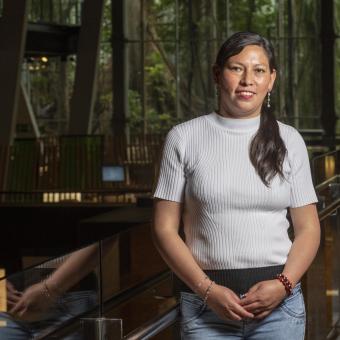
Marleny Condori, president of ATIPTALLA, sums up the before and after: “Before, we had no way of earning an income for our families […] we had no access to education, but now we do, thanks to this enterprise created by the ATIPTALLA association.”
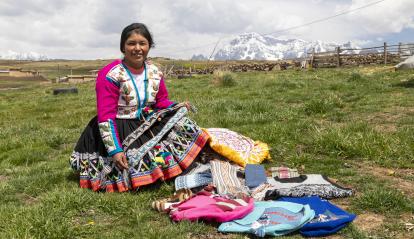
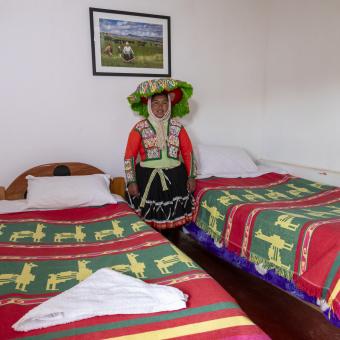
The work carried out over these years has now resulted in four tourism routes that combine local culture, ancestral knowledge and respect for the environment. The itineraries are built on CODESPA’s RUTAS methodology – which promotes inclusive tourism in Latin America – and the social innovation model of Work4Progress.
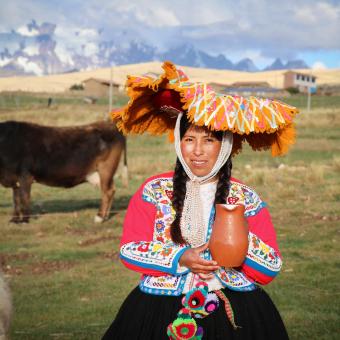
The first proposal is the Milk Route, where visitors take part in everyday activities such as “milking the cow, preparing dairy products such as cheese or caramel spread, and they can also enjoy tasting a selection of locally produced cheeses,” Jiménez Serrano explains.
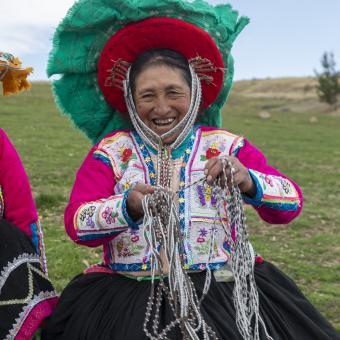
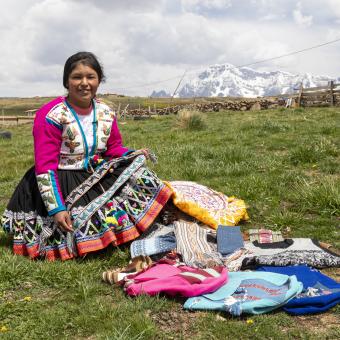
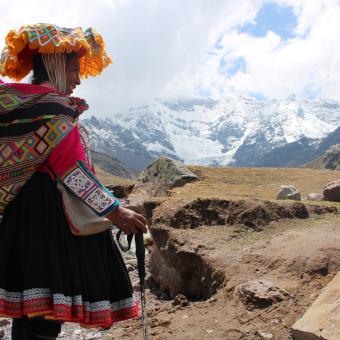
The Andean Textile Route invites visitors to discover “the process of spinning and dyeing using natural plants,” highlighting one of the most visible expressions of Andean culture.
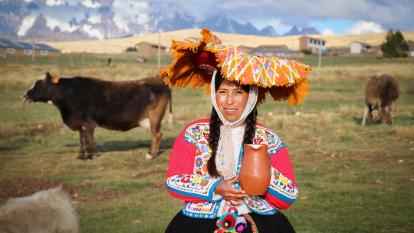
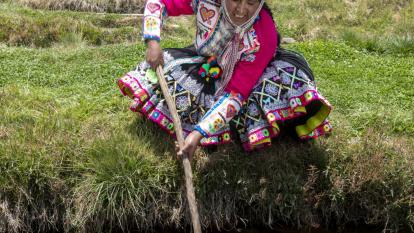
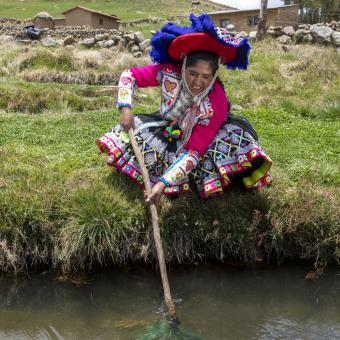
The third proposal is the Trout Route, focused on artisanal fishing in a high-altitude lake and on the preparation of “dishes based on trout”.
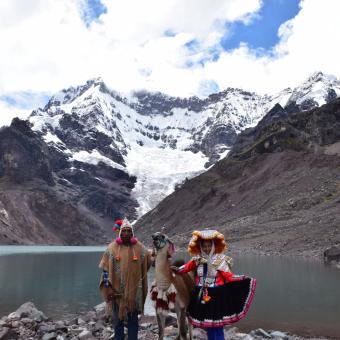
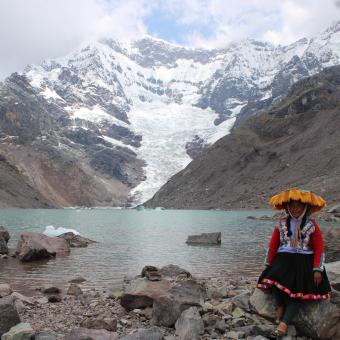
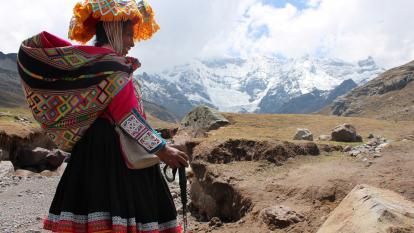
Finally, the Trekking Route runs along the slopes of Nevado Ausangate, the fifth-highest mountain in Peru. There, “in addition to enjoying spectacular views, visitors can take part in other traditional activities, such as the Pago a la Tierra”, a ritual of gratitude to Mother Earth that connects tourism with Indigenous worldviews.
Respect for the environment is not an add-on, but a cross-cutting pillar of the project. Care for the natural environment is deeply rooted in the local population and is reflected in every activity designed for visitors. During the walks, “they take care of their natural surroundings”, Jiménez Serrano notes. They are aware that “plants must be treated with care and not overexploited, and there are also specific reforestation activities.”
As for the waste generated by tourism, the guiding principle is clear: “Everything that is produced is also cared for.” This attitude, the coordinator explains, stems from a spiritual and everyday relationship with “Pachamama, Mother Earth”, which is “very deep”, because the communities always know “who provides us with resources”. That is why, she says, “they make use of them, but they also do so responsibly.”
Looking ahead to the future of ATIPTALLA, Jiménez Serrano stresses that “the benefits will be felt within families, in their immediate surroundings”. She points to a multiplier effect on “daughters, mothers, sisters”, who now see tourism as an activity that complements their daily tasks. “They don’t have to abandon tradition or neglect their families in order to provide these services. They’ve seen that they can generate an income and, of course, the expectation for the future is to continue growing.”
International recognition has come quickly. The community-based ecotourism prototype has been awarded the 2025 Indigenous Tourism Challenge, selected from 382 entries, by UN Tourism and the CAF. For Marleny Condori, president of ATIPTALLA, the award marks a turning point: she says she feels “very proud” and welcomes the fact that the prize will bring them “greater visibility and more visitors”.
The distinction “has been highly motivating for the organisation”, says Jiménez Serrano, highlighting the effort, resilience and determination of Andean women. Beyond the financial incentive, the importance of the award lies in the fact that “it is a recognition being given to the families, to the women.” ATIPTALLA shows that it is possible to generate “jobs for women who were previously marginalised in their own communities.”
The alliance between Work4Progress, CODESPA Peru and the Andean communities has thus translated into tangible impact on the ground. ATIPTALLA has become established as a model of inclusive rural development in which the community not only preserves its cultural heritage, but also turns it into a source of economic prosperity and environmental sustainability. Its experience is already resonating as a point of reference for women in rural communities around the world. In the words of its president, Marleny Condori: “We are women, and yes, we can.”