You are reading:
You are reading:
02.12.25
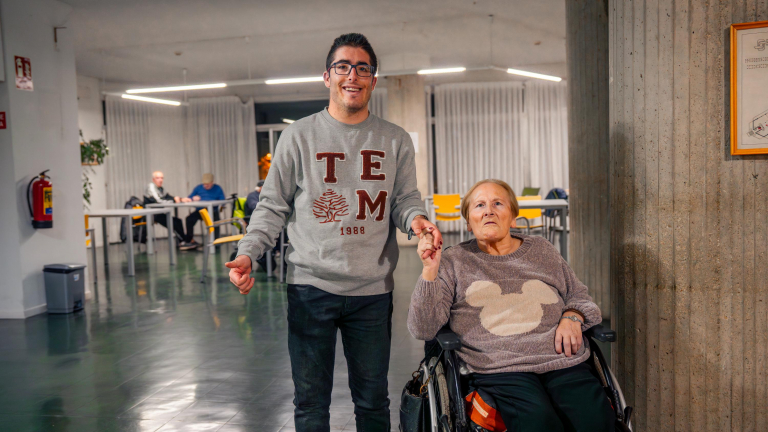
7 minutes readEvery fortnight, Adrián and Daniel, two young men with learning disabilities, volunteer at a care home in Ávila, spending the afternoon with Luisa and Luciano, two older residents who are single and without close family. They do so thanks to the support of Respirávila and its programme “I volunteer too”, selected in the 2024 Castilla y León social projects call of the ”la Caixa” Foundation. Coinciding with the International Day of Persons with Disabilities, their story invites us to change our perspective: to stop seeing people with disabilities as mere recipients of help, and to recognise them instead as citizens with full rights and the ability to support others.
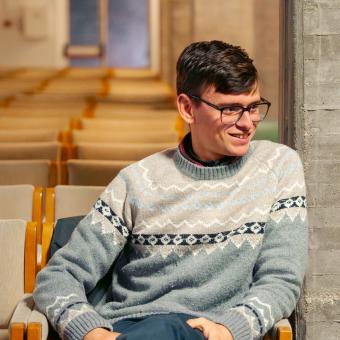
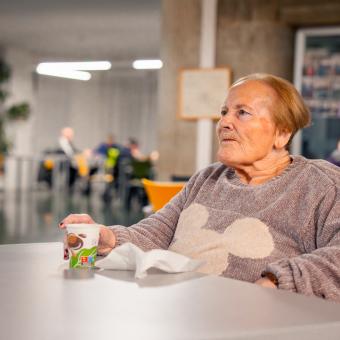
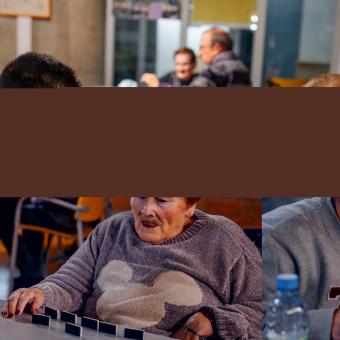
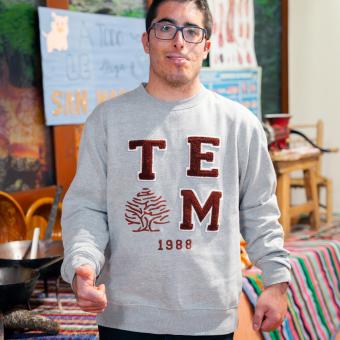
Adrián loves the way footballers Jude Bellingham and Kylian Mbappé play. “I support Real Madrid, but it’s very expensive to go to the stadium,” he admits. He is 24 years old and lives with his parents. Daniel is the same age, but he prefers rugby and strolling around the walled city. He knows it inside out. Luisa, who will soon turn 70, is more fond of playing dominoes and sitting at a café terrace for a drink. And Luciano, now in his nineties, who used to be a taxi driver and worked the land, remains loyal to bullfighting and to Real Ávila Football Club.
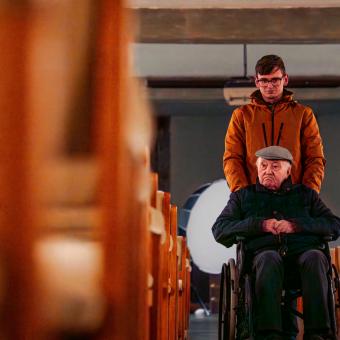
The four of them meet every other Wednesday at the same place: the care home for older people in the capital of Ávila, run by the regional government of Castilla y León. Adrián Casado and Daniel García work as volunteers there, and their role is to accompany Luisa and Luciano. And to make sure they have a good time.
Up to this point, it is a story that is repeated in many towns and cities. What sets it apart is that Adrián and Daniel are people with learning disabilities who have chosen to devote part of their time to improving the wellbeing of Luisa and Luciano. To make sure that loneliness does not dominate their daily lives.
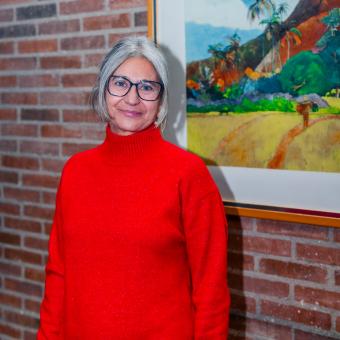
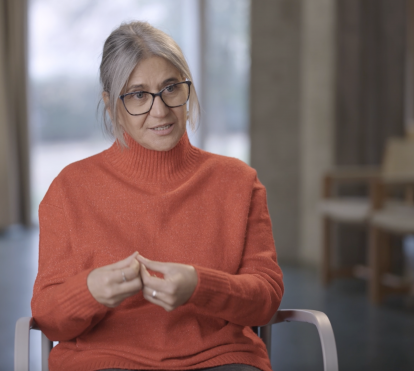
“We always see people with learning disabilities as recipients of help, not as people who can give help. That’s why the most important aspect of this project is the change in perspective. This change takes place within the volunteers’ families, within the community, and within the volunteers themselves. As volunteers, they boost their self-esteem, they do something valuable, they feel useful, and they build relationships within a group they belong to. And their families see their children as more capable, more responsible, more independent,” explains Elena Unquiles Cobos, coordinator of inclusive leisure at Respirávila, a non-profit association that gives families time for rest and respite, and the organisation behind the 2024 initiative “I volunteer too”.
This project is supported by the Calls for Social Project of the ”la Caixa” Foundation, which since their creation in 1999 have promoted more than 23,500 projects across the country, reaching over 10 million beneficiaries.
The project has been running for three years and includes 16 volunteers, as well as the association’s technical team and five personal assistants who attend to the volunteers’ individual needs, helping them carry out a role that fosters their autonomy and strengthens their abilities.
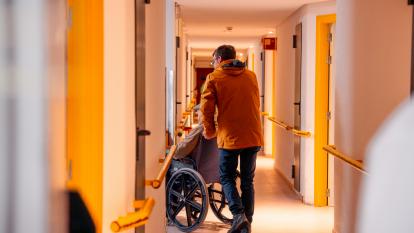
Under the motto “We all have something valuable to offer”, the volunteers, aged between 18 and 40, not only accompany older people experiencing loneliness, but also volunteer in animal shelters, food banks, charity runs, solidarity markets and sports organisations.
“They sign up, we hold a welcome interview where we look at what interests and availability they have and what motivates them. Then they choose the activity. It’s gone so well that we now have a waiting list,” Elena explains.
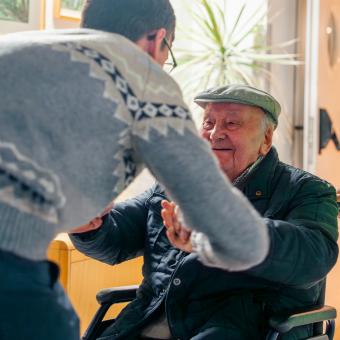
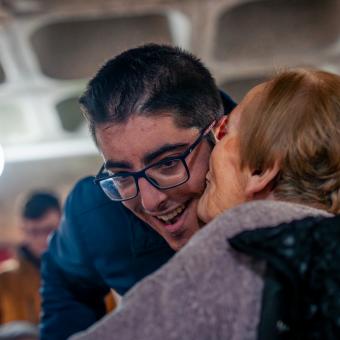
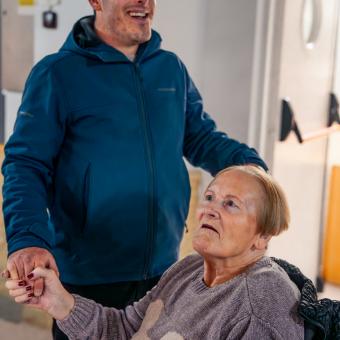
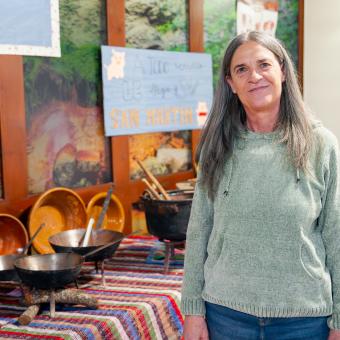
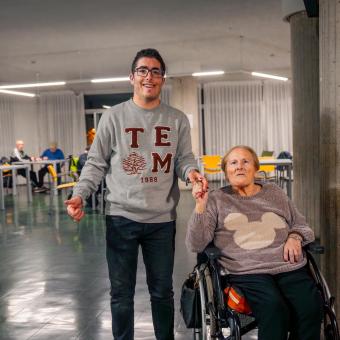
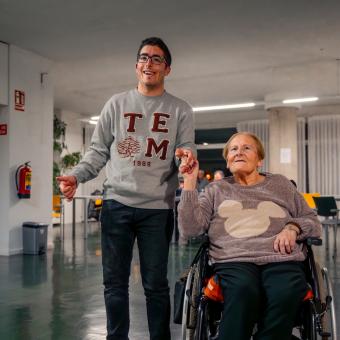
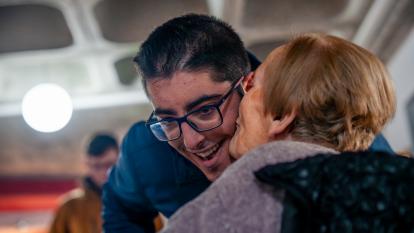
Luisa is about to leave her room. She is single, uses a wheelchair, has cognitive impairment, and the few relatives she has live far away. Her nails are freshly painted, and the moment she sees Adrián she greets him with a gesture of affection. Adrián, who has been waiting eagerly, takes her hand and showers her with kisses and hugs.
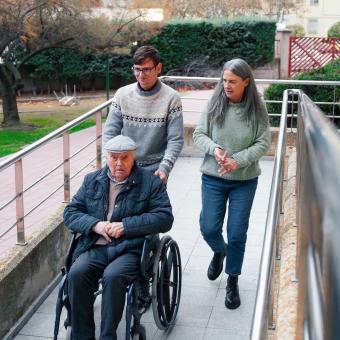
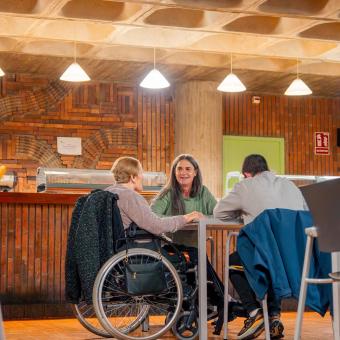
“Luisa is an older lady who struggles to get around and leave the care home. I usually help her put on her coat, then I put a bit of lipstick on her, and we go out for a stroll, to buy a lottery ticket or have a drink. She likes to have a small beer; I have a sugar-free cola, and Yolanda prefers a regular soft drink,” Adrián explains, without letting go of her hand.
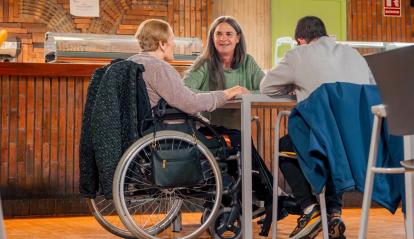
Yolanda Susan is the assistant who accompanies Adrián during his volunteering. She knows both of them best. Her role is to support Adrián during the two hours he spends with Luisa, making sure they both feel comfortable. “Adrián is a very considerate young man; he’s always attentive to what Luisa needs and he’s learned to handle the wheelchair really well. He’s the king of getting up and down kerbs!”
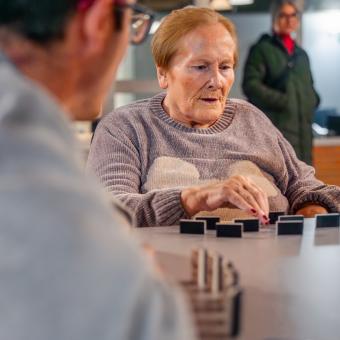
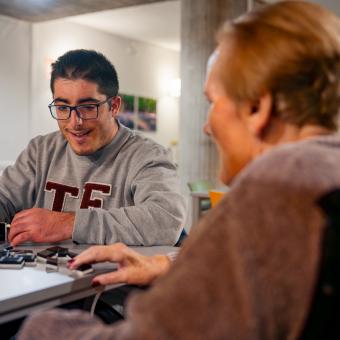
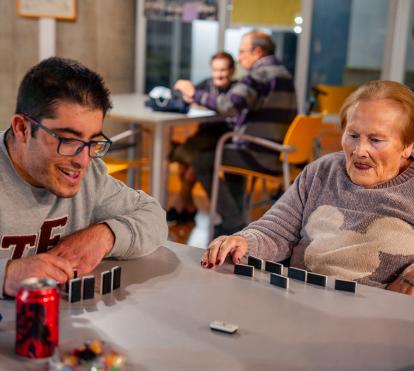
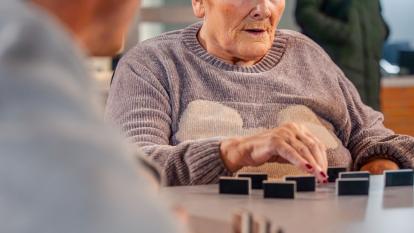
It’s cold in Ávila today, so they head to the care home café. Adrián gets some sweets, chocolate biscuits, a can of soft drink and a small bottle of water from the vending machine, and they settle down to play dominoes. He doesn’t take his eyes off Luisa, and she responds with knowing, affectionate glances. She hardly speaks.
“The role of assistants like Yolanda is essential. The programme wouldn’t have been nearly as successful without their mediation between the volunteers and the organisation. They provide support and guidance. In the case of Adrián and Daniel, their work is more about companionship, but there are people, for example, with visual impairments who need much more help from the assistants when they volunteer,” Elena explains.
For Adrián, choosing to spend his volunteering time with older people in the care home was an easy decision. He is used to enjoying time with his grandmothers. Every weekend he travels to Villoslada de la Trinidad, a 45-minute drive from Ávila, to visit them. He helps them in the vegetable garden and goes for walks with them, just as he does with Luisa at the care home.
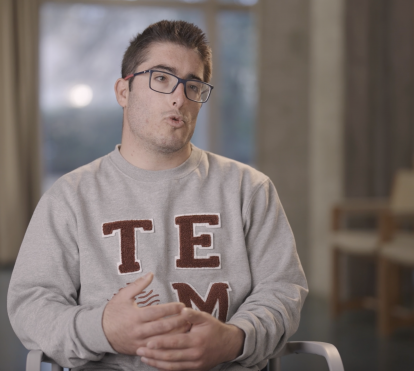
“The benefit is mutual: the volunteers help combat loneliness among older people, because the day they visit the care home is a break from their routine. But loneliness doesn’t only affect older people; many people with learning disabilities also find these activities the best antidote to their own loneliness. They have their families and the support of social organisations, but outside these they often have no friendship networks. They find it hard to take part socially, they don’t know what resources exist or how to access them, and this volunteering gives them other opportunities,” Elena explains.
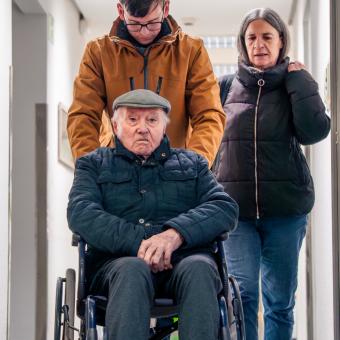
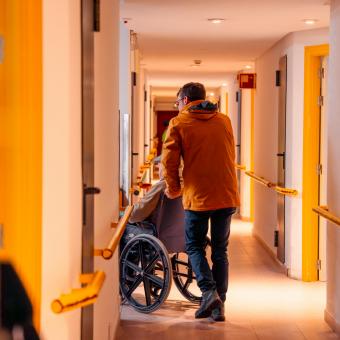
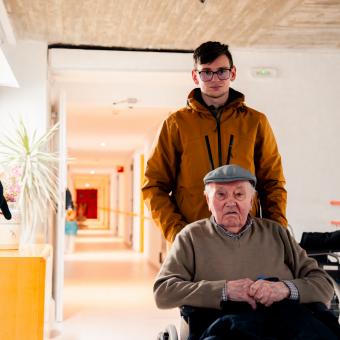
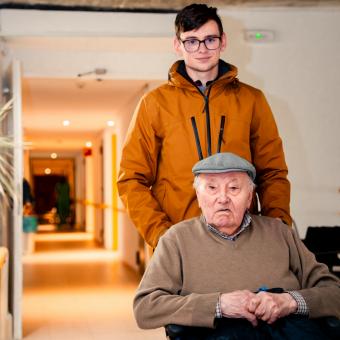
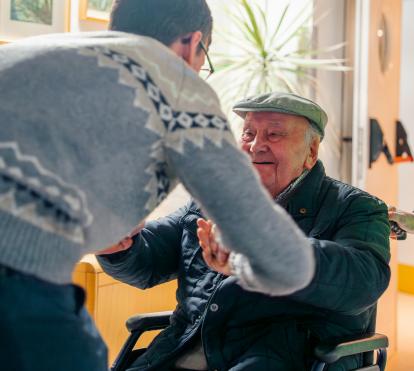
Down the corridor come Daniel and Luciano, a 90-year-old man who is also single. “Daniel is a really lovely lad. He comes here and we go out together, and he tells me all sorts of things. The other day we went to the football ground to watch Real Ávila against Numancia. It was absolutely freezing…!” says Luciano. Both say they had a great time, although they do not quite agree on the final score. In the end it was a goalless draw.
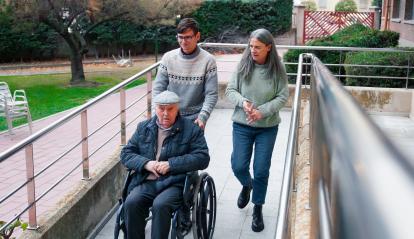
Daniel works from Monday to Saturday in a well-known supermarket in Ávila, and at weekends for a gardening company. He is a capable young man: “The volunteering programme has helped me switch off from work and make other friends.” As with Luisa and Adrián, today is not a day for going outdoors, so he accompanies Luciano to the television room to see whether there is a bullfight on. And if not, they play Ludo or cards.
Just like Daniel and Adrián, many other people with learning disabilities are also considering volunteering through Respirávila. “They don’t just want to help others; they also want more independence and for their parents to understand that,” admits Elena Unquiles. She still remembers when Adrián was not able to go out alone in the city. “For some time now, he’s been going on his own from his house to the care home, and he’s shown his family and himself that he’s capable of that and much more.”