You are reading:
You are reading:
20.01.26
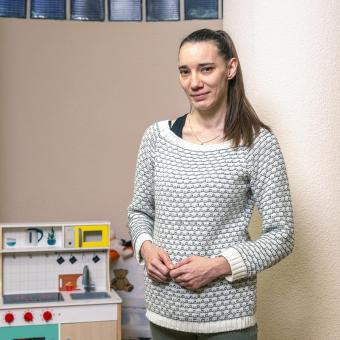
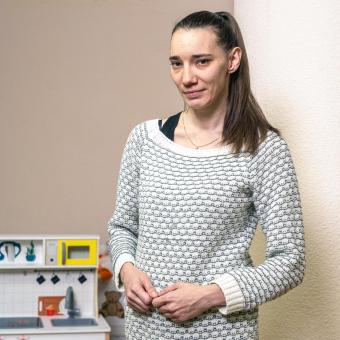
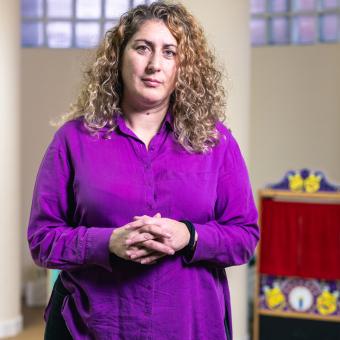
6 minutes readEvery morning, in a flat in Puente Vallecas, Ainhoa Torres serves breakfast to her three children. They are triplets, almost four years old: Naim, Nian and Asier. Ainhoa is 35 years old and has lived her whole life in the neighbourhood, one of the most disadvantaged areas of Madrid. There, she is raising her children while preparing to complete her secondary education (ESO) and find a job. Amid this daily struggle to make ends meet, the support provided by the ”la Caixa” Foundation through CaixaProinfancia has marked a turning point in this family’s life.
Vallecas is much more than a working-class neighbourhood, and the data paint a complex picture. It is one of the districts with the highest population density in Europe and also one of those with the highest levels of unemployment and school dropout in Spain. It accounts for 23.7% of the families receiving Madrid’s minimum income support (RMI). The district has the lowest gross annual income in the capital (€22,593) and also records one of the highest rates of homelessness in the entire autonomous community.
It is in this context that the Barró Association operates, a partner organisation of the ”la Caixa” Foundation’s CaixaProinfancia programme, which for 25 years has been providing socio-educational support to children and young people living in vulnerable circumstances. Its goal is to promote their social integration and break the cycle of poverty that is passed down from parents to their children.
Ainhoa Torres lives with her partner and their triplets in her parents’ home. “Without my parents’ help I wouldn’t be able to do anything,” she says. “We share the tasks of taking them to school, preparing meals and doing the housework.”
She explains that she was unable to complete compulsory secondary education (ESO) at the time, and it was precisely the birth of her children that pushed her to return to her studies. “I have to help them. Right now I don’t remember anything of what I studied, and if I don’t know anything, how can I help them? That motivated me enormously,” she reflects.
Ainhoa Torres, who is from Vallecas, has experience in the cleaning sector, but is currently unemployed and knows that the ESO certificate is also a requirement for entering the job market. “Without the ESO, nobody will hire me.” However, her academic commitments are subordinate to her children’s needs and to her partner’s split shifts. Ainhoa stoically describes her situation as “a bit complicated”.
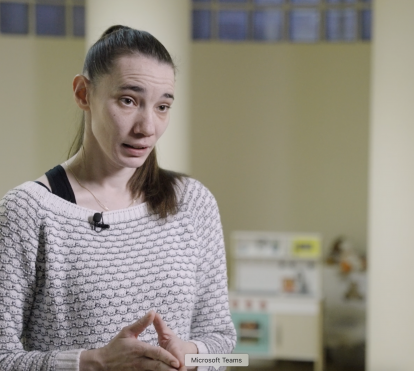
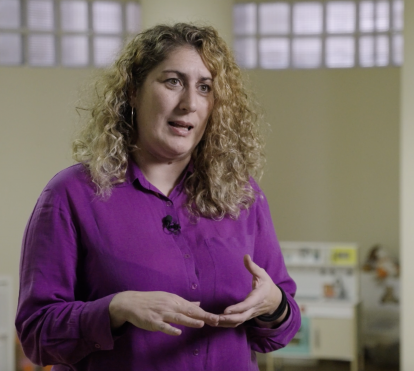
“Without a support network, these families are overwhelmed by constant problems. They carry very heavy loads,” says Elena Rebollo, a pedagogue and head of the Children, Youth and Family department at the Barró Association.
The organisation has observed how vulnerability has evolved over the years. “In general, we’re now working with a population experiencing very high vulnerability that is also multifactorial, meaning that multiple challenges converge within the same family,” Rebollo explains.
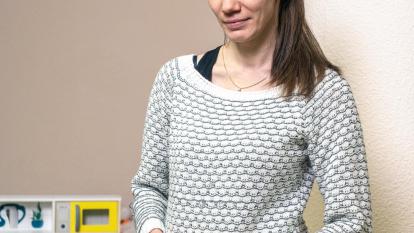
Breaking out of the spiral is difficult because precariousness affects every aspect of life: family and social relationships, mental health, academic outcomes and employment prospects. Rebollo illustrates this clearly: “If I have to worry about accessing decent housing, finding a job or keeping the fridge full, it’s difficult, for example, to keep track of my children’s schooling.”
According to the specialist, eight out of ten people who experienced poverty in childhood reproduce that situation when they start their own families. “Many of the parents we support do not feel capable of accompanying their children through the educational process because, essentially, they don’t know what it means to be supported themselves.”
In this context, having an organisation that can support and guide them can make all the difference. Poverty creates gaps, and the third sector tries to cushion their impact. “We are a lever,” the pedagogue maintains. “These children, in general, don’t believe in themselves, but when they find this support network, when organisations accompany them, they realise they can develop far beyond what’s usually expected of them. We encourage them to believe that they can.”
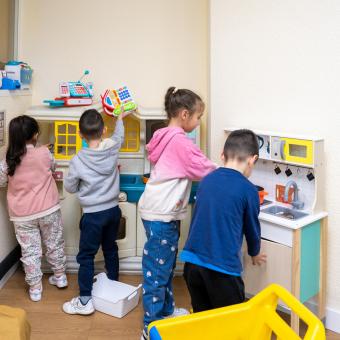
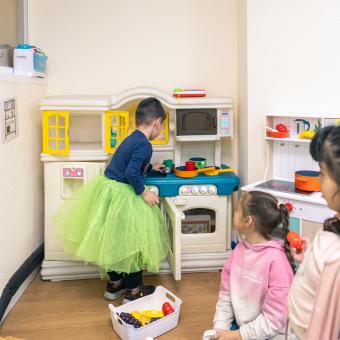
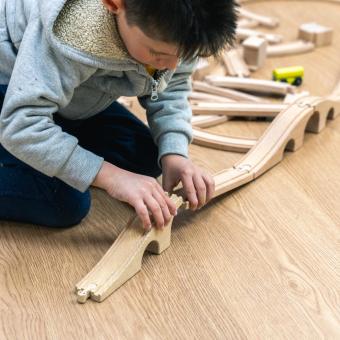
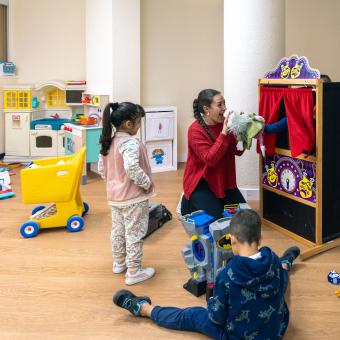
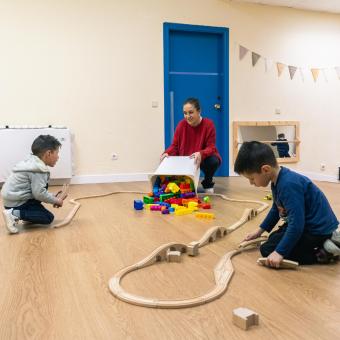
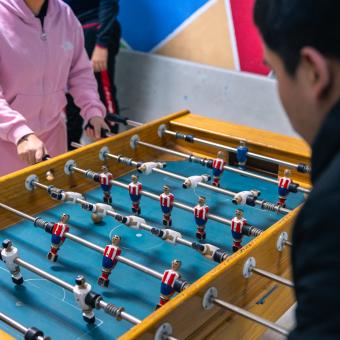
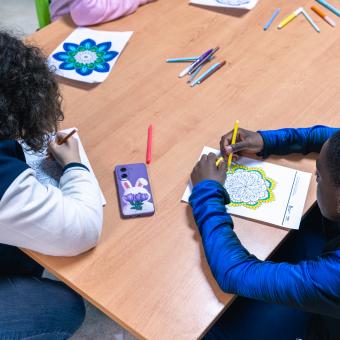
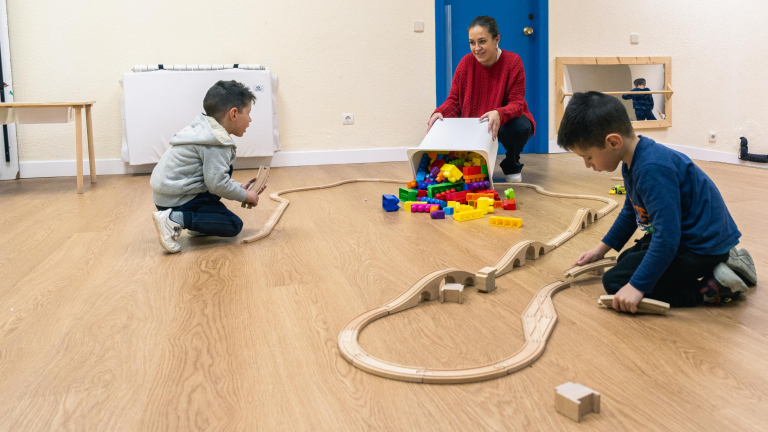
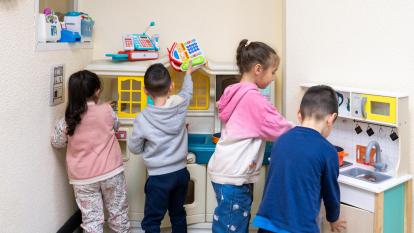
Naim, Nian and Asier attend the CaixaProinfancia 3-6 Growth Spaces at the Barró Association. For them, it is a different kind of afternoon activity: a safe place where they can learn and play. “They’re the ones who want to come,” their mother admits. Ainhoa is pleased because she sees that her children “learn much more and have fun”.
“The children we support start out in life from a very different position: they come from homes where it’s often difficult to study or concentrate, they don’t get enough rest, and sometimes they experience complex and unstable emotional situations that make it hard for them to cope with a school day in a normal way,” Rebollo points out.
Since 2007, CaixaProinfancia has supported nearly 400,000 children and young people across Spain through a network of more than 400 partner organisations. According to the pedagogue, the programme’s impact grows over time: families who have been involved for longer clearly notice the effects of the support and educational reinforcement.
The children learn how to prepare for exams, organise themselves better, and strengthen both their academic skills and their social and emotional abilities. “Having a space where they can work on all of this, express themselves freely and not feel judged has a huge impact on them,” she explains.
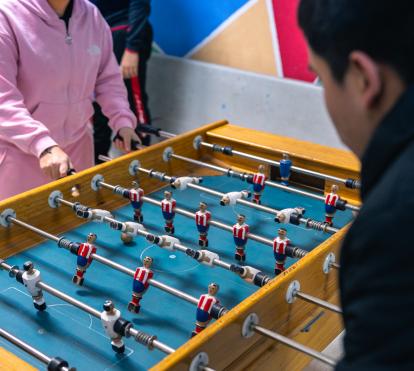
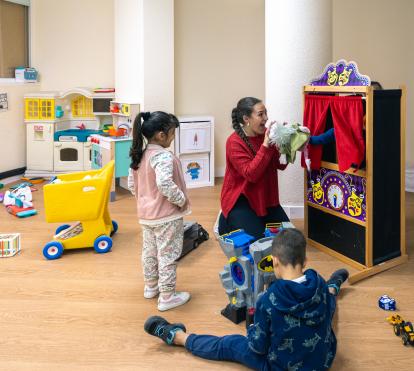
The feedback from the families is generally very positive. Over time, bonds grow stronger. “They see us as ‘family’, as a place where the doors are always open, where if they’re struggling they’ll be supported, where their successes will always be celebrated and they’ll never be judged,” says the organisation’s specialist.
Ainhoa speaks about the future with a mix of determination and restrained emotion. She carries years of precariousness and sacrifice on her shoulders, but clings to the hope that her children will have more opportunities than she did. “I’d like them to be more than I was, to go further. I got stuck at secondary school, and I’d like them to be able to go to university and aim for a good job.”
Her story does not erase the difficulties, but it does introduce a decisive element: she is no longer alone. She has a support network, a qualification on the way, and three children who, in the afternoons, play and learn in a space where someone reminds them every day that they can go further.