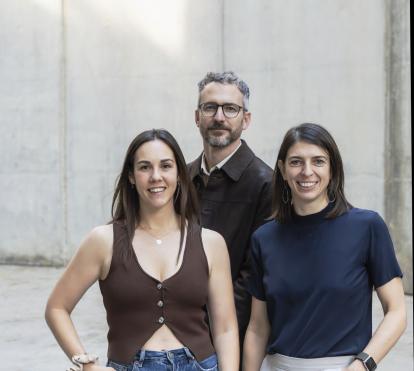
The CaixaResearch Institute continues to attract talent and has welcomed three new researchers in immunology
02.12.25
6 minutes readThe CaixaResearch Institute will be welcoming three new group leaders who will bring their expertise to expand the study of immunology in health and disease. With these additions, there will be five active research groups when the institute begins its research activity in 2026. Thanks to these scientists, the institute will deepen our understanding of how the immune system works, the body’s first line of defence.
Gemma Moncunill, an immunologist specialising in vaccines and infectious diseases, will be joining the institute in December from the Barcelona Institute of Global Health (ISGlobal), where she focused on malaria and COVID-19, initially as an assistant research professor and later as a senior research leader. Dr Moncunill, who will maintain collaborative projects with ISGlobal, has led international studies aimed at identifying predictive markers of vaccine efficacy and understanding the mechanisms of protection against infections. Her research shows that an individual’s immune status prior to vaccination determines both the response to the vaccine and the level of protection achieved. At the institute, Moncunill will establish her own research group dedicated to improving the effectiveness and duration of vaccines, particularly in vulnerable populations, and to understanding the impact of infections on the immune system.
Also joining the institute are two Spanish talents who until now have been conducting research at centres abroad. On one hand, immunologist Héctor Huerga Encabo, who is completing his postdoctoral research at the Francis Crick Institute in London. His work focuses on clonal haematopoiesis, which involves the accumulation of mutations in blood stem cells, a very common process during ageing. Huerga Encabo, who will join the CaixaResearch Institute this December as a junior group leader, has demonstrated that these mutations evolve in response to certain environmental stressors and affect the development and functioning of cells involved in innate immunity, such as neutrophils and monocytes. His research programme will aim to identify markers that can predict which individuals are likely to develop pathologies associated with clonal haematopoiesis, including cancer and cardiovascular conditions.
On the other hand, the immunologist from Murcia, María Martínez López, who is currently pursuing her postdoctoral research at the Champalimaud Foundation in Lisbon with a Junior Leader Fellowship from the ”la Caixa” Foundation, will join the new research centre in Barcelona as a junior group leader once she completes her postdoc in July 2026. Martínez López is an expert in dendritic cells, which coordinate the immune response. Her neuroimmunology research explores the activity of dendritic cells, which is modulated by the interaction between the immune and nervous systems. In particular, she is investigating how stress can influence processes related to the development and progression of cancer.
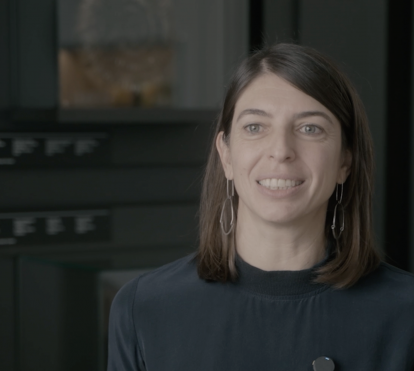
The CaixaResearch Institute's Internal Scientific Committee led the selection process. The new appointments, which were announced at the meeting of the Board of Trustees of the CaixaResearch Institute, chaired by Isidre Fainé, chairman of the ”la Caixa” Foundation, and with Javier Solana as a member, are aligned with the 2025-2027 Kick-off Plan of the CaixaResearch Institute. The plan set its top priority as achieving scientific excellence and generating new knowledge in immunology, in order to provide solutions for infectious diseases, global health, cancer and neurological diseases, among other fields. To meet this objective, the institute began setting up its first research groups at the end of 2024.
The new centre of the ”la Caixa” Foundation introduced its first two group leaders a few months ago. One of them is neurologist Josep Dalmau, renowned for discovering several autoimmune encephalitis syndromes. He will hold a dual position shared between IDIBAPS and the CaixaResearch Institute, and has just been awarded the National Research Award in the Gregorio Marañón category, granted by the Ministry of Science, Innovation and Universities.
The other is biochemist Gabriel Rabinovich, who will hold a dual affiliation with the Institute of Biology and Experimental Medicine (IBYME, CONICET-FIBYME) in Argentina. Among other discoveries, he identified the role of galectin-1 in promoting immune tolerance, which has implications for cancer and autoimmune disease treatments. In one of his first studies as a researcher at the institute, conducted by research teams from Hospital del Mar, IIBB-CSIC-IDIBAPS and the Mayo Clinic, Rabinovich helped shed light on the role of galectin-1 in the aggressiveness of pancreatic cancer.
Over the coming months, the CaixaResearch Institute will identify new group leaders, with the expectation of having twelve research groups by the end of 2027. At the same time, the institute is building a research support team, which currently consists of six professionals.
A
cutting-edge, collaborative facility within the research ecosystem
In addition to attracting talent, the CaixaResearch Institute is currently working to further strengthen its ties with the health and research ecosystem, in line with the collaboration agreement signed between the ”la Caixa” Foundation and the Government of Catalonia. Alongside its existing partnerships with research centres linked to the Foundation, the institute is also working to establish alliances with various research centres to share scientific equipment.
At present, construction work continues in Barcelona on the buildings of the future CaixaResearch Institute, located opposite the CosmoCaixa Science Museum. The centre, designed by TAC Arquitectes following the highest sustainability and environmental protection standards, will be connected to CosmoCaixa, making it possible to create a world-class scientific campus at the foot of the Collserola Natural Park.
The ”la Caixa” Foundation will invest 100 million euros in the construction of the CaixaResearch Institute. The first of the two buildings that will make up the institute is scheduled to come into use at the end of 2025, and once fully completed the facility will offer 20,000 m2 of state-of-the-art infrastructure for scientific activity, including wet and dry laboratories, scientific and technical services, and innovation areas.
Josep
Maria Campistol, a new addition to the Scientific Committee of the ”la Caixa”
Foundation
In addition to the Board of Trustees of the CaixaResearch Institute, the Scientific Committee of the ”la Caixa” Foundation also met, welcoming a new member: nephrologist and CEO of Hospital Clínic de Barcelona, Josep Maria Campistol, author of more than 800 scientific publications, who combines his clinical practice with teaching as Professor of Nephrology at the Universitat de Barcelona.
The Scientific Committee, whose main functions are to propose the entity’s scientific policy priorities, evaluate the actions carried out and identify initiatives that could serve as international benchmarks, is made up of members of the Board of Trustees of the ”la Caixa” Foundation, renowned scientists, and an executive team from the Foundation itself.
Josep Maria Campistol joins the Scientific Committee, chaired by Javier Solana, whose scientific members include the physicists Juan Ignacio Cirac and Lluís Torner; the cardiologist Valentí Fuster; the biologist Ángela Nieto; the neurologist Catarina Oliveira; the oncologist Josep Tabernero; the neurobiologist Rafael Yuste; and the chemist Carmen Vela. The committee also includes several representatives of the ”la Caixa” Foundation, such as its chairman Isidre Fainé; general manager Josep Maria Coronas; deputy general manager Esther Planas; assistant general manager for Research and Fellowships Àngel Font; and vice-chairman Javier Godó. The economist Andreu Mas-Colell is also a member.
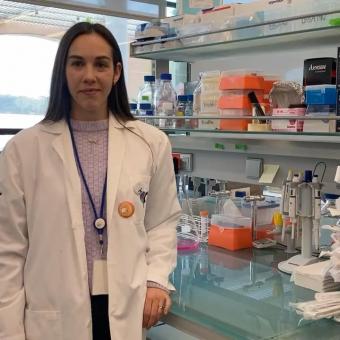
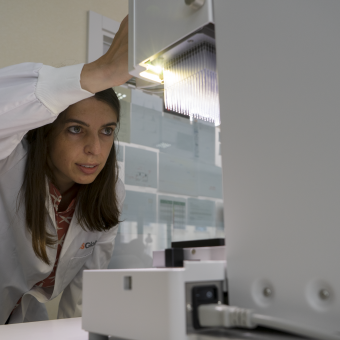
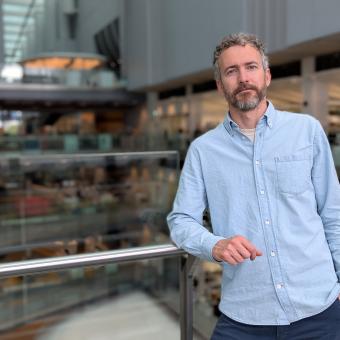


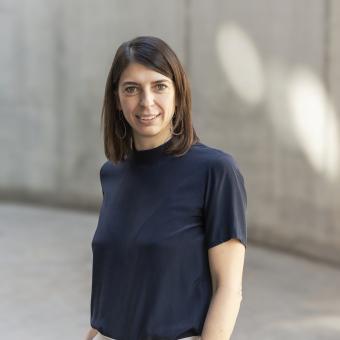
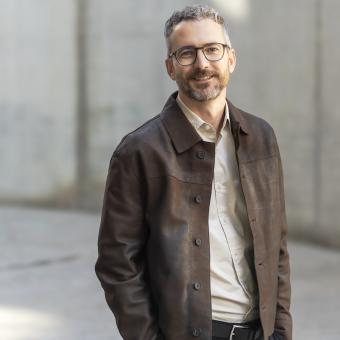
Statements from Héctor Huerga, María Martínez and Gemma Moncunill, new researchers at the CaixaResearch Institute.
- Imágenes
- Videos
- Audios
Barcelona23.06.25Rabinovich: “Immunotherapy could treat all diseases with an inflammatory background”
His research into the role of galectins in the immune system, which has opened up new pathways for treating cancer and autoimmune diseases, has established him as an international leader in his field.
Read more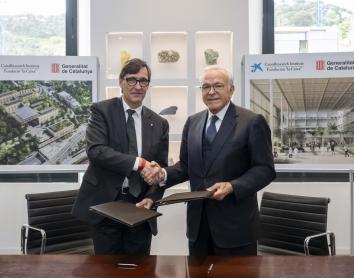
- Imágenes
- Notas de prensa
Barcelona16.04.25The Government of Catalonia and the CaixaResearch Institute join forces to promote the research ecosystem
The president of the Government of Catalonia, Salvador Illa, and the chairman of the ”la Caixa” Foundation and chair of the Board of Trustees of the CaixaResearch Institute, Isidro Fainé, have signed a collaboration agreement between the two institutions.
Read more