You are reading:
You are reading:

December draws near, the streets fill with lights, decorations take over the shops, and diaries become packed with dinners, toasts and family gatherings. Christmas brings with it a shared collective image of celebration and joy, almost an obligation to feel happy, which clashes head-on with the reality faced by those who are going through bereavement. To support these people, the Comprehensive care for people with advanced illnesses programme of the ”la Caixa” Foundation is promoting the meetings “It’s Christmas and there’s an empty chair”, spaces where experiences and guidance are shared on how to live through this time of year.
The emotions of grief – sadness, anger, fear, nostalgia, loneliness – do not change at Christmas, but they do intensify. “It isn’t just a significant day; it’s whole weeks of feeling the pressure from those around you to be okay,” explains Marta Gutiérrez, a psychologist specialising in grief with the Mutuam psychosocial care team (EAPS), part of the Comprehensive care for people with advanced illnesses programme of the ”la Caixa” Fondation.
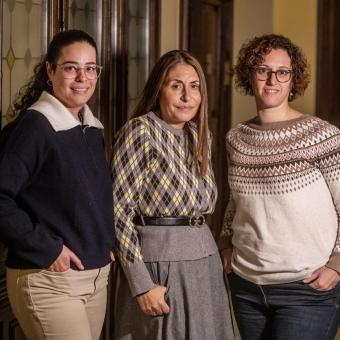
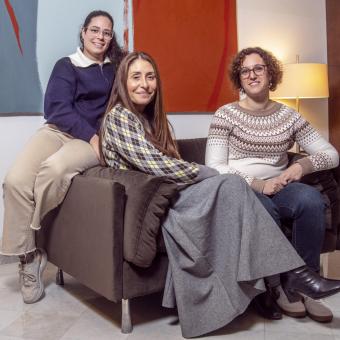
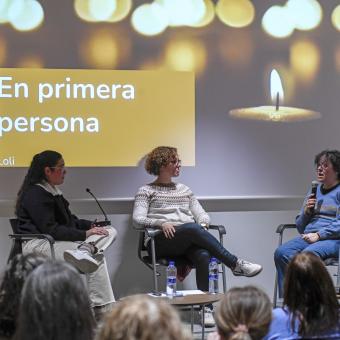
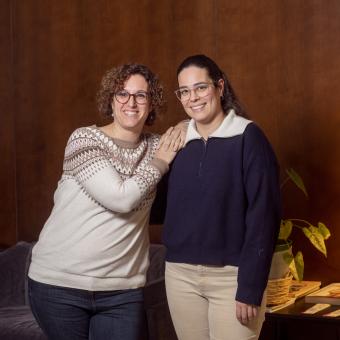
Marta Gutiérrez and her colleague Elisa Sanz, also a psychologist with the programme, lead the talks in Barcelona. These gatherings, held in different parts of Spain, offer guidance on emotional coping and, above all, create a space where those attending can share their feelings and reflections and feel listened to, recognised and understood, challenging the notion that grief must be endured in silence and alone.
One of the most frequent remarks is about the exhaustion caused by the emotional marathon that Christmas has become – practically from the end of November, with the switching-on of lights in many cities. “A lot of people tell us, ‘I wish I could close my eyes and wake up on 7 January’,” says Sanz.
One of the main concerns for those grieving during the festive season is “the fear of breaking down and not knowing whether they’ll be able to manage the flood of emotions,” Sanz explains. “Many try to protect others from their feelings of grief because they don’t want to spoil things for them, but also because they don’t want to show their own vulnerability,” she adds.

This attempt to “look after” those around them so as not to add to the shared pain leads many people to withdraw and avoid expressing what they are feeling, making it harder to achieve the very connection they need to get through this stage. “Our experience tells us that when people share and acknowledge their pain, that inner burden becomes much lighter,” says Gutiérrez.
Grief cuts across all generations, and that includes children and older people as well. In the case of the very young, the psychologists stress that “above all, we must allow them to be and behave like children,” even if their apparent emotional rollercoaster can unsettle adults. “They can be very sad and, two minutes later, be happily playing. It’s important to respect that fluctuation, because it’s a tool they have,” the psychologist points out.
They also advise against excluding them from decisions about how these days will be spent. It helps to adapt language to their age and, in particular, for adults to name their own emotions, so that children can more easily recognise and express theirs.
With older people, the priority is not to decide on their behalf, but to ask them directly how they would like to spend the festive season, setting aside the social expectation that everyone must be together at Christmas. “When they’re going through a difficult time, there are moments when they will need to be alone, and it’s important that we understand and respect that, while letting them know that we’re available if they change their mind or need us,” Gutiérrez says.
During the festive season, each person faces grief in their own way; even within the same family, needs can be very different. That is why, the psychologists emphasise, it is essential to recognise and respect these differences: “If I don’t communicate what I need and you don’t tell me either, it will be difficult to reach an understanding and we may have an unexpected emotional reaction.”
To answer the question “What do I need?”, it is essential to understand what we are feeling. “Emotions are neither positive nor negative; they are pleasant or unpleasant, but all of them carry a message and explain something that’s happening to us,” Sanz says. Hence the importance of expressing them naturally rather than suppressing them. “Holding things in is the gateway to anxiety, which often appears when we feel social pressure to keep up traditions,” she argues. Even the same person can live with different emotions at the same time.

However, it is not always easy to know what one is feeling. Grief is a constant ebb and flow and sometimes leads to emotional blockages. Ana García Jorodovich, who attended the talk in Barcelona, lost her mother four years ago: “When she died, I fell into a depression in which I couldn’t get out of bed and did nothing but sleep and cry.”
Ana recalls those first Christmases without her mother in a state of shock: “It was as if I hadn’t lived through them at all. My children and my husband put themselves in my place and respected me at all times. We went to a house we have in Girona, surrounded by nature, and I did little more than go for long walks.”
Christmas was closely associated with her mother: “I couldn’t imagine not going to her house. Together with my sister, the three of us would cook there, put on our music, raise a toast together… Those first Christmases, we didn’t even know where to sit.”
In the years that followed, Ana moved through different ways of experiencing Christmas, depending on what she needed at each moment, always supported by her family. “The second Christmas was completely different. We went to a hotel, booked ourselves into a spa and then had dinner there. We broke with tradition, and it wasn’t bad at all. We even told jokes at the table,” she recalls.
The arrival of her granddaughter also transformed her view of these festivities: “Becoming a grandmother changed me. My granddaughter brought me a joy that you can’t understand until you experience it yourself. She made our Christmases beautiful again.”
For Ana, the unconditional support of her loved ones and the flexibility with which they have accompanied her have been key to coping with grief at Christmas. “My children and my husband have always been there whenever I’ve needed them, without overwhelming me, giving me my own space and time. That’s crucial, because if you don’t feel understood, you retreat into your shell,” she says.
Alongside family support, Ana García experienced a turning point when she began therapy with psychologist Marta Gutiérrez: “Eight months after my mother passed away, I started therapy, and it helped me enormously. I began to work through my grief and ended up opening myself up completely. I think it was the best decision I ever made.”
Asking for help was the push she needed to move forward: “If you don’t ask for help, you can end up isolated for years. Thanks to therapy, I’ve been able to find myself again and I’ve learned to manage what I feel. Marta gave me perspectives that I simply couldn’t see,” she says. “By listening to the person, exploring their environment, their resources, their life story, the bond they had and the nature of their loss, we can offer support and provide more specific recommendations,” Gutiérrez confirms.
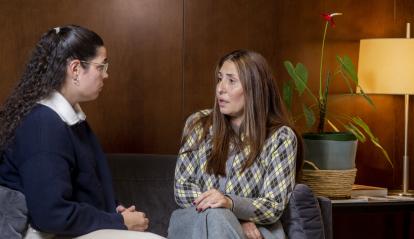
According to the psychologists, there are no standard guidelines for coping with grief, but there is one piece of advice that applies to everyone: “The recommendation is to give yourself a moment to stop and check in with how you are and what you need,” Sanz acknowledges. “Grief is a process that stops us in our tracks. We have to give ourselves permission for feelings to surface. You may feel one thing at one moment, and half an hour later something entirely different. Everything is valid when we’re grieving.”
Although death and grief are being talked about more and more, they remain taboo subjects. Both Gutiérrez and Sanz agree that talking about them and agreeing on what one wants to celebrate, and what one doesn’t, helps those around us to offer the support that is needed: “It’s as simple as listening and being honest. You can say, ‘Look, I would really like this, but I don’t feel up to it’.”
For the psychologists, it is just as valid to rethink traditions as it is to maintain family Christmas celebrations while keeping in mind the person who once occupied that now-empty chair. “Small gestures, such as a few words in a toast or sharing anecdotes to remember the person who is no longer there, are very helpful. They help avoid that ‘elephant in the room’ effect that no-one talks about, and release tension,” they explain.
At this time of year, so strongly associated with joy and family gatherings, pausing to listen to one’s own emotions, easing expectations and opening up honest conversations that allow feelings to surface can be of great help in coping with grief. And if that journey is shared – whether with family members, friends, professionals or groups of people going through similar situations – it becomes easier to find a new way of inhabiting these festivities and to begin living with the absence that empty chair represents.