You are reading:
You are reading:
14.07.26
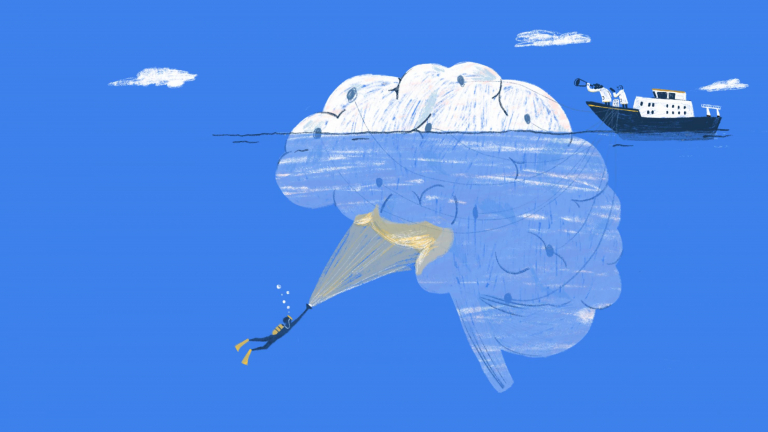
9 minutes readRamón y Cajal conceived of the brain as a vast garden, a dense forest teeming with connections and cells of different kinds, capable of governing our organism. Despite major advances, this network of 86 billion neurons remains a mystery. Two research projects supported by the ”la Caixa” Foundation’s Health Research calls now highlight the unexpected link between our most complex organ and conditions as diverse as cachexia, obesity and infertility.
The neuroscience community does not even know the precise number of cell types that make up the brain, a challenge that various projects have sought to resolve. The most prominent of these is the BRAIN Initiative, which in November 2025 presented its draft map of the brain during its developmental stage. Through the analysis of more than 1.2 million cells, researchers have succeeded in producing the first cellular and genetic atlas of the developing brain.
This historic milestone, the results of which have been published in 12 articles in the journal Nature, represents one of the latest advances in our understanding of the brain. On the one hand, it has expanded knowledge of neuronal cellular diversity; on the other, it has provided vital information for understanding how and at what stage of development disorders such as autism, schizophrenia and ADHD originate.
Mental and neurological diseases are not, however, the only ones with a close link to the brain. As the control centre of our body, it also directly affects conditions or imbalances which, at first glance, may not appear to be related to brain activity.
A clear example is the gut–brain connection – a field of study currently experiencing rapid growth, which was the subject of a debate organised by the ”la Caixa” Foundation – but also a number of research projects supported by the Foundation that have revealed that the brain plays a surprisingly crucial role in conditions such as cancer cachexia, obesity and human fertility.
Miguel López, professor at the CiMUS research centre in Santiago de Compostela, is the researcher leading two initiatives that have revealed the surprising links between the brain and two metabolism-related conditions: obesity and cancer cachexia. His projects received funding in the ”la Caixa” Foundation’s Health Research calls of 2019 and 2025 respectively, and their results are already beginning to translate into potential benefits for patients.
Obesity and cachexia are two radically opposed processes. The former consists of the chronic accumulation of fat, while the latter involves severe weight loss in patients with advanced cancer. However, they share a common feature: their effect on the hypothalamus, a region of the brain. “The hypothalamus is a data control centre in the brain. It receives information, decodes it and carries out the appropriate homeostatic response. It decides on all the basic processes necessary for the body’s survival,” explains López. These include metabolism, temperature, food intake, reproductive function and the sleep–wake cycle.
His group at CiMUS has focused on this area of the brain, vital for metabolism, in order to decipher cachexia, a degenerative syndrome that causes the death of more than a third of cancer patients. “Cachexia involves weight loss, asthenia, loss of appetite, an apathetic mood, metabolic alterations, and a massive loss of muscle mass and body weight experienced by patients in advanced stages of cancer. It is a global, systemic and metabolic degeneration that accompanies cancer,” explains the researcher.
People usually attribute these symptoms to the effects of chemotherapy. Now, López’s team is going a step further. “Our hypothesis is that, while the tumour is the primary trigger, what causes the entire metabolism to break down, to collapse, is that it affects the hypothalamus,” he explains.
The tumour secretes factors that affect the immune system, but it also releases circulating and neural signals that directly impact the brain. “The hypothalamus is like an orchestra conductor. It receives the information that the musicians send it and issues instructions so that the symphony is performed properly. If one musician makes a mistake or plays out of tune, the conductor can correct it without it being too noticeable. But if it starts receiving many uncoordinated signals, the whole melody falls apart. The conductor, the hypothalamus, won’t be able to control it,” explains the neuroendocrinologist. This causes the adaptive system to collapse, leaving it unable to adjust and affecting the patient irreversibly.
This hypothesis, put forward by the team and supported by experimental data, has already led to the development of a treatment aimed at targeting the hypothalamus and correcting cachexia. The speed of this progress is due to the prior work López carried out leading another research project in 2019, which linked obesity to this same area of the brain.
That study enabled his CiMUS laboratory to characterise, with remarkable precision, metabolic pathways in the hypothalamus which, as he points out, “are now part of the textbooks”. Above all, however, it made possible the development of a groundbreaking pharmacological strategy based on nanotechnology and the use of exosomes. These extracellular vesicles act as “instruction-bearing envelopes” at the molecular level, small enough to cross biological barriers such as the blood–brain barrier, which regulates the passage of molecules from the bloodstream to the brain. Once inside, they can be directed with ultra-high specificity towards target cells in order to modulate the function of specific proteins.
Unlike highly popular treatments such as Ozempic or Mounjaro, whose effectiveness lies in reducing food intake, the solution developed by López’s team offers far greater therapeutic versatility because it enables the regulation of metabolism as a whole. The use of exosomes can not only help to reduce patients’ food intake, but can also stimulate energy expenditure. Moreover, exosomes allow for more specific targeting, meaning they could be used to treat other conditions, such as cachexia or ischaemic stroke.
This highly disruptive approach has already demonstrated its efficacy in preclinical models, and the patent, recently approved in the United States, has led to the creation of the company Gazella Biotech. Through this venture, the researchers plan to begin the first clinical trials in humans within the next two to three years, while also paving the way for Lyrea Biotech, a second spin-off company emerging from this project and focused on applying the same technology to treat ischaemic stroke. The process has been supported by the ”la Caixa” Foundation, an impetus which, as López notes with gratitude, “has revolutionised biomedical research in Spain”.
If the link between weight imbalances and the hypothalamus opens up new avenues of research, the finding led by Eva González Suárez at the Spanish National Cancer Research Centre (CNIO) in Madrid redefines what we knew about human reproduction. Her group, which specialises in breast cancer and is supported by the ”la Caixa” Foundation’s 2023 Health Research call, has identified a key component for fertility within the brain’s immune cells.
Paradoxically, her research did not begin with the intention of delving into neurology. It started as a project to decipher the role of the RANK protein in breast cancer treatments. However, scientific curiosity and the team’s ability to “think outside the box” ultimately opened up a new and unexpected line of research.
When analysing animal models in which the RANK protein was non-functional during puberty, they observed that mammary development came to a dramatic halt due to a drop in sex hormones. “That’s when we began to investigate where this fall in oestrogen might be coming from […] We started by exploring this axis at the level of the gonads, then the pituitary gland, and finally the hypothalamus, thus entering this new field,” she explains.
When they turned to the hypothalamus to identify which cells expressed the RANK protein, they discovered that the highest levels were found in microglia, which are immune cells that reside in the brain. “We discovered that GnRH neurons, which regulate the fertility axis in the hypothalamus, could be affected by these immune cells. This is the novelty of the finding: that microglia regulate fertility neurons, and do so through the RANK protein,” says González.
This milestone opens the door to future clinical applications, particularly “in diagnosis, because there are many problems associated with reproduction or fertility whose cause remains unclear, and this opens up a new avenue for identifying and investigating a biomarker,” the researcher explains.
But it also raises new avenues of research. “Microglia are involved in many conditions regulated in the brain, from cancer and brain metastases to Alzheimer’s and Parkinson’s. This means there’s a possibility that the RANK protein may be regulating these processes in microglia, processes that have not yet been studied and which generate new questions,” she explains.
This finding, González explains, would not have been possible by following traditional avenues of scientific research. “The system is set up in such a way that it favours small steps, where you delve just a little deeper into the discovery of something that’s already known […]. This work represents a completely different approach, in which you come across something curious or unexpected outside your experience or usual line of research, and you make sense of the data little by little,” she reflects.
In this respect, the support provided by the ”la Caixa” Foundation proved decisive, “both for the funding it provides and for the level of trust it places in researchers to allow them to pull on that thread”. That trust enabled them to open up a new avenue of research and to discover that the brain still holds many mysteries yet to be solved.