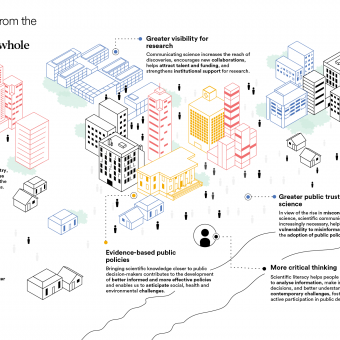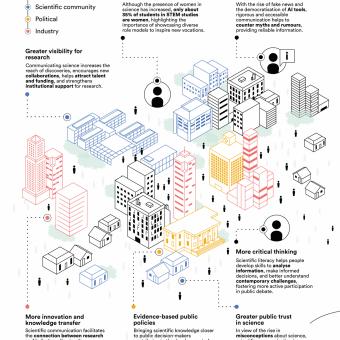
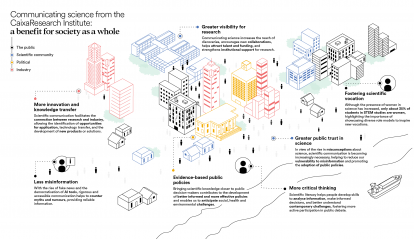
Scientific outreach is essential to strengthen the role and contribution of science in addressing today’s societal challenges. In a global context marked by uncertainty and constant change, the synergies between the CaixaResearch Institute, CosmoCaixa and the CaixaForum network of centres will make it possible to disseminate cutting-edge research as rigorous, socially impactful science in engaging and accessible formats for all citizens. In doing so, they will not only foster a better understanding of science, but also encourage informed public debate on research outcomes and their impact on everyday life.
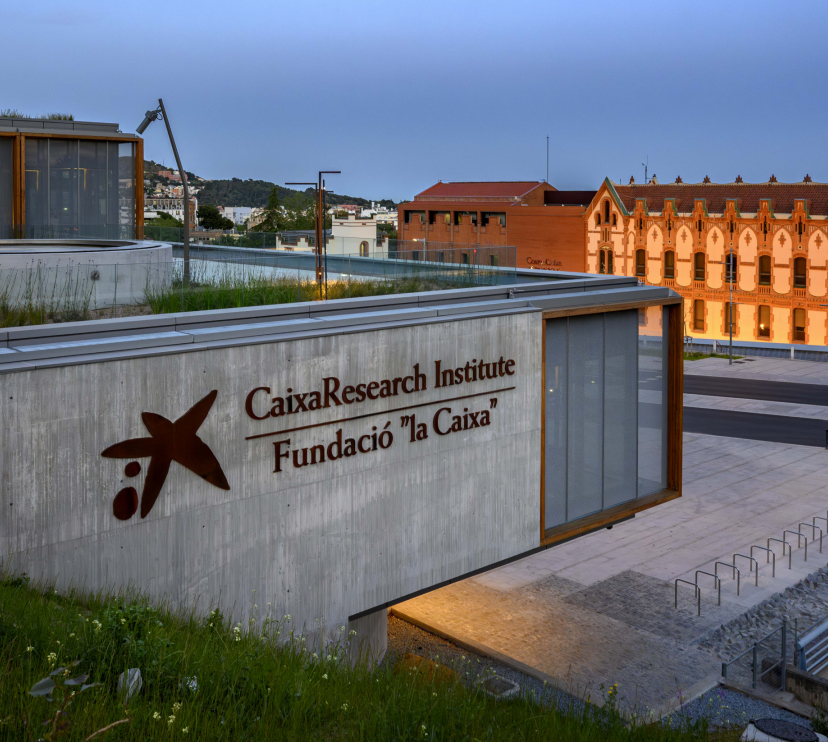
With the launch of the CaixaResearch Institute, the ”la Caixa” Foundation is strengthening its commitment to outreach and scientific debate in biomedicine and health, supported by the physical and conceptual proximity between the institute and CosmoCaixa, the first interactive science museum in Spain and one of the most renowned in Europe. The close collaboration between the two facilities will enable the creation of a distinctive new scientific hub, aimed at building bridges between science and society.
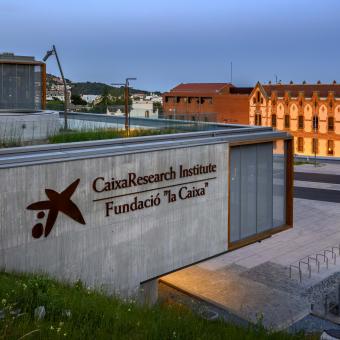
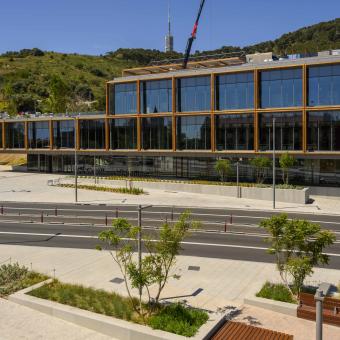
Located at the foot of the Collserola Natural Park in Barcelona, the CaixaResearch Institute and the CosmoCaixa Science Museum will be connected by the Francesc Moragas Gardens, named in honour of the founder of ”la Caixa”. This space symbolises the ties that unite them: they share the same origins and are guided by the same vision, that of a century-old institution such as the ”la Caixa” Foundation, whose primary aim is to contribute to social progress.
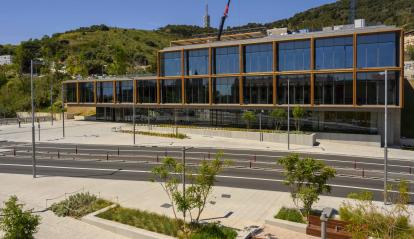
In line with its mission and values, collaboration between the CaixaResearch Institute and CosmoCaixa will be essential to strengthen the organisation’s work in the scientific field. The two institutions will work closely together to develop outreach initiatives that foster public engagement with research, in a relationship defined by its two-way nature: on the one hand, CosmoCaixa visitors will be able to explore the science of the CaixaResearch Institute, while on the other, researchers from the new institute and from centres supported by the ”la Caixa” Foundation will be able to connect with people and their concerns.
In turn, through the museum, which welcomes more than 1.2 million visitors each year, the knowledge generated at the institute will also be brought closer to society, with a focus on research into the immune system and its links to highly prevalent conditions such as cancer, infections and neurodegenerative diseases. The scientific campus will also enable the development of joint activities aimed at fostering scientific vocations and raising awareness among diverse audiences of the importance of supporting and promoting research.
The ”la Caixa” Foundation laid the foundations for this scientific campus even before the inauguration of the CaixaResearch Institute. Last year, CosmoCaixa had already promoted a range of scientific outreach activities focused on immunology, for example, by organising talks on the subject for the general public as part of the Research Night – which will take place again this year – as well as supporting conferences and specialist events in this field.
Now, through a variety of formats, the Science Museum plans to progressively incorporate more content on health and immunology aligned with the institute. This will include both the centre’s exhibition offering and its programme of activities and workshops.
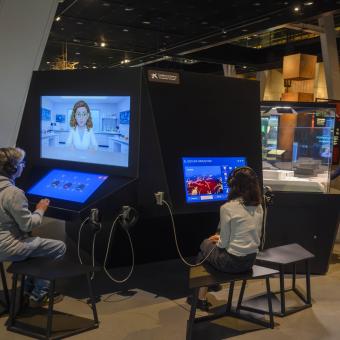
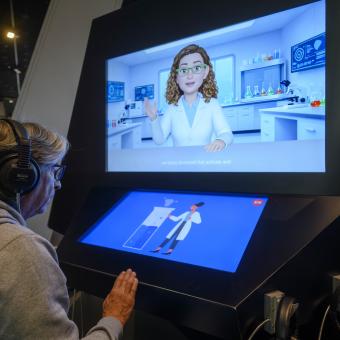
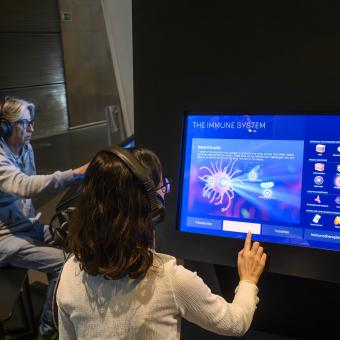
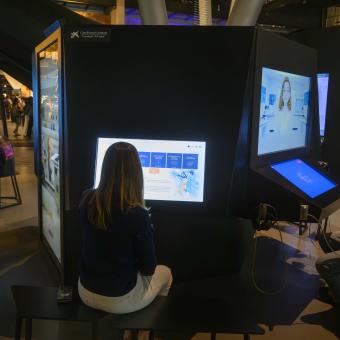
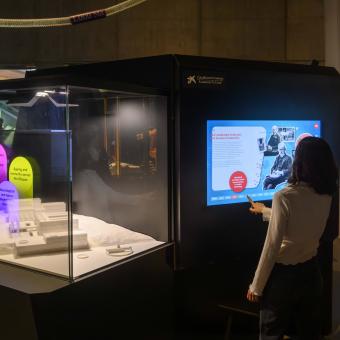
Notable among the new initiatives already available at the museum is the renovation of the Top Science section in the Universe Hall, the museum’s permanent exhibition space. The Top Science area includes materials in different formats designed to introduce the world of immunology and showcase part of the research being carried out at the CaixaResearch Institute. One of these features is a video by Dr Gabriel Rabinovich, a group leader at the institute, in which he explains why he chose to become a scientist and reflects on his career and field of expertise, while visitors are given a close-up view of the institute’s laboratories, which can also be viewed through a new scale model.
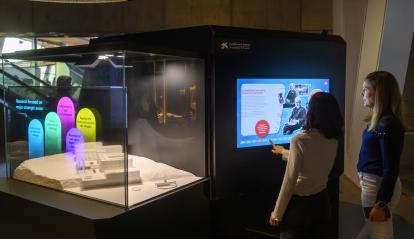
This is complemented by interactive resources and games on immunology. One of these focuses on the immune system, vaccines and tips for keeping our defences healthy. Another introduces new treatments based on immunotherapies. In particular, this interactive experience allows users to take part in designing two immunotherapies that are transforming the fight against cancer: monoclonal antibody immunotherapy and CAR-T cell therapy.
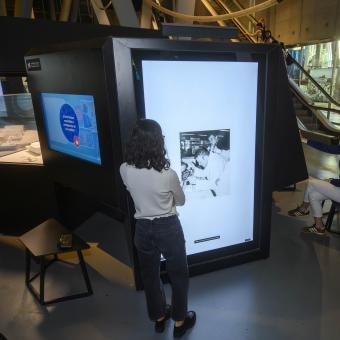
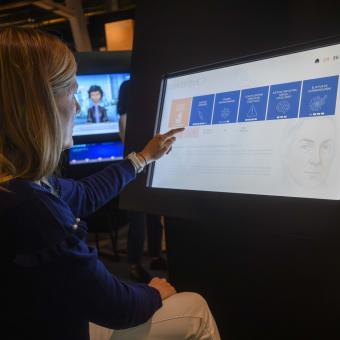
As part of the revamped Top Science section, CosmoCaixa now also features a space showcasing the main advances in immunology and immunotherapy. This timeline stretches back 2,400 years, to when the historian Thucydides observed something remarkable in classical Athens: those who survived an epidemic did not fall ill again when exposed to the same pathogen. The timeline extends to the present day with the 2025 Nobel Prize awarded to Mary E. Brunkow, Fred Ramsdell and Shimon Sakaguchi for their discoveries on peripheral immune tolerance, and with the inauguration of the CaixaResearch Institute.
During the 2026–2027 academic year, a pilot phase will also begin for a new educational workshop developed in collaboration with IrsiCaixa, a centre associated with the ”la Caixa” Foundation and an international benchmark in the study of HIV, emerging infectious diseases and immunopathologies such as cancer. The workshop, dedicated to the microbiota and immunity, will include a theoretical component explaining what the microbiota is, namely the community of bacteria, fungi, viruses and other microscopic organisms that live in our bodies, and its relationship with vaccine responses. It will also feature a practical component using samples to study bacterial DNA and analyse results to determine which bacteria are associated with better responses to vaccines.
Another of this year’s notable outreach initiatives will be a documentary on immunology produced by CaixaForum+ in collaboration with the production company La Manchester and directed by Òscar Cusó. Through three cases based on real patient testimonies, the film will guide viewers, alongside researchers and clinicians, into the complex world of immunology, from uncertain diagnoses to the most innovative therapies. It will be available exclusively on the free CaixaForum+ platform next autumn.
The creation of this scientific campus aligns with other international models in which the coexistence of research and outreach fosters a closer relationship between science and society. One such reference is CERN in Switzerland, which hosts the CERN Science Gateway, a centre with interactive exhibitions and educational spaces designed to make particle physics accessible to the public. Similarly, the Massachusetts Institute of Technology has its own museum featuring exhibitions and interactive installations on topics such as time measurement, artificial intelligence and engineering.
In addition to the campus formed by the CaixaResearch Institute and CosmoCaixa, the ”la Caixa” Foundation will also bring science communication content on health and immunology to its network of nine CaixaForum centres across Spain, which are visited by 4.5 million people each year. In this way, it will continue to bring research and science closer to the public in a direct and accessible manner.