You are reading:
You are reading:
07.04.26
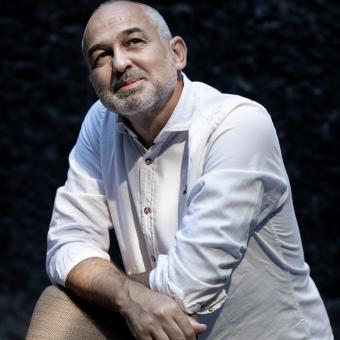
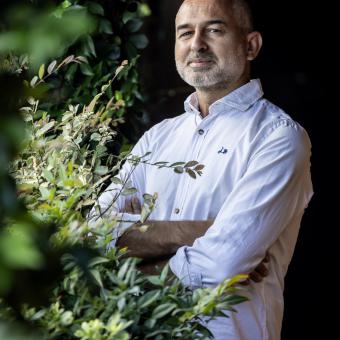
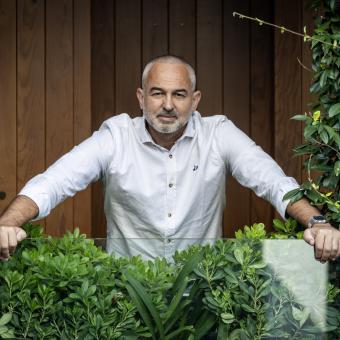
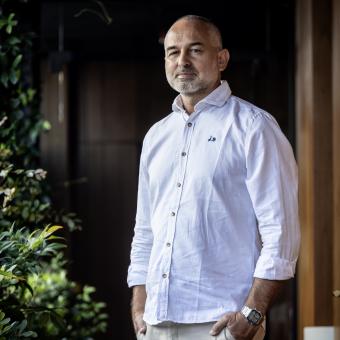
9 minutes readThe ability to project oneself into the future is a determining factor in educational and professional trajectories, as highlighted by several UNESCO studies. Some individuals stand out for their capacity to imagine what lies ahead. They have a clear sense of vocation and trust in their power to change the world through hard work and determination. Sergio Boixo, Pilar Manchón and Juan Argote are three such individuals. Years ago, the ”la Caixa” Foundation awarded them a fellowship to pursue postgraduate studies abroad. Today, they lead teams in major technology companies capable of driving the advances that will redefine our relationship with technology, language and cities.
Einstein said that imagination is more important than knowledge because, while knowledge has limits, imagination encompasses the entire world. Perhaps that is the key to those who think about the future: where others see boundaries, they see opportunities.
In recent years, technologies such as quantum computing, artificial intelligence and autonomous driving systems have not only set the pace of progress but have also driven some of the most decisive advances of our time.
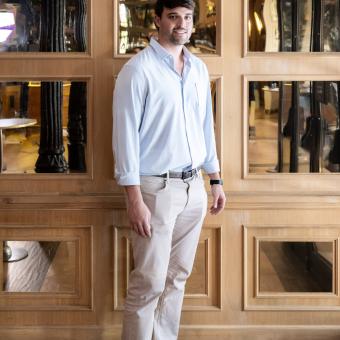
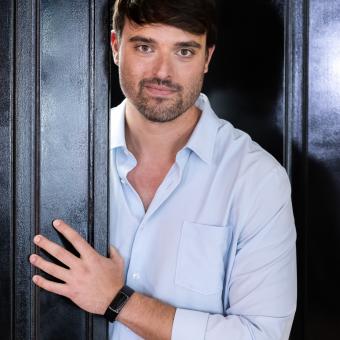
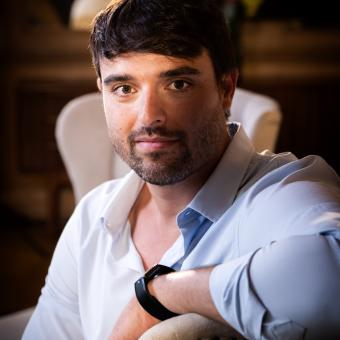
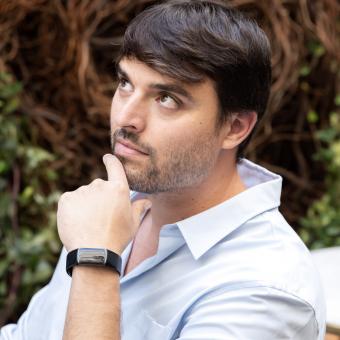
Behind this transformation are people who lead, individuals with the training and talent to move this revolution forward with purpose. Some of them have reached this point thanks to the postgraduate fellowships abroad from the ”la Caixa” Foundation. This is the case for Pilar Manchón, Senior Director of Research Strategy at Google AI; Sergio Boixo, Director of Quantum Computing at the same company; and Juan Argote, Director of Aurora Data Solutions. They imagined the future, and today they are building it.
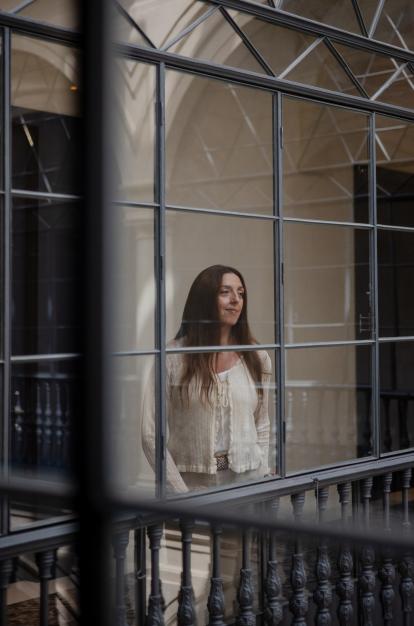
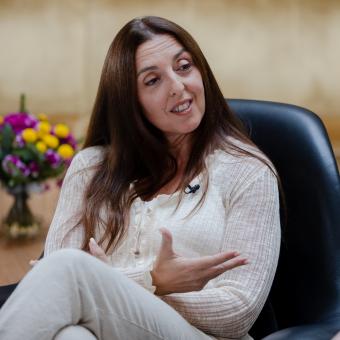
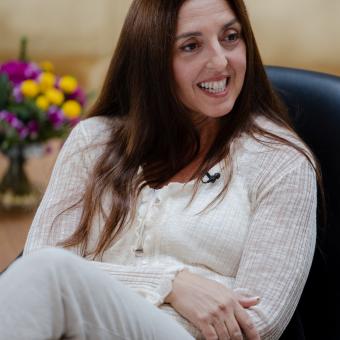
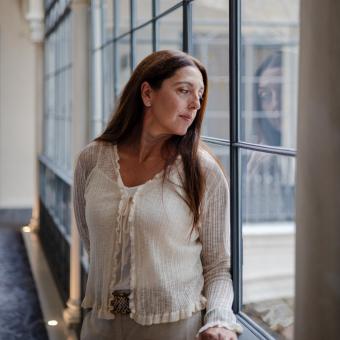
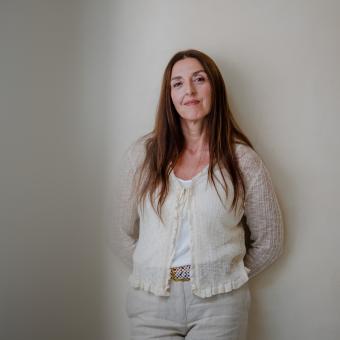
From her home in Los Altos, California, computational linguist Pilar Manchón imagines and drives the future of AI, the technology that has transformed our world and continues to advance at an extraordinary pace. Her career was shaped by a postgraduate fellowship abroad from the ”la Caixa” Foundation. Born in the Nervión district of Seville, no-one in her family was linked to science: her father was a taxi driver and her mother a homemaker. “My father left school at 12 and my mother at 13. Neither had formal education. I was the first in my family to complete a university degree,” Pilar explains.
She had graduated in English Philology and, in that same year, 1997, received the fellowship. “It marked a turning point in my career,” she says. “It was the beginning of what would become a much more ambitious professional path.” Pilar had started a PhD in Computational Linguistics in Seville, and the fellowship enabled her to move to the University of Edinburgh to pursue a master’s degree in Cognitive Science and Natural Language.
Beyond its academic impact, the support opened the door to a community of like-minded individuals with a shared ambition to change the world. “When you start interacting with people who think like you, who have the same concerns and the same desire to make an impact, it feeds back into you; it makes you want to do more,” she reflects. “That’s why fellowships like this are so important.”
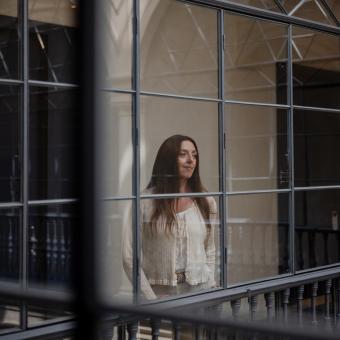
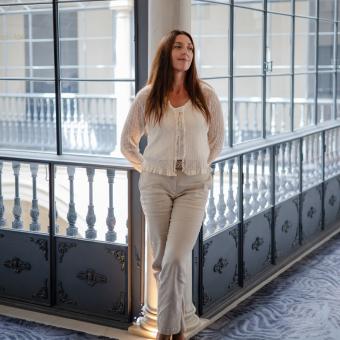
It was there that she began a meteoric career that led her to work in the leading AI departments at Google Research. Her work sits at the heart of the current technological debate involving companies such as Intel and Amazon. Today, Pilar leads AI Research Strategy at Google Research, placing her at the centre of one of the most pressing questions in technology today: aligning AI with human values.
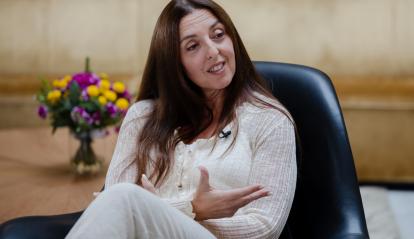
At the head of her team, she investigates how to audit and measure whether machine responses are ethical and respect the principles that matter to us as a society. In a world that watches the advance of algorithms with both fascination and a certain degree of fear, she describes herself as “somewhere between optimistic and realistic”. “I believe we have the potential to create a better society with AI,” she says with conviction.
Alongside her research work, Pilar has become a key voice in communicating the potential and societal impact of this technology. Her advice to young people with the drive and talent to change the world is clear: “Take the risks, believe in yourself, and aim high.”
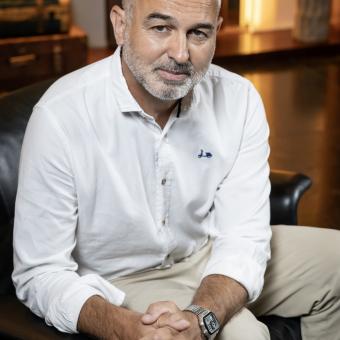
“From a relatively young age, I read popular science books and magazines, such as Investigación y Ciencia or Nature. I was always very interested in quantum physics and the philosophy behind it,” says Sergio Boixo (2003). Today, he lives in Los Angeles, but his vocation began in León, where he grew up until the age of nine.
He came from a scientific family. “My grandfather was a veterinarian and my grandmother a chemist. In that generation, there weren’t so many women scientists,” Boixo notes. That environment likely shaped his fascination with science and technology, and after finishing school he began studying Computer Engineering. He combined this with Philosophy and shortly afterwards also enrolled in Mathematics.
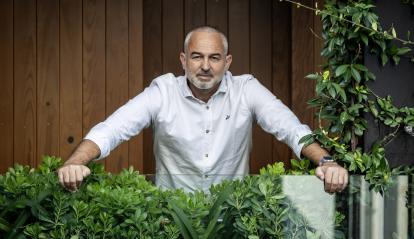
With that academic background, the León native quickly began working in IT within the banking sector. He worked at the European Central Bank and at Dresdner Bank, but he could not shake off his scientific calling. He was young and earning a good salary. “I started saving and asking myself: what do I do with this money? What do I really want to do?”
Boixo was clear that he wanted to do a PhD and dedicate himself to science. So he left his career in Berlin and enrolled in a master’s degree in Quantum Physics at the Autonomous University of Barcelona. The ”la Caixa” Foundation fellowship was the final push he needed to move to the United States and complete a doctorate.
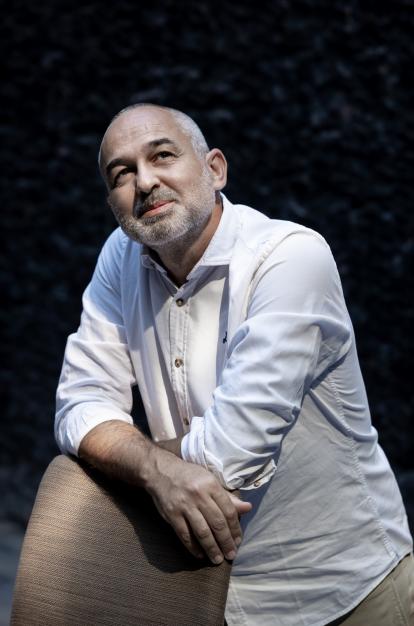
At the time, Boixo was 30 years old, with a wife and two children, but he did not hesitate. “I moved with my whole family to Albuquerque, New Mexico,” he recalls. It was his chance to fulfil his dream and build a scientific career. “There, I worked mainly on quantum metrology, and we developed a theory explaining how to take measurements with much greater precision.” Within two years, they had applied this theory to an experiment at the Institute of Photonic Sciences in Barcelona.
Today, Sergio Boixo is one of the leading figures in the field of quantum computing. The fellowship gave him the opportunity to pursue his vocation, but also to lead the scientific work of hundreds of brilliant people.
Together with his team, he has developed Willow, a quantum chip capable of performing in five minutes a calculation that would take the fastest classical computer 10,000 trillion years, longer than the age of the universe. The chip has also succeeded in exponentially reducing error rates as the number of qubits – the basic unit of information in quantum computing – increases, which has been one of the major challenges this technology has faced until now.
His ultimate goal is to develop the first quantum computer in history, although this requires reaching key stages along the way. “The next major milestone is what we call the logical qubit, which is the equivalent of the first quantum transistor,” he explains. Sergio is clear about the impact of his work. “I believe that quantum technology will lead to a second technological revolution, one that I hope will have an impact comparable to that of the revolution that gave rise to modern computing.”
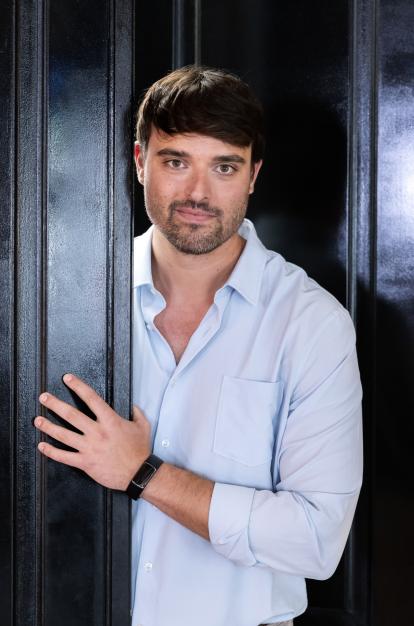
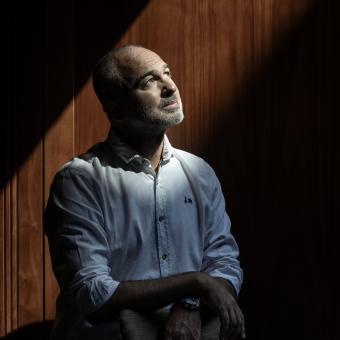
This is precisely what engineer Juan Argote did. Raised in the Les Corts district of Barcelona, he grew up in a family that prioritised his education above all else. From an early age, he was fascinated by mathematics and also by biology. He watched Jacques Cousteau’s documentaries with awe, and it was through one of them that he discovered his first calling. “Cousteau had made a documentary about underwater constructions that had an architectural element and a mathematical relationship, and I ended up leaning towards architecture,” Juan explains.
This was the starting point of a non-linear journey towards the technological frontier. After ruling out architecture because of its artistic dimension, Juan chose to study Civil Engineering at the Polytechnic University of Catalonia (UPC), drawn by the rigour of structural analysis. But the real turning point came in the third year of his degree, when he discovered transport engineering. “It was the first time I saw a way to have an impact on my everyday life, to influence city infrastructure,” he explains. What had seemed abstract in textbooks suddenly became tangible: moving people and goods efficiently could change the world.
The ”la Caixa” Foundation postgraduate fellowship abroad came at an unexpected, almost cinematic moment. Sitting in front of a sunset during his end-of-degree trip to Tunisia, he received the call confirming the award. “It was a rush of adrenaline… I felt a very deep sense of gratitude because a door was opening that until then had only been a possibility, but was now right in front of me,” he recalls with emotion.
Thanks to that opportunity, Juan headed to the University of California, Berkeley. There, he completed his PhD and became part of a community of brilliant minds from disciplines as diverse as philosophy and pure sciences, which ultimately shaped his worldview. He also developed Cabbie, his first software solution designed to improve public transport.
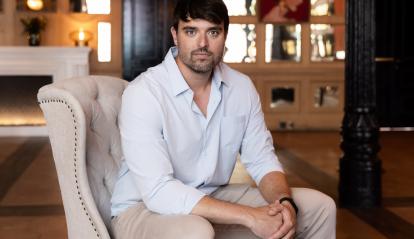
Today, Juan is a key figure in shaping the future of mobility as the Director of Aurora Data Solutions, the data science team at Aurora, a leading company in the autonomous vehicle sector. His expertise lies in modelling, simulation and large-scale data analysis, disciplines he combines with a clear goal: to revolutionise transport, making it smarter and safer.
Thanks to the initial support of the ”la Caixa” Foundation, Sergio, Pilar and Juan have not only imagined the future; they are now building it, in fields as diverse as quantum physics, AI and smart mobility. Their stories share a common origin – vocation – and a common dream: the desire to make the world a better place.