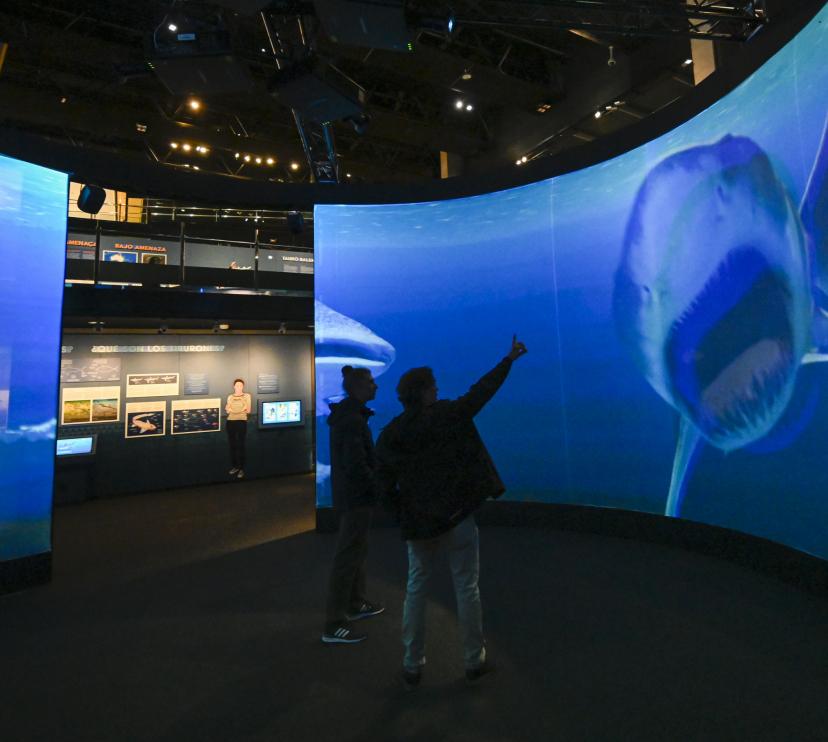
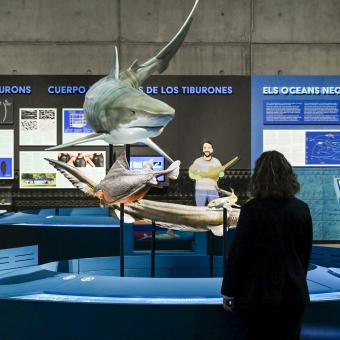
Sharks. Guardians of the oceans is divided into nine sections exploring different aspects relating to these animals: The Ancient Ones; Evolutionary Survival; What Is A Shark?; Sharks’ Bodies and Senses; Respect; Fear; Oceans Need Sharks; Under Threat; and Saving Sharks.
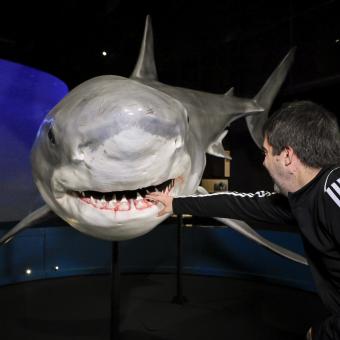
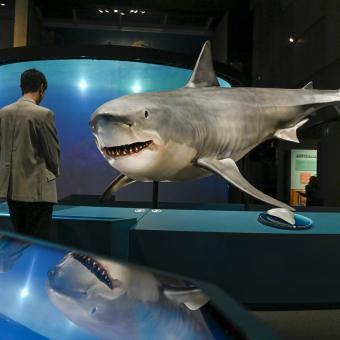
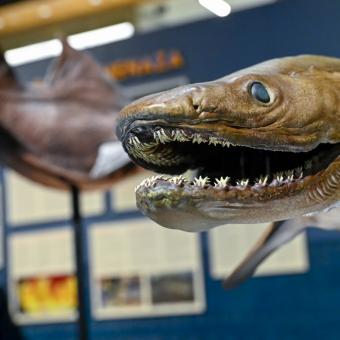
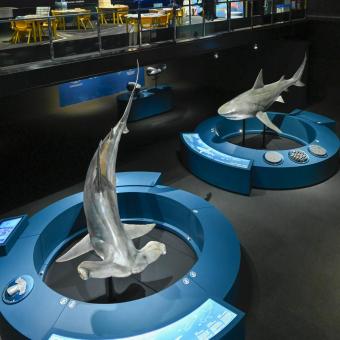
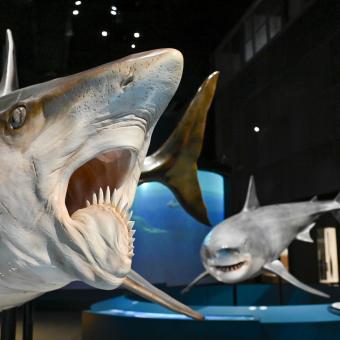
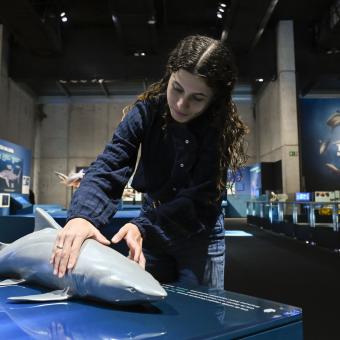
The exhibition also features life-size replicas of ten different species:
- Helicoprion
- Tiger
Shark (Galeocerdo cuvier)
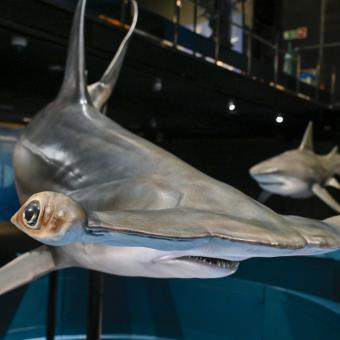
- Scalloped
Hammerhead Shark (Sphyrna lewini)
- Frill
Shark (Chlamydoselachus anguineus)
- Prickly
Dogfish (Oxynotus bruniensis)
- Epaulette
Shark (Hemiscyllium ocellatum)
- White
Shark (Carcharodon carcharias)
- Bull
Shark (Carcharhinus leucas)
- Port
Jackson Shark (Heterodontus portusjacksoni)
- Greynurse
Shark (Carcharias taurus)
Throughout its nine sections, the exhibition explores some of the key themes relating to sharks.
Ancient animals with remarkable adaptability
The biological characteristics of modern sharks are the result of millions of years of evolution. Sharks have no bones; instead, their skeletons are made of cartilage, making them lighter. Their skin is also covered in dermal denticles – serrated scales that help them move more efficiently through the water.
The study of fossilised teeth and dermal denticles has revealed that the shark lineage has an evolutionary history spanning more than 450 million years. Building on this evidence, the exhibition tells the story of the survival of these ancient animals, highlighting how they have adapted to changes in the oceans, including cycles of cooling and warming, ocean acidification and competition with other apex predators, among other challenges.
The exhibition reveals a number of fascinating facts about these animals, such as how it was during the Permian period that they developed some of their most distinctive features, including anvil-shaped dorsal fins, and how it was not until the Jurassic and Cretaceous periods that they began to resemble the sharks we know today.
A highlight of this section is a replica of Helicoprion, a shark with sharp teeth arranged in a circular saw-like spiral that lived during the golden age of sharks, between 290 and 250 million years ago, when they dominated the oceans. Visitors can also see a Megalodon tooth – from the largest fish ever to have existed, reaching up to 20 metres in length – and a life-size replica of a Megalodon jaw. An interactive display also provides an insight into the different survival strategies used by different shark species.
Diversity among species
We are looking at animals with enormous diversity across species (there are more than 500 species worldwide, with more being described every year). This diversity can be seen in their size – species living today range from the 20-centimetre Dwarf Lanternshark (Etmopterus perryi) to the Whale Shark (Rhincodon typus), which can reach up to 12 metres in length.
Moreover, of all animal groups on the planet, sharks have some of the most varied reproductive strategies. Some are viviparous, with the embryo developing inside the mother’s body, sometimes through a placenta-like structure, as in Hammerhead Sharks, or inside an egg that remains within the mother’s body until the young are born, as in the White Shark. Others are oviparous, with the embryo developing inside an egg outside the mother’s body, as in Port Jackson Sharks.
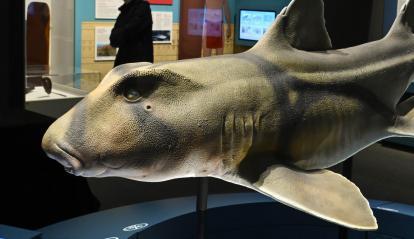
Differences in their ways of life are another source of diversity among these animals. For example, while most sharks live in salt water, some species, such as the Bull Shark, can travel long distances through fresh water and have been found in the Mississippi River, almost 4,000 kilometres from the Gulf of Mexico.
Their swimming speed is also influenced by their way of life. The Greenland Shark (Somniosus microcephalus), for example, inhabits extremely cold waters and swims very slowly. By contrast, the Shortfin Mako (Isurus oxyrinchus) is probably the fastest of all sharks, reaching speeds of up to 70 km/h thanks to a circulatory system that keeps its body temperature higher than that of the surrounding water, allowing its muscles to work more efficiently.
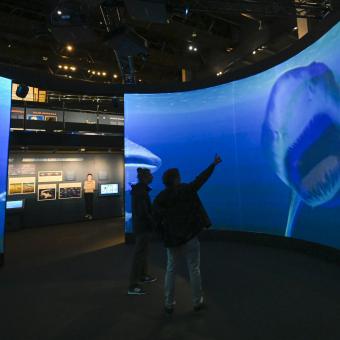
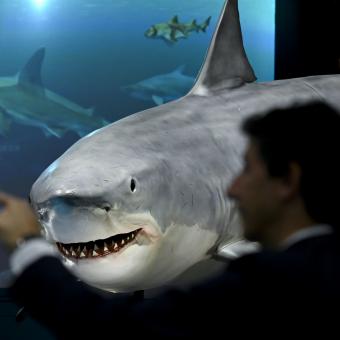
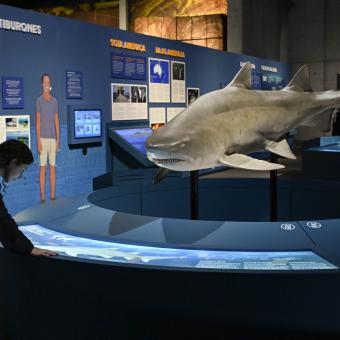
One of the exhibition’s main attractions is a digital oceanarium that immerses visitors in a captivating world where a multitude of sharks swim slowly around them. The space offers a mesmerising multimedia presentation that reveals the diversity, longevity and power of sharks, our connection with them and their importance to the world.
Seven senses
In general, sharks are characterised by their sophisticated senses and streamlined bodies, which are covered in highly specialised scales, or dermal denticles. These reduce drag, helping sharks move easily and silently through the water, while also acting as armour to protect them from predators.
The shape and swift movement of sharks have inspired industrial designers, who have replicated the longitudinal raised ridges of their scales to improve the performance of ships and aircraft. In elite sporting competitions such as the Olympic Games, swimsuits have also drawn inspiration from the hydrodynamic properties of shark skin, helping swimmers improve their performance. Between 2008 and 2010, when high-tech swimsuits were banned, nearly 200 world records were broken by swimmers wearing similar suits, which reduce drag and provide greater buoyancy and speed.
Many scientists believe that sharks’ teeth evolved from the denticles that cover their skin. Whatever their origin, shark teeth, designed either to tear and rip or to crush and grind, are as varied as the different shark species themselves. As a comparative infographic in the exhibition shows, some species, such as the White Shark, possess teeth that are large and razor-sharp, while in others, such as the giant Whale Shark, they are tiny. Sharks generally have several rows of teeth, which are continuously replaced to ensure they can feed throughout their lives.
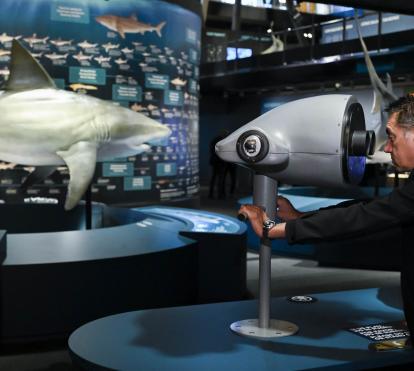
Sharks also have an array of sensory systems that help them navigate and detect their prey. In addition to the five traditional senses (smell, sight, hearing, taste and touch), they have two more. The first is a system known as the lateral line, which detects vibrations and changes in pressure from up to 100 metres away. This also helps sharks navigate: as a shark swims, it creates waves that bounce off objects such as rocks, enabling it to sense its surroundings. The second involves electroreceptors known as the Ampullae of Lorenzini, organs located on the shark’s snout that detect the weak electrical fields generated by nearby animals.
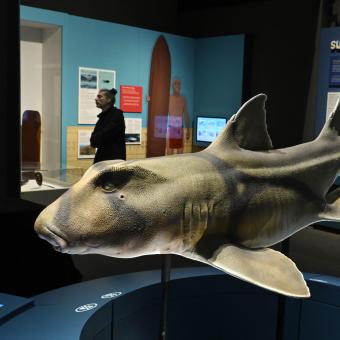
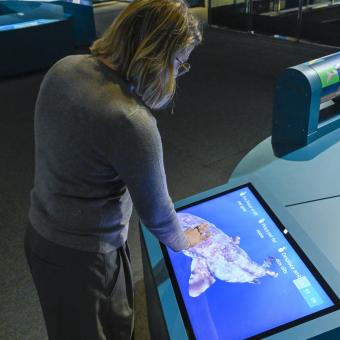
A number of engaging interactive displays allow visitors to explore the internal anatomy of some sharks in 3D and discover, for example, the fleshy outgrowths around the mouth of the Banded Wobbegong (Orectolobus ornatus), which resemble a beard, or the prominent ridges above the eyes of Port Jackson Sharks.
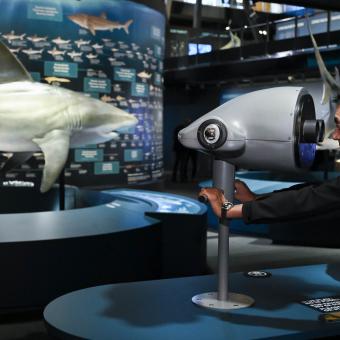
Visitors can also encounter one of the most unusual sharks in terms of its morphology, the Hammerhead Shark, which is critically endangered. In this section, they can see a replica and experience what it is like to view the world through this species’ 360-degree vision.
A bad reputation fuelled by fiction
For the past 60 years, the International Shark Attack File has documented all known shark attacks and investigated new cases. The data shows that, on average, between eight and ten people die each year from shark bites.
Despite these figures, the release of the film Jaws (1975) had a negative impact on perceptions of these animals, fuelling fear and hostility towards them. Inspired by a series of shark attacks that took place in New Jersey in 1916, the film portrayed them as killing machines.
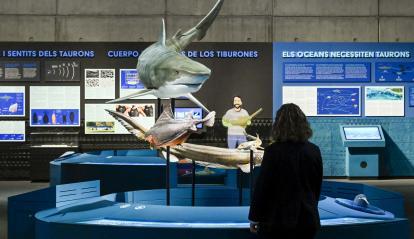
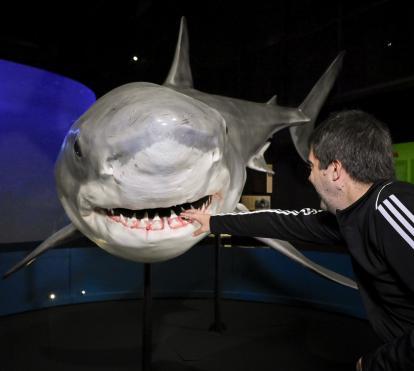
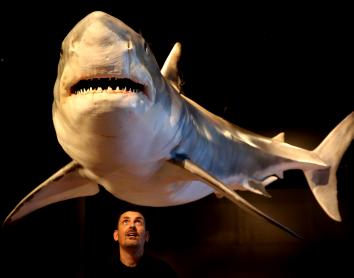
The exhibition explains that, of the approximately 500 shark species worldwide, three – replicas of which can be seen in the exhibition – are responsible for almost all fatal incidents: the White Shark, Bull Shark and Tiger Shark. Dusky Sharks and Bronze Whaler Sharks have also occasionally caused serious injuries.
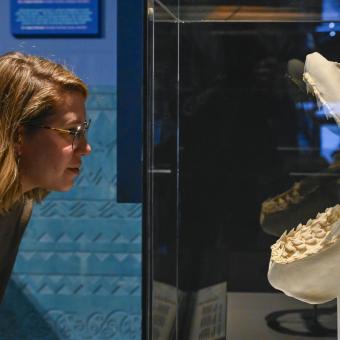
Visitors can also see impressive real jaws from a White Shark – with triangular, serrated teeth that enable it to feed on large animals such as other sharks, seals, dolphins and even dead whales – and a Tiger Shark, with 48 teeth designed to grip prey and cut and ‘saw’ through flesh and bone.
In 2021, authorities in some Australian states proposed replacing the term ‘shark attack’ with the more neutral ‘shark bite’. Scientists support this initiative, because ‘attack’ implies aggressive intent and provokes fear, whereas ‘bite’ is a more accurate description of what actually occurs.
At this point, the exhibition offers a necessary perspective on how, in many cultures, sharks are not feared but respected and admired for the very characteristics that inspire fear in us: their strength, speed and ferocity. It presents accounts, some told in the first person, that explore the cultural connections between humans and sharks across a wide range of places, including Australia, the Torres Strait Islands, Fiji, Tonga, Aotearoa (New Zealand) and Hawaii. For some First Nations peoples of Australia and the Pacific, sharks are much more than animals: they are totems, ancestors and beings with whom they share a profound relationship of respect and kinship, grounded in knowledge passed down through generations.
Ocean engineers under threat
In keeping with its educational mission, the exhibition highlights the important role sharks play in marine conservation, particularly large sharks, which act as ocean engineers and occupy an important position in the food chain. As apex predators, they help maintain the delicate balance of ocean ecosystems. Sharks keep populations of their prey in check, which means their prey’s prey is less intensely hunted and the effects continue down the food chain. However, current levels of overfishing put the maintenance of this delicate balance at risk.
The exhibition highlights one of the most efficient sharks in terms of energy conversion: the Whale Shark (Rhincodon typus), the world’s largest fish. Despite its size and enormous mouth, which contains around 300 rows of tiny teeth, it feeds on plankton, small crustaceans, fish eggs and shoals of small fish.
Despite the vital role they play on our planet, sharks are under threat, which also puts the health of our oceans at risk. The most serious threat they face is industrial fishing, as they are often caught as bycatch in gillnets or on longlines. This is particularly true of the Greynurse Shark (Carcharias taurus), which is classified as critically endangered. This species, a replica of which can be seen in the exhibition, undertakes annual migrations of thousands of kilometres, swims consistently close to the surface and often becomes caught in trawl nets.
Humans catch 100 million sharks every year. In addition to accidental bycatch, practices such as shark finning have a major impact on shark populations. In this cruel practice, sharks are caught, their fins are cut off and they are then returned to the sea, where they die. The popularity of deeply-rooted culinary traditions such as shark fin soup, considered a delicacy in some cultures, particularly in Asia, plays a key role in their current plight. It is estimated that removing shark fin soup from restaurant menus could save up to 73 million sharks a year. According to some reports, growing awareness of animal welfare led to an 80% reduction in shark fin consumption in China during the 2010s.
These harmful practices are compounded by other threats, including plastic pollution, climate change and rising sea temperatures, as well as low reproductive rates. Sharks, especially larger species, which are the most threatened, produce small litters and have very long gestation periods. The Greenland Shark is an extreme example: it has a very slow metabolic rate as a result of living in icy waters,. Although it can live for up to 400 years, its gestation period lasts for decades.
A message of hope: what we can do
The exhibition aims to bring about a positive change in visitors’ perceptions of these animals and encourage them to take action to help protect them. To this end, it invites us to draw on the knowledge and perspectives of First Nations peoples – the Indigenous peoples of Oceania who have lived alongside sharks for thousands of years – as well as the recommendations of scientists and conservationists, to guide our actions.
As shown in an interactive display, there are simple steps people can take, such as not fishing for sharks for human consumption, banning practices such as shark finning, protecting certain species and returning sharks to the ocean in the event of accidental bycatch.
In addition, the first reintroduction programme for an endangered shark species has been launched for Zebra Sharks (Stegostoma tigrinum) in West Papua. No-take marine reserves, where extractive activities such as fishing are prohibited, can also be created. Globally, only 2.7% of the oceans are protected in marine national parks with such restrictions. Australia, with 58 marine parks covering 37% of its ocean waters, has one of the largest marine protected areas in the world. However, since fishing is permitted in three-quarters of these parks, only around 15% of Australia’s ocean waters are protected by no-take areas.
The status of sharks in the Mediterranean
For its presentation at CosmoCaixa, the exhibition features an audiovisual produced by the ”la Caixa” Foundation about sharks in the Mediterranean, which reveals that 49 shark species currently live in our sea – half of them threatened with extinction as a result of fishing and pollution.
The audiovisual presents a number of good practices being implemented across Mediterranean regions to protect sharks, with the involvement of scientists, conservationists and fishers. Visitors can learn how Nursehounds, a species endangered in the Balearic Islands, are being bred at Cabrera Archipelago Maritime-Terrestrial National Park. This species is also the focus of an initiative by the Oceanogràfic in Valencia, which carries out artificial insemination.
In response to the threat posed by fishing, the audiovisual highlights initiatives such as Catsharks in Barcelona, which rescues Small-spotted Catshark eggs from fishing nets, rears them and releases them into the wild, and the Palma Fishers’ Guild (Confraria de Pescadors), which designs bycatch reduction devices (BRDs) to save large sharks when they are accidentally caught.
As evidence that protection from bottom trawling works, the audiovisual also features Shark Med, an initiative that studies sharks in their natural habitat off Mallorca using benthic cameras and has documented, for example, the presence of 15 Sharpnose Sevengill Sharks.

- Imágenes
- Videos
- Audios
- Notas de prensa
Barcelona21.10.26To know is to protect: CosmoCaixa dives into the extraordinary importance of sharks to our oceans
The CosmoCaixa Science Museum is hosting the European premiere of the exhibition Sharks. Guardians of the ocean. Created by the Australian Museum, it is one of the most comprehensive exhibitions on sharks ever produced.
Read more