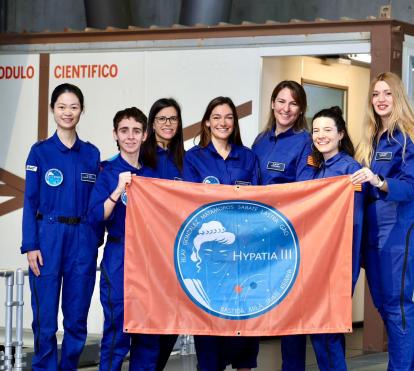
Hypatia will lead the first mission made up exclusively of women scientists to take place at an Arctic research base, scheduled for the summer of 2027. The new crew is also the first to include Spanish researchers.
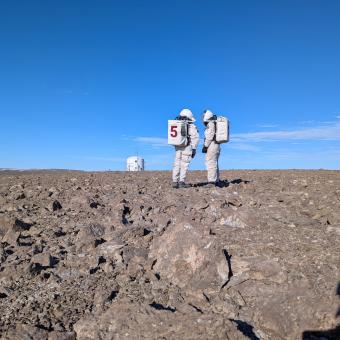
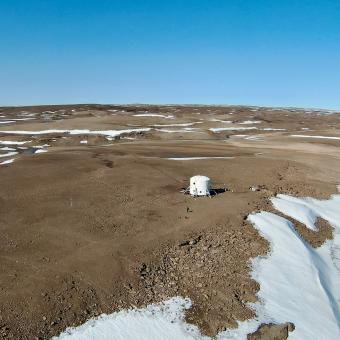
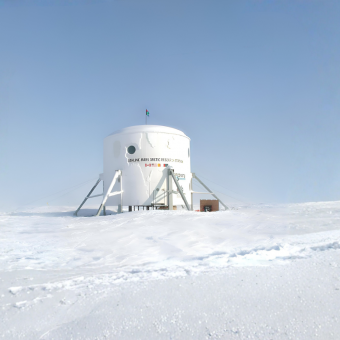
The Mars Society has selected the first all-female crew to carry out a mission at the Flashline Mars Arctic Research Station, located on Devon Island in the Qikiqtaaluk region, in a remote area of the Canadian Arctic Archipelago. The Flashline Mars Arctic Research Station hosts only three missions per year during the summer months.
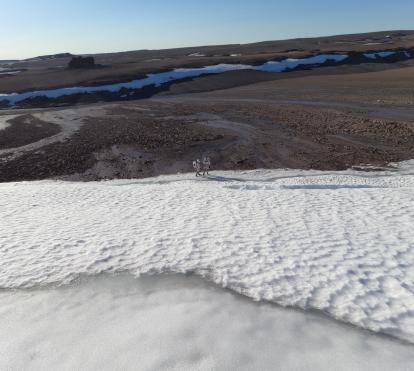
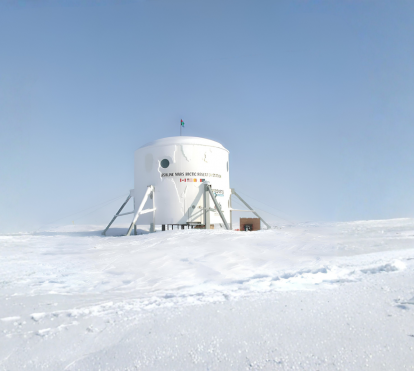
As explained during the mission presentation held at the CosmoCaixa Science Museum of Barcelona, the Hypatia Mars association is taking a further step forward in analogue missions and will carry out a more demanding expedition, in a more remote location, under colder conditions, and with an even higher level of realism as a simulation of Mars exploration. The two previous missions were conducted at the Mars Desert Research Station (MDRS) in the Utah desert (USA).
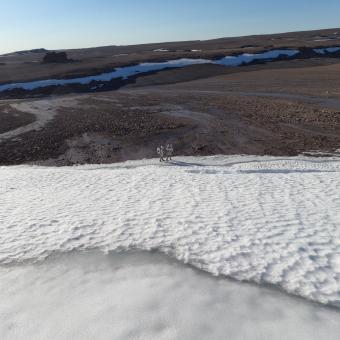
The Flashline Mars Arctic Research Station represents a major challenge, as it transforms every aspect of mission management on the ground, including equipment, extravehicular activity (EVA) operations, battery life, and human performance, due to conditions of extreme cold, snow, and ice. In addition, the new remote location further increases the isolation of the crew.
In the Arctic, planning, flexibility, and discipline are essential to resolve any problem. These are skills that space agencies increasingly value when recruiting new astronauts for their missions, and which the Hypatia Mars association also took into account when selecting the new crew from among 80 applications.
The ”la Caixa” Foundation has already joined the initiative as a collaborator, enabling, among other actions, the organisation of scientific outreach activities related to space exploration and Hypatia’s research projects at CaixaForum and CosmoCaixa centres, with the aim of bringing research closer to the general public and fostering scientific vocations. A free session for families will take place at the CosmoCaixa Science Museum of Barcelona on 14 February. The team now has a year and a half to prepare physically and psychologically, and to secure agreements with companies and institutions to make the mission and its research projects viable, such as Universitat Politècnica de Catalunya.
Scientific research in partnership with Nunavut
Hypatia III will contribute to the continuous scientific research conducted at the Flashline Mars Arctic Research Station in partnership with the Nunavut Government and population. As part of this scientific research, the crew will monitor permafrost and assess water quality to detect potential historic contamination from meltwater.
The team will combine field observations with satellite radar data, to study seasonal thaw and millimetre-scale ground movement, information that remains crucial for planning safe infrastructure in extreme environments on Earth or Mars.
Another line of research will focus on cellular aging, which is significantly accelerated in space due to radiation. This, combined with the fact that long-duration space missions weaken muscles and the immune system due to microgravity, can have major health impacts. To study how to mitigate these effects, the crew will follow a diet designed to enhance resilience, which could also be applied to improving life expectancy on Earth.
- Imágenes
- Videos
- Audios
- Notas de prensa
Barcelona26.02.25CosmoCaixa imagines life beyond Earth in a new exhibition on extraterrestrials
The CosmoCaixa explores the answers to one of humanity’s greatest questions: the possibility that we are not alone in the universe. The exhibition Extraterrestrials. Is There Life Outside Earth? presents a fascinating and scientifically rigorous narrative that delves into topics such as our place in the cosmos and the meaning of the concept of life.
Read more