You are reading:
You are reading:
12.05.26
6 minutes readFor many small businesses in rural areas of the provinces of Cabo Delgado and Maputo, in Mozambique, accessing bank credit can make the difference between merely surviving and starting to grow. In these regions, which are among the most vulnerable in the country, the development finance institution Gapi, within the framework of the ”la Caixa” Foundation’s Work4Progress programme, is promoting a guarantee and credit fund that opens this door to women and young people, enabling them to start up or expand their businesses in the country. Since 1997, the ”la Caixa” Foundation has allocated more than 42 million euros to support a range of programmes focused mainly on the fields of health and job creation, one of which is Work4Progress. The roll-out of all these initiatives has had a tangible impact on more than 5.8 million beneficiaries.
In Cabo Delgado province, a rural region in northern Mozambique, the population has had to contend with an accumulation of crises in recent years. Increasingly frequent cyclones, the effects of climate change and episodes of violence have led to displacement and the loss of livelihoods.
In this context, starting a business does not simply mean generating income; it also entails rebuilding a degree of stability. And one of the main barriers local people still face in trying to sustain an economic activity is access to formal credit.
Banks often require collateral or financial track records that much of the population simply does not have. To overcome this obstacle, the ”la Caixa” Foundation’s Work4Progress programme – aimed at creating decent employment for vulnerable women and young people living in rural communities in Mozambique, as well as in Peru, Colombia and India – has launched a guarantee and credit fund alongside Gapi. Known as Rural Credit for Progress, this fund backs entrepreneurs’ loans and provides coverage for the financial institution, thereby enabling small businesses to start up or grow. The fund also includes technical assistance and support for entrepreneurs, which is crucial in ensuring that projects not only get off the ground, but also become firmly established.
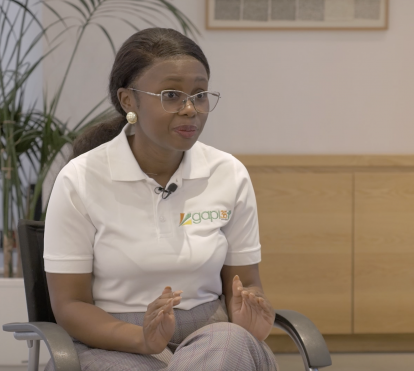
“This fund has represented an opportunity to support a vulnerable group that often has no access to financing from formal banks,” explains Ashley Massingue, senior specialist in Gapi’s Financing and Project Coordination Area and coordinator of projects developed in Mozambique with the support of Work4Progress. “It allows them to obtain capital to develop their businesses and build up a banking history that makes it easier for them to access financing in the future,” she adds.
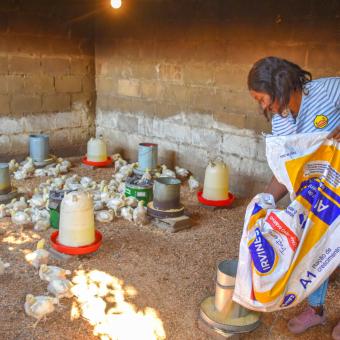
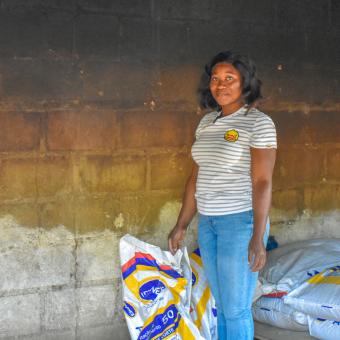
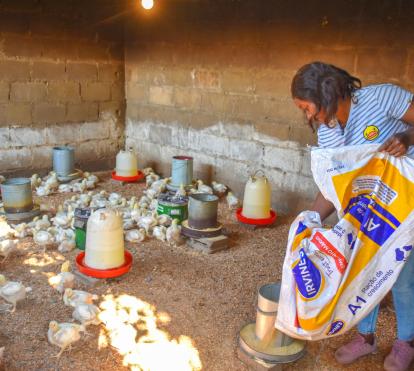
Assucenia José lives in the town of Massaca, in Maputo province, and has been involved in the rearing and sale of chickens since 2013. Her project was launched with the aim of strengthening poultry production in her community, generating self-employment and improving local food security.
For years, her business progressed with great difficulty because she did not have the proper resources. “I lacked equipment and materials, which made the work very difficult,” she recalls. The situation changed when she secured financing through the programme. “Once I received it, I was able to invest in tools and equipment, improve production and increase my income,” she explains.
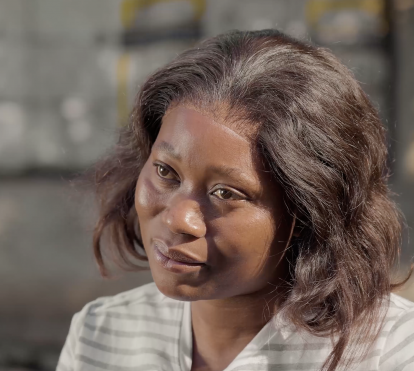
The growth of the business had a direct impact on her everyday life. “Today I can support my children and also invest in agriculture, which has helped me a lot,” she says. Repaying the loan required effort and organisation. “It took some hard work and good management, but I managed to keep up with the payments and now I no longer have any debts.”
Her next goal is to continue expanding the business. She plans to add laying hens for egg production and thus diversify the farm’s income. She also has a message for other women, urging them to take the step: “I encourage young women to join this project, it’s worth it.”
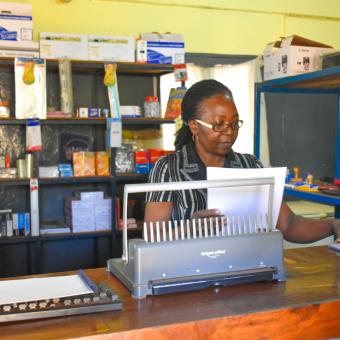
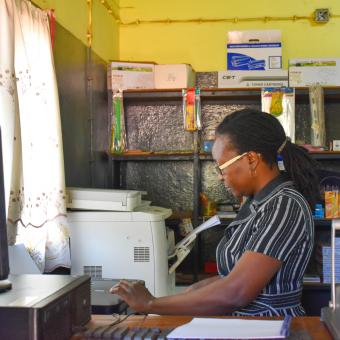
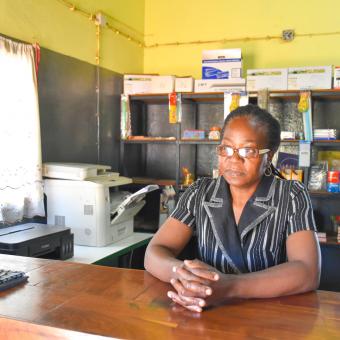
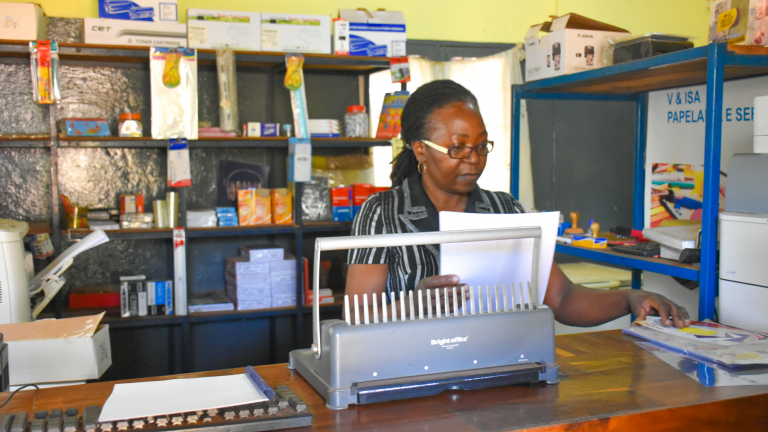
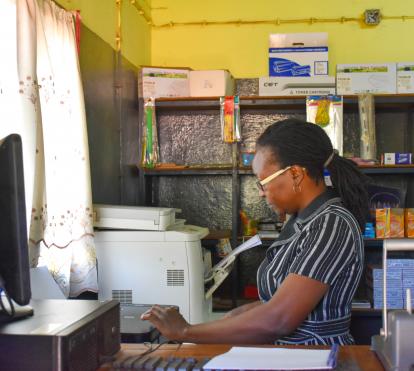
The experience of Crisália Nhambi, who also lives in the community of Massaca, shows just how much a small boost can change the course of a business. The initial loan she received enabled her to expand her stationery shop with the aim of improving access in her community to school materials, office supplies and administrative support services. “The financing made a huge difference because I was able to increase my resources and expand my business,” she says.
With the profits, she also decided to open up a new source of income by investing in a small bakery business. This diversification broadened her customer base and gave her greater financial stability.
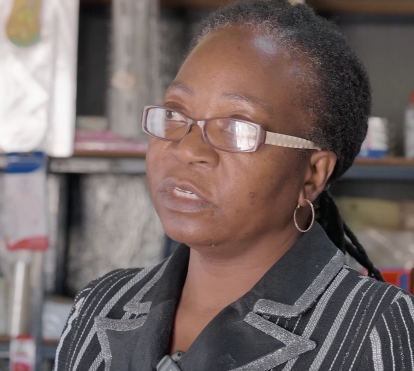
Over time, it became necessary to restructure the repayment plan, but Crisália’s business continued to move forward. “I used to pay around nine thousand meticais, but when I applied for the restructuring, my repayments went down to six thousand,” she explains. Today, the two businesses employ four people, contributing to job creation and local economic activity.
Her goal now is to consolidate the project and have a space of her own. “My biggest plan for the future is to acquire a plot of land and build my own premises,” she says. In the meantime, she shares a piece of advice for anyone seeking financing: “First, you have to invest the money in what you took the loan out for and, with the profits, gradually grow the business.”
The guarantee and credit fund managed by Gapi is implemented through a network of Spanish and local organisations – led by Ayuda en Acción, CESAL and Enraíza Derechos, and coordinated by FUNDE – that work directly with communities and help identify the people who may benefit from this financing. “At Work4Progress, we work as a single platform,” says Massingue. “Most of our beneficiaries come through organisations that are already working with these communities and know their needs well.”
The programme also includes training in business management and financial education to strengthen the viability of the businesses. Experience shows that, when access to credit is combined with support and knowledge of the local context, communities are capable of generating their own solutions.
The businesses supported by the programme typically start on a small scale, often run by a single person or with family support. Over time, many of them grow and create new economic opportunities within their surroundings. “The financing doesn’t come to completely transform their lives, but rather to accelerate their ideas,” says Massingue.
For the Work4Progress coordinator at Gapi, the key lies in understanding the role that access to capital plays in these contexts. Beyond generating income, in places where crises have left a deep mark on everyday life this support can mean the chance to rebuild life plans, create a more stable future, and turn women and young people into participants in the development of their communities.
Since 2017, the ”la Caixa” Foundation has allocated more than 42 million euros to support a range of programmes focused mainly on the fields of health and job creation, such as Work4Progress. The roll-out of all these initiatives has had a tangible impact on more than 5.8 million beneficiaries.