You are reading:
You are reading:
17.11.26
7 minutes readSend your questions to:
Director científico de CaixaProinfancia
Catedrático de Educación (Área de Pedagogía Social) de la Universidad Ramon Llull en la Facultad de Psicología, Ciencias de la Educación y del Deporte Blanquerna-URL
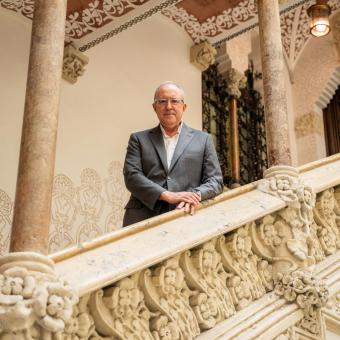
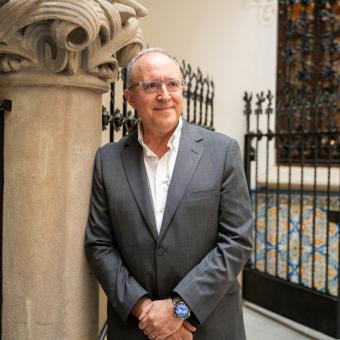
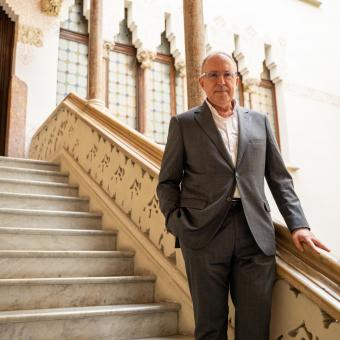
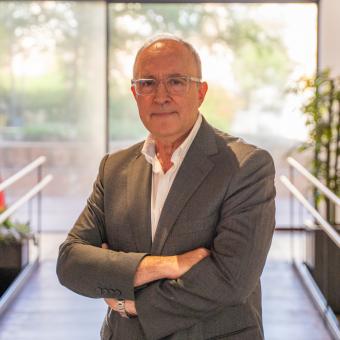
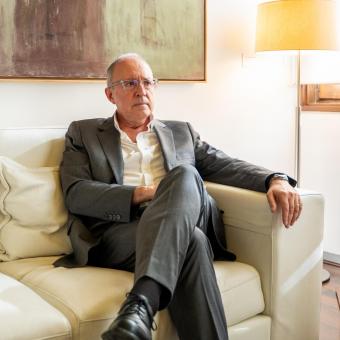
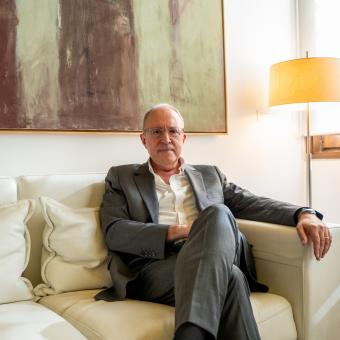
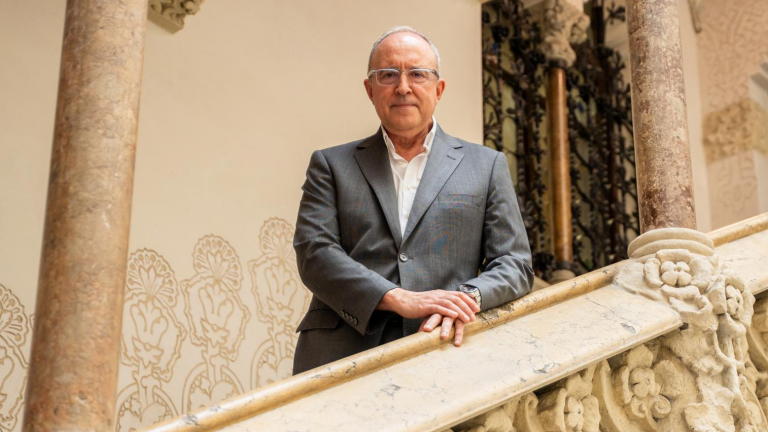
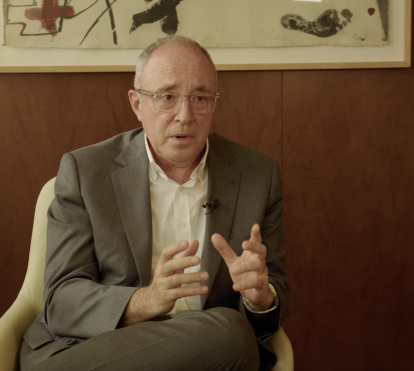
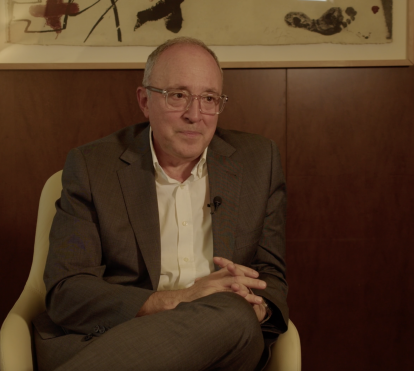
Child poverty remains one of Spain’s main structural problems. Despite the economic and social progress made in recent decades, thousands of children continue to grow up in circumstances that limit their future opportunities. We speak to Jordi Riera, scientific director of the ”la Caixa” Foundation’s CaixaProinfancia programme, about the consequences of this inequality, the importance of intervening from the earliest years of life and the need for a nationwide effort to tackle it.
According to the Living Conditions Survey conducted by Spain’s National Statistics Institute (INE) in 2025, 1 in 3 children under the age of 16 (33.9%) in Spain was at risk of poverty or social exclusion, compared with 25.7% of the population as a whole. Why does a country like Spain continue to have such a high rate?
Spain has some of the poorest poverty indicators in the European Union: 1 in 4 people, around 12.5 million, is at risk of poverty or social exclusion. Children are particularly affected: 1 in 3 under-18s is at risk of poverty or social exclusion.
What is most concerning is that these figures have barely changed over the past 15 to 20 years. We might assume that poverty is driven by specific events, such as economic crises or population movements. But Spain has been through periods of greater and lesser prosperity without these indicators changing substantially. This suggests that poverty has become a persistent, entrenched problem that requires structural solutions.
How does a child’s postcode affect their risk of poverty and their future opportunities?
A child’s postcode has a far greater influence on their development and educational journey than their genetic code. It shapes fundamental aspects of their family environment, housing conditions and access to cultural and educational opportunities.
However, Article 1 of the Spanish Constitution defines Spain as a social and democratic state governed by the rule of law. This means that the state must safeguard equality of opportunity and social justice, taking action as early as possible to offset that initial disadvantage.
When we talk about child poverty in Spain, what does it mean in a child’s everyday life?
We’re talking about families with insufficient or highly unstable incomes who, after paying for housing, have barely enough left to cover such basic needs as food.
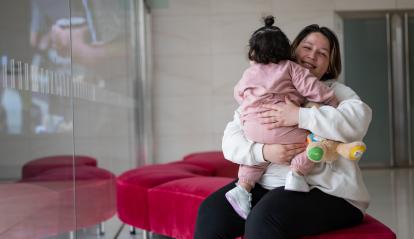
From a very young age, these children and young people learn something particularly difficult: to go without. They go without birthday parties with their friends, taking part in leisure activities or having a space of their own at home where they can study.
They often feel ashamed of having to go without these things, because it makes it harder for them to take part in the same activities as their peers and broaden their social circle. Eventually, they learn to hide their circumstances, with all the consequences this can have for their emotional well-being.
At what stage of childhood is intervention most crucial?
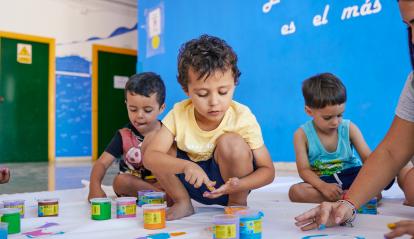
One of the critical stages is from birth to the age of 3. During this period, crucial developments take place in a child’s personal and cognitive development. Stimulation and emotional support are essential to foster learning, particularly language development, and to prevent inequalities from accumulating and becoming entrenched by the start of primary school. As a country, we’ve made progress in providing free early years education for children aged 3 to 6, but there’s still a long way to go when it comes to the under-3s.
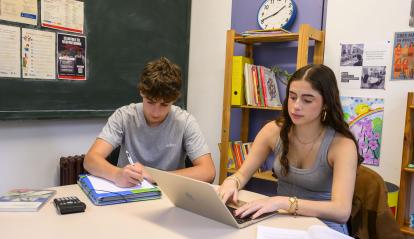
And these difficulties don’t disappear when children start school. Many of these pupils struggle to follow a successful educational path, so they gradually lower their academic expectations until they become convinced that continuing further with their education simply isn’t for them. Once compulsory education ends, the risk of dropping out increases. This weakens one of the most important levers for breaking the intergenerational cycle of poverty: education.
What is going wrong with the way children are protected?
Traditionally, Spain has addressed child poverty through a welfare-based approach centred on providing financial benefits or material assistance. But on its own, this model of separate, unconnected services has failed to break the cycle of poverty.
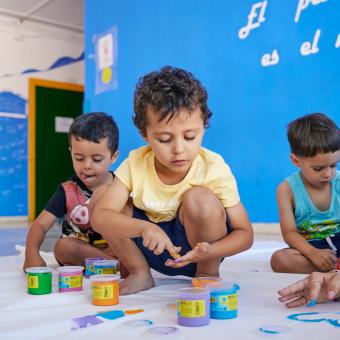
At CaixaProinfancia, we understand that financial assistance is a resource, not the ultimate goal. The aim of our intervention is to enable children to thrive socially, educationally and culturally.
That’s why we design personalised action plans that address each family’s educational, health, psychological and social needs holistically. We deliver these plans through networks of partner organisations in order to draw on the best specialists in each field. Another reason for working as a network is that it’s far better at catching anyone who, metaphorically speaking, falls through the cracks.
As CaixaProinfancia approaches its 20th anniversary, how would you assess the programme’s results?
Last year, we supported around 68,000 children and young people from 44,000 families through 202 networks across the country. And we’ve learnt that this new multidimensional, network-based approach, sustained over time, can deliver highly positive outcomes.
Can you give us an example?
Children who take part in our 0-3 early years provision reach the first year of primary school with a much smaller educational gap than those we haven’t been able to support, who can be as much as a year or even a year and a half behind. This shows how early intervention can help promote equality of opportunity.
We’ve also made significant progress in graduation rates at the end of compulsory secondary education (ESO). When the programme began, these stood at 50–55%, and among young people from lower-income households who take part in the programme, we’ve achieved rates similar to the Spanish average, at around 82–84%. We teach them not to give up.
We also have Impulso Joven, a new service for young people aged 14 to 20 who are at risk of dropping out or have already left post-compulsory education. Although it has only been running for two years, we’re beginning to see encouraging outcomes among young people who return to education or training.
All of this progress leads us to believe that we have an intervention model that could be implemented across the entire country.
What challenges lie ahead for our society in tackling child poverty over the coming years?
The great challenge is to ensure that poverty no longer limits the future opportunities of so many children from the earliest years of their lives. Because child poverty isn’t simply a lack of resources; it’s also an accumulation of missed opportunities. It cannot be right that a child, upon starting compulsory education, can already be carrying a disadvantage equivalent to a year and a half of learning simply because of the social circumstances they were born into.
That’s why we need to intervene through social and educational support as early as possible, support families, and ensure that schools, education and social services and organisations across the local area all work together as a network. We can’t simply resign ourselves to addressing inequalities once they’ve already become entrenched. We need to get ahead of them from the very outset.
And above all, we need to prevent children from ending up believing that their future is limited by where they were born. That, ultimately, is what equality of opportunity is really about.
So is it a question of increasing investment?
Yes, but simply increasing resources isn’t enough. We also need to organise support more effectively, evaluate its outcomes and commit to a holistic model that places education at its heart, as one of the most effective ways of breaking the intergenerational transmission of poverty. We need structural change.
Above all, we need to ensure that efforts to tackle child poverty no longer depend on electoral cycles. It needs to become a project for the whole country, a long-term commitment by the state that is shared across all political majorities.