You are reading:
You are reading:
14.09.26
9 minutes readMultiple sclerosis is a neurological disease in which the immune system, designed to protect the body, becomes its main aggressor. More than 55,000 people are living with it in Spain. It is a chronic condition, often invisible and still without a cure, for which research in neuroimmunology is now opening a door that did not previously exist. Multiple sclerosis represents one of the research lines at the CaixaResearch Institute aimed at gaining a better understanding of immune-mediated diseases.
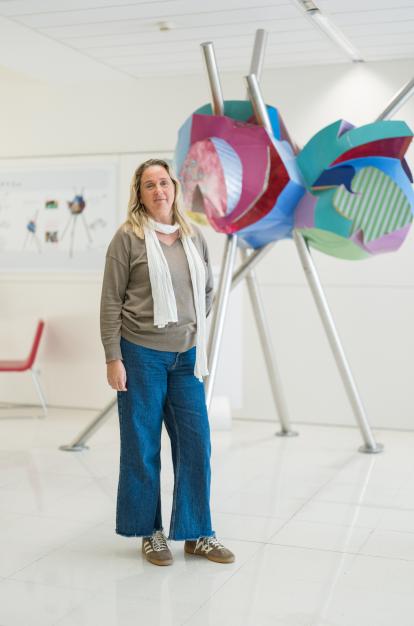
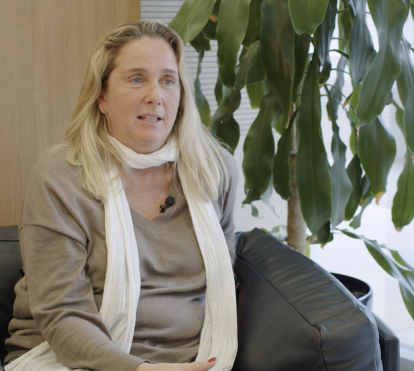
One morning in 2017, Núria García woke up with a numb right thumb. She thought it was due to a bad sleeping position, but over the following days the numbness began to spread: first to her hand, then to her forearm, eventually affecting the entire right side of her body. She began to notice that her hand was moving without her intending it to, that it was becoming increasingly difficult to change gears in the car, and that she was progressively losing sensation.
Those symptoms led her to an initial medical consultation, where she underwent a CT scan that did not provide clear answers. Some time later, another neurologist reviewed those images and identified clear and extensive lesions. The diagnosis came without hesitation: she had multiple sclerosis.
“It was a shock,” recalls Núria, now 51. “It was a disease I knew absolutely nothing about. I had no information, and I didn’t know anyone close to me who had it. The uncertainty of not knowing what was going to happen was the hardest part at that moment.”
Multiple sclerosis is known in the medical field as “the disease of a thousand faces” due to the huge variety of symptoms with which it can present. This diversity is what complicated Núria’s initial assessment and is why many patients take months to receive a clear diagnosis.
The disease occurs when the immune system, responsible for defending the body against internal and external threats, malfunctions and mistakenly attacks a part of the body itself: myelin, the layer that covers neurons and allows electrical impulses to travel properly through the nervous system. When this myelin deteriorates, nerve signals slow down or fail to be transmitted correctly. Depending on which part of the brain or spinal cord is affected, the symptoms can vary widely: vision problems, motor impairments or loss of sensation.
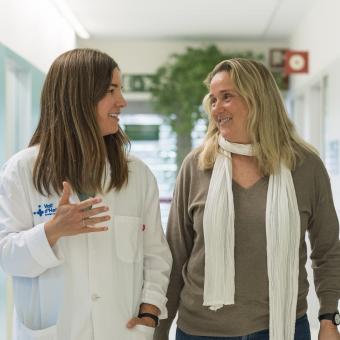
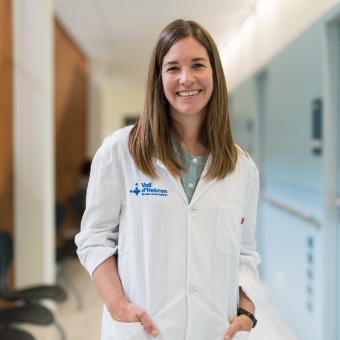
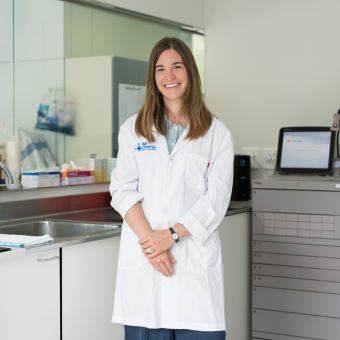
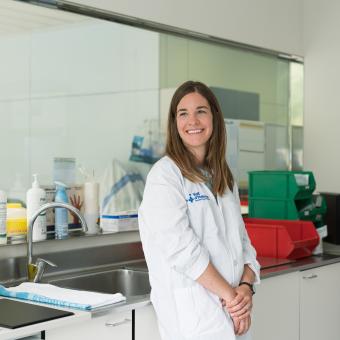
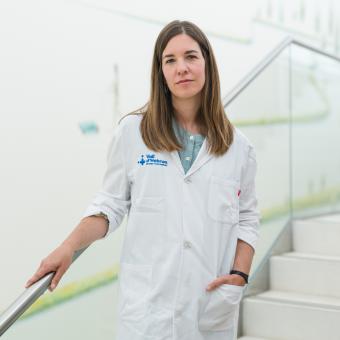
But there are other, less visible manifestations that can go unnoticed or be attributed to other causes. “Fatigue affects most people with multiple sclerosis and can end up being highly disabling,” says Ana Zabalza, a neurologist at CEMCAT (Multiple Sclerosis Centre of Catalonia) at Vall d’Hebron University Hospital in Barcelona. “There is also cognitive impairment, problems with concentration, fatigue, mood swings… These are symptoms that are often not visible from the outside, but they have a huge impact on everyday life.”
More than 55,000 people are living with multiple sclerosis in Spain, and around 1,900 new cases are diagnosed each year. Most appear between the ages of 20 and 40, and around 70% occur in women. Even so, the disease is still surrounded by a certain lack of awareness and by stereotypes. “People still associate multiple sclerosis with ending up in a wheelchair,” explains Zabalza. “And today that is far from the reality. Many people can lead a completely normal life for years.”
At first, this was also the case for Núria. Following the diagnosis, corticosteroids managed to control the initial flare-up, and the treatment worked well for a long time. “I was leading a completely normal life,” she recalls. “I went to work, and my social life was exactly the same.”
Most people with multiple sclerosis initially present with a relapsing–remitting pattern: flare-ups of symptoms that appear and from which they recover partially, interspersed with periods of stability. Núria followed this pattern for years. But gradually, without clear and visible flare-ups, the condition progressed. Her case evolved into progressive multiple sclerosis.
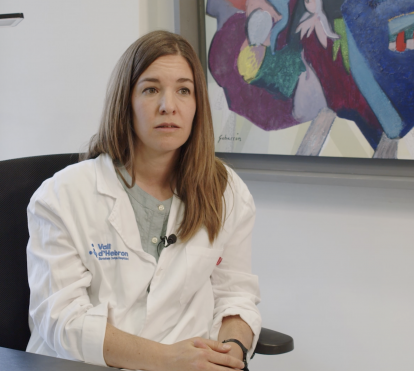
“Previously, we thought mainly about the inflammatory aspect of the disease, about the flare-ups,” explains Zabalza. “But we now know that from very early stages there’s also a progressive loss of neurons that can cause symptoms to worsen little by little.” That is what happened in Núria’s case. “She began to tell me: ‘I don’t run the same any more, I don’t walk the same, I can’t concentrate the same,’” says Zabalza, who has known Núria for years. “These are small things that perhaps, taken in isolation, might go unnoticed. But when they accumulate over months and years, you realise that the disease is progressing.”
Over time, Núria also began to change the way she related to the disease. “If I could speak to my past self, I’d tell her to take better care of herself and to stop prioritising things that perhaps aren’t all that important,” she reflects. “We think we have to give everything all the time, but there comes a point when you realise that what really matters is you.”
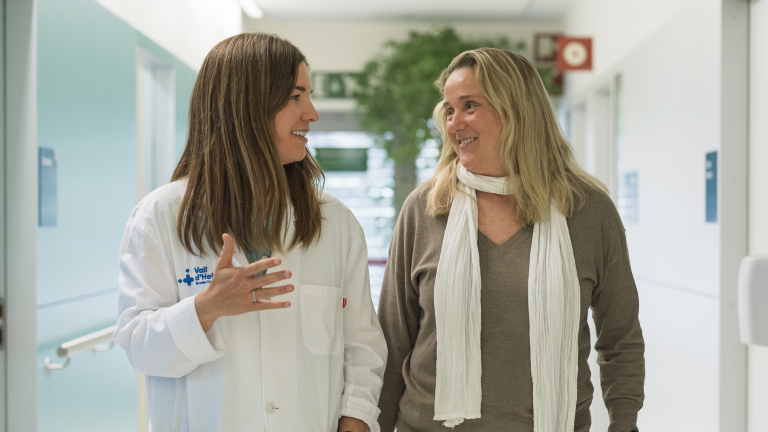
That process of acceptance and adaptation was not a journey that she made alone. For years, Núria has been part of CEMCAT, a specialised centre that provides comprehensive care through collaboration between the Institut Català de la Salut (Vall d’Hebron University Hospital), CatSalut, and the Fundació Esclerosi Múltiple, whose aim is to support people with this disease throughout all its stages. “When you come here, there’s no need to talk,” she says. “People see you and they already know how you feel, they already know what’s happening to you. You don’t have to keep giving explanations all the time.”

In addition to neurological monitoring, the centre has physiotherapists, psychologists, speech therapists, specialised nursing staff and rehabilitation teams made up of physiotherapists, speech therapists and other specialists. “The aim is not only to treat the disease, but to support the patient throughout their entire lives,” explains Zabalza. “As it’s a chronic condition, it’s essential to create an environment of trust in which shared decisions can be made and there’s genuine emotional support.”
For Núria, that contact with other people going through similar experiences was also key to accepting the disease. “At first I thought, ‘What a drag, coming here to talk about this all the time,’” she recalls with a laugh. “But later I realised that no-one can understand you better than someone who is going through the same thing. That’s when I understood I wasn’t the only one.”
Although multiple sclerosis still has no cure, the approach to the disease has changed radically in recent decades. “Thirty years ago there were virtually no treatments, and now we have a wide range of therapies, many of them highly effective,” explains Zabalza. Thanks to these advances, it is now possible to control flare-ups and inflammation much more effectively, allowing many people to maintain a good quality of life for years.
However, significant challenges remain. “We still don’t know how to properly treat progression and neurodegeneration,” the neurologist points out. Part of current research is focused precisely on gaining a better understanding what happens inside the brain during this silent progression of the disease. Understanding these mechanisms could open the door to new ways of slowing neurological damage and to the development of more effective therapies.
“Multiple sclerosis has an inflammatory basis that makes it a field in which immunotherapy has a great deal to offer,” says Dr Gabriel Rabinovich, who leads one of the research groups at the CaixaResearch Institute, Spain’s first research centre specialised in immunology, promoted by the ”la Caixa” Foundation.
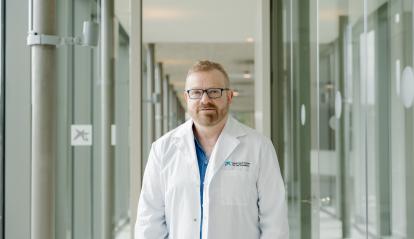
His work focuses on the study of galectins, a family of proteins that act as natural regulators of inflammation. When the immune response becomes excessively activated, these molecules help the body restore balance. For this reason, in conditions such as multiple sclerosis, enhancing this “biological brake” could help reduce damage and protect nervous tissue.
In parallel, other experimental strategies are being explored, such as CAR-T-cell therapies. Adapted from oncology, a field in which they have already demonstrated effectiveness against certain lymphomas and leukaemias, these therapies involve extracting immune cells from the patient, genetically modifying them and reintroducing them so that they act on specific mechanisms involved in the inflammatory process.
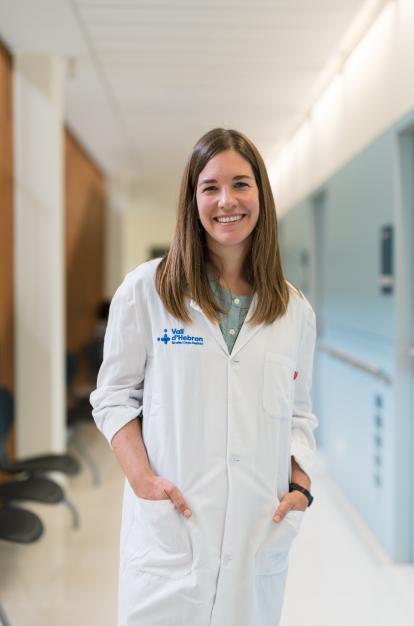
What makes them particularly interesting in this context is that they could cross the blood–brain barrier, the natural boundary that separates the blood from the brain and which many conventional drugs are unable to penetrate. “The idea is quite exciting,” admits Zabalza. “We could hypothetically treat inflammation from within the brain, which we believe would be more effective. In addition, these therapies make it possible to reset the immune system: the cells generated afterwards are much more anti-inflammatory, more similar to those of someone who does not have multiple sclerosis.”
Alongside the limited treatments currently available, phase 1 clinical trials are already under way. However, there remains a long road ahead, with uncertainties regarding potential long-term side effects, the actual duration of the effect and the cost of these therapies. Even so, for many patients they represent new possibilities that are always needed.
This is precisely one of the objectives of research promoted in centres like the CaixaResearch Institute: to ensure that advances in immunology do not remain confined to the laboratory, but can be translated into real new options for people.
For Núria, that research also represents something more: the possibility that the future may be different. “It gives you great peace of mind and a great deal of hope to think that new things will come out that will cure people, that everything will get better,” she says. “And that’s one of the most important things.”