You are reading:
You are reading:
16.06.26
10 minutes readResearch is usually told through its results, but behind every breakthrough lie less visible stories: early vocations, life changes and crucial support. One of the factors that most shapes a research career is early access to funding – fellowships, contracts or grants – as highlighted by the European Commission’s MORE4 study. The trajectories of Irene Marco, Marc Suárez-Calvet and César de la Fuente, fellows of the ”la Caixa” Foundation, show that innovation requires not only talent, but also time and trust.
Major scientific advances are often presented as complete, visible achievements: a new technology, an effective treatment or a significant discovery. However, this endpoint is only the most visible part of a much longer process shaped by early decisions, key opportunities and support that arrives at decisive moments. The European MORE4 study highlights that early access to funding – such as fellowships, initial contracts or mobility support grants – is one of the factors that most strongly influence the continuity of scientific careers and their international projection, to the extent that, without this impetus, many career paths are cut short before they can be consolidated.
At a time when research has become a central issue – both because of its direct impact on people’s health and quality of life and its ability to anticipate some of the major collective challenges – it is worth focusing not only on the result, the discovery, but also on the conditions that make it possible.
Irene Marco, Marc Suárez-Calvet and César de la Fuente have followed very different paths, yet their trajectories converge on the same idea: the science that transforms our lives also needs support, especially at the beginning, when a research career is still a possibility rather than a certainty.
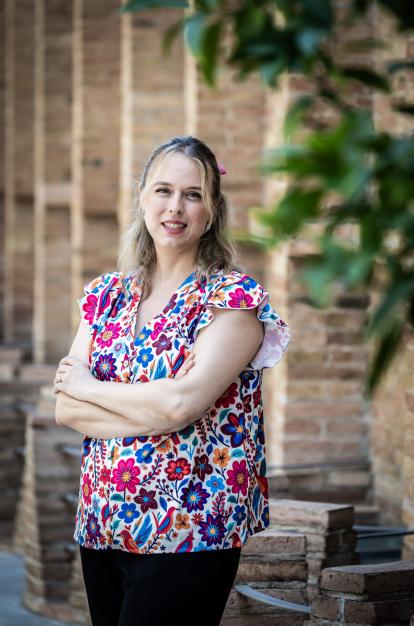
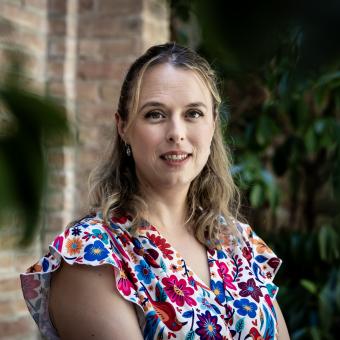
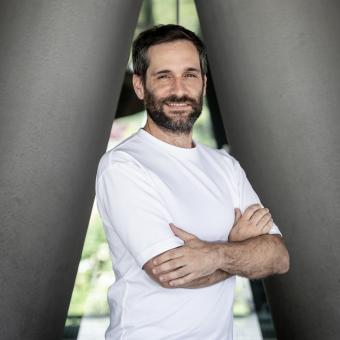
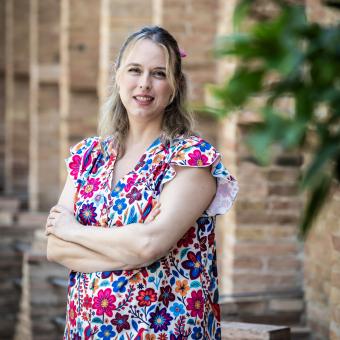
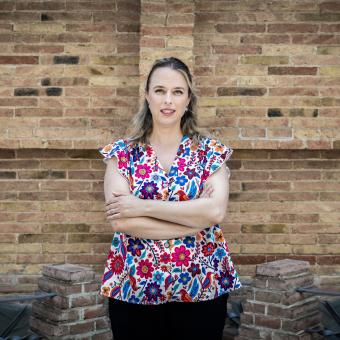
Irene Marco recalls an early vocation born out of a close contact with illness. “When I was little, I wanted to be a neurologist because my grandmother had dementia and my mother told me that the neurologist was helping her.” Later came another dream: “I visited the CosmoCaixa planetarium and was absolutely fascinated.” That was how, with the idea of eventually studying astrophysics, Marco decided to enrol in Physics at the Universitat Autònoma de Barcelona.
That initial goal, however, was cut short by an unexpected event. During her third year at university, her mother fell seriously ill and spent a period in a coma. It was then that the question ceased to be which field of knowledge fascinated her and became a much more concrete one: Who was actually helping her mother? “There were the doctors, of course, but also the machines keeping her alive. And who made those machines? ‘Biomedical physicists’, they told me.”
Since the speciality of Medical Physics did not exist in Spain, Marco completed an Erasmus placement at Heidelberg University (Germany) and, the following year, obtained a postgraduate fellowship abroad from the ”la Caixa” Foundation, which allowed her to stay for another year and undertake a master’s degree in Biophysics in 2009.
That fellowship marked the beginning of a long-term international trajectory, linked to a high level of specialisation and an understanding of science in terms of its capacity to transform everyday life. Marco spent 10 years conducting research outside Spain, moving between Germany, the United States, the Netherlands and Israel.
In 2018, she held a very good position in Cambridge, but she was already clear that “when I became a mother, I wanted to return to Spain”. At that point, a Postdoctoral Junior Leader fellowship from the ”la Caixa” Foundation enabled her to return under conditions comparable to those she had in the United Kingdom, in order to carry out her postdoctoral research in Molecular Biology and Biochemistry at the Institute for Bioengineering of Catalonia (IBEC) in Barcelona. “Without this fellowship, I probably wouldn’t have come back,” she admits.
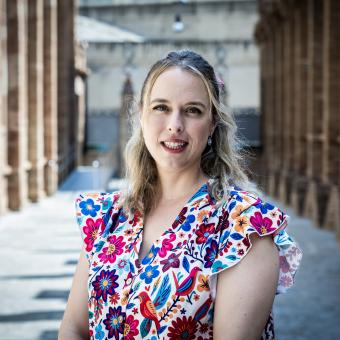
Today, Marco is a principal investigator at the institution and leads the Molecular Imaging for Precision Medicine group, which brings together biologists, biochemists, physicists, chemists and biomedical engineers. Her team develops advanced molecular imaging techniques using hyperpolarised magnetic resonance. This allows them to observe molecular processes “at a small scale, in small animals or even in cells” in real time, a line of research oriented towards precision medicine.
“My dream would be to bring this technology to hospitals all across Spain,” she says. Her ambition could revolutionise medical imaging and, in a way, bring her own story full circle. The same researcher who once wondered who built the machines that helped keep her mother alive is now working to create tools that enable a better understanding of disease.
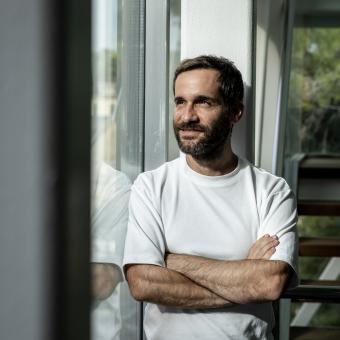
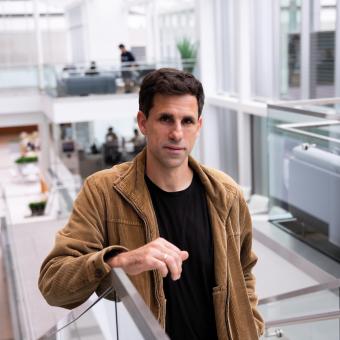
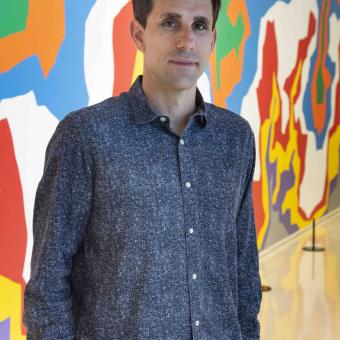
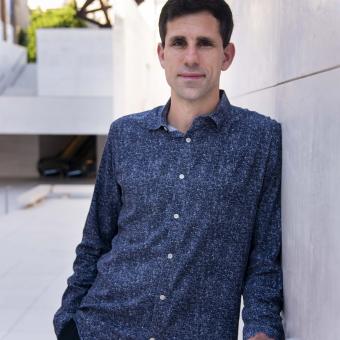
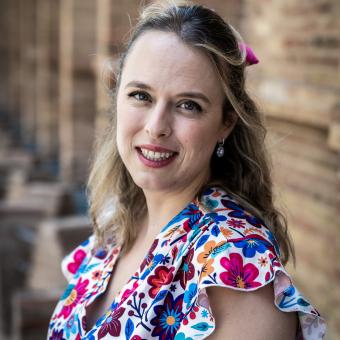
Marc Suárez-Calvet’s story begins in Sabadell (Barcelona) and unfolds far from any linear notion of vocation. He was not one of those students who always knew they wanted to study medicine. At first, he was mainly drawn to “the biological sciences, biochemistry,” he recalls.
It was when the time came to choose a degree that he began to take an interest in medicine: “the clinical side of working with patients, building a medical history, and that detective-like aspect of making a differential diagnosis.” The result was dual training in medicine and biochemistry, “which has also enabled me to carry out research.”
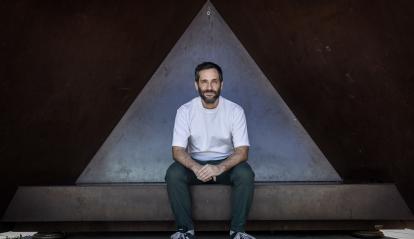
In 2021, after several years working in research teams in Germany, Sweden and London, Suárez-Calvet was awarded a fellowship to carry out his postdoctoral research at the Barcelonaβeta Brain Research Center, the research institute of the Pasqual Maragall Foundation, where his work has been widely recognised for its contributions to the study of Alzheimer’s.
In his case, the value of the fellowship is closely linked to one of the most delicate stages in any scientific career: the transition from postdoctoral work to research independence. “The life of a scientist, although sometimes idealised, mainly consists of asking for money,” he explains.
At that stage, a fellowship can change not only a researcher’s financial stability, but also their ability to develop their own research agenda: “Fellowships like those offered by the ”la Caixa” Foundation not only help you secure funding for your salary, which is already important, but also give you scientific independence; they allow you to start building your own group and your own line of research.”
And that independence has tangible consequences. Shortly after receiving the ”la Caixa” Foundation fellowship, he began preparing a proposal for the prestigious Starting Grant from the European Research Council (ERC), which he went on to win. “In all likelihood, if I hadn’t had the ”la Caixa” Foundation fellowship first, I wouldn’t have achieved it,” he acknowledges. That initial support laid the groundwork for accessing other competitive funding structures. “I now have my own group, my own laboratory, I lead a team of 10 people and we’re conducting our own research.”
At present, Suárez-Calvet is a clinical neurologist at Hospital del Mar, specialising in Alzheimer’s disease and other neurodegenerative disorders, and leads the Translational Neurology and Biomarkers group at the Barcelonaβeta Brain Research Center. His research focuses on understanding the molecular mechanisms of neurodegeneration and on developing biomarkers in blood and cerebrospinal fluid that make it possible to detect these diseases earlier, monitor their progression and better evaluate therapeutic responses.
It is within this framework that one of his most ambitious projects takes shape: HeBe, linked to the fellowship he received from the ERC. The hypothesis is as complex as it is promising: to identify factors present in the blood associated with ageing that may have either a rejuvenating or ageing effect on the brain and could therefore become future therapeutic targets against Alzheimer’s disease.
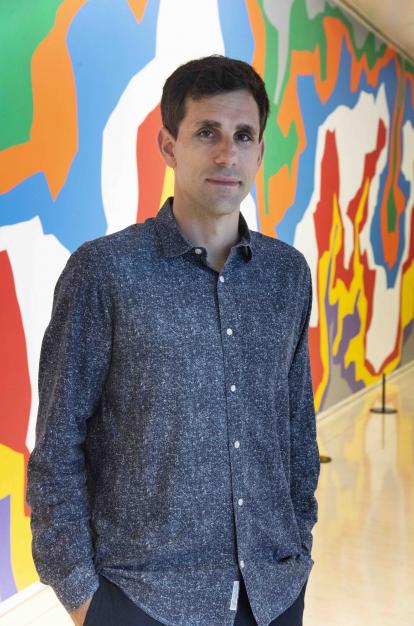
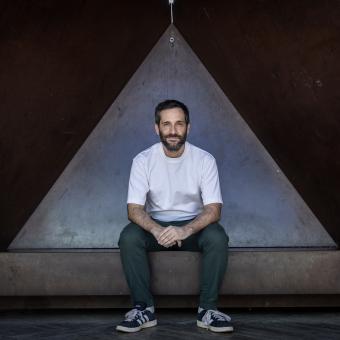
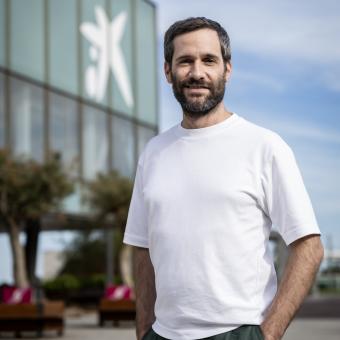
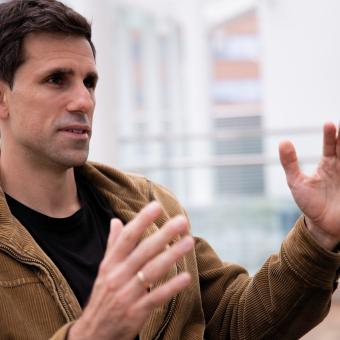
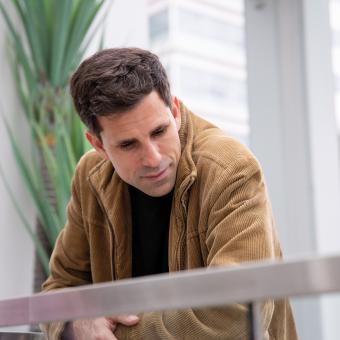
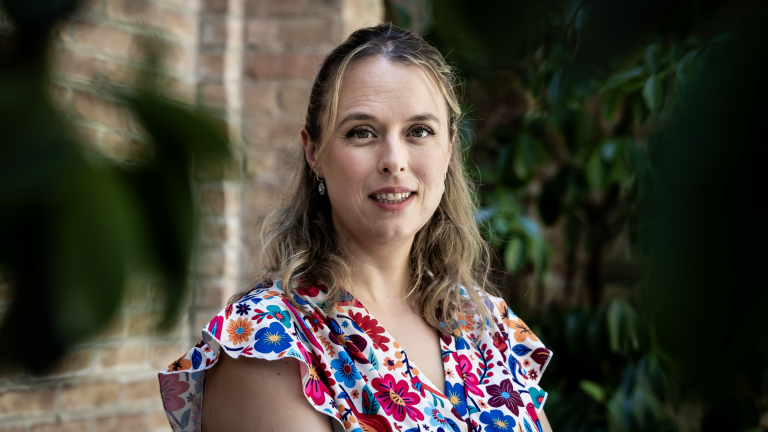
The son of a neuroscientist father and a medical doctor mother, César de la Fuente has revolutionised the discovery of antibiotics with the help of artificial intelligence. Even as a child, in his hometown of A Coruña, he would come home with fish to dissect and, at the age of eight, calculated how many helium balloons he would need to lift his own body weight and that of his siblings in order to fly.
He studied Biotechnology at the University of León. In his trajectory, being awarded a ”la Caixa” Foundation postgraduate fellowship abroad was a defining moment. It enabled him, in 2011, to undertake a PhD in Microbiology and Immunology at the University of British Columbia, in Canada. “I was awarded the fellowship to try to understand bacteria and why they become harmful to humans,” he recalls.
In his memory, the moment he found out he had been awarded it still retains the intensity of something decisive. “I received the ”la Caixa” Foundation fellowship at an absolutely critical moment,” says the researcher from A Coruña. “I was very young. I must have been 23. I still didn’t know who I was, either personally or, much less, as a scientist.”
The news reached him in the early hours of the morning in Vancouver, where he was doing his PhD, through a call from his mother. “I couldn’t believe it; I wasn’t expecting it at all.” That night, he opened a bottle of champagne with the woman who is now his wife. “It was an incredible moment, and it really changed my trajectory, above all because of the confidence it gave me.”
The impact of the fellowship was not limited to a practical dimension. There is something perhaps even more decisive: validation. “I wasn’t sure whether I could actually be a scientist. Having the support of an institution of the calibre of the ”la Caixa” Foundation, experts in identifying young minds with potential, was a turning point. I thought: ‘if they believe in me, let’s give it a go’.” In addition, in the scientific sphere, the fellowship gave him the freedom to pursue the research he wanted. “Without that initial boost, it’s difficult to reach the next stage.”
As a biotechnologist and researcher, he is now working on a pioneering line of research: “We’re trying to discover and design entirely new antibiotics using computational tools to kill bacteria.”
He is a full professor at the University of Pennsylvania (Philadelphia, USA), where he leads the Machine Biology Group, a laboratory working at the intersection of biology, medicine and computation to accelerate biomedical discoveries with the help of machines.
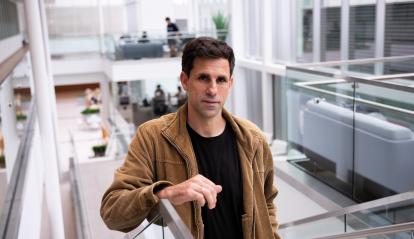
His team focuses primarily on antibiotic-resistant bacteria, a problem that, according to the WHO, ranks among the greatest threats to global health. “Superbugs are one of the major existential challenges we face,” he says.
At the age of 40, De la Fuente already has a meteoric career behind him. In 2019, he was named one of the world’s 10 leading innovators by the prestigious Massachusetts Institute of Technology (MIT), and in 2020 he was recognised as the top young researcher in the United States by the American Chemical Society.
The trajectories of Irene Marco, Marc Suárez-Calvet and César de la Fuente highlight something essential: the most pioneering research requires institutions capable of identifying talent at a very early stage, trusting in it when it is still emerging, giving it time and providing funding. The science that transforms our lives does not begin on the day of the discovery, but much earlier, when someone decides to back it.