CaixaForum Valencia celebrates Rembrandt as a printmaker in an exhibition organised with the British Museum
01.10.26
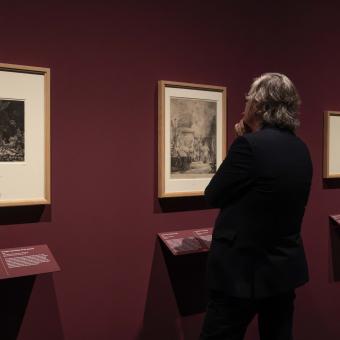
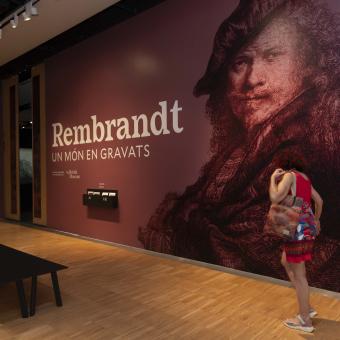
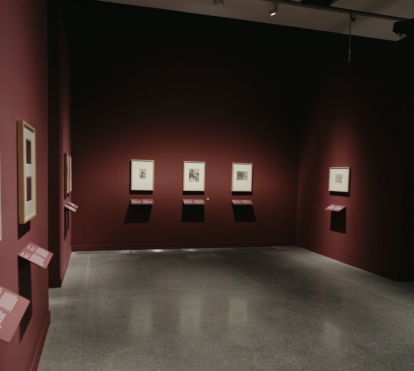
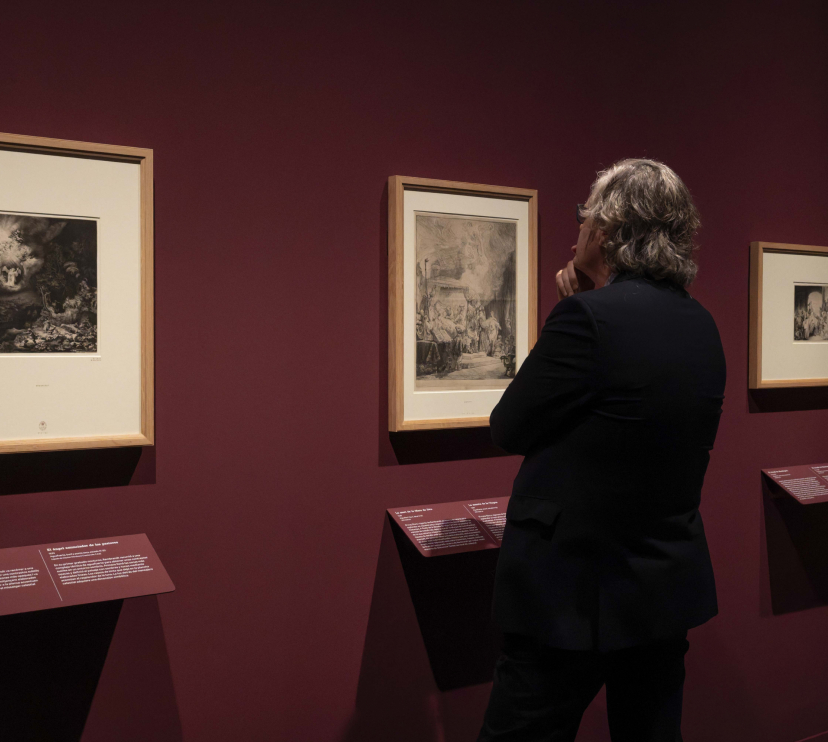
10 minutes readCaixaForum Valencia opens Rembrandt. A World in Prints, an exhibition organised in collaboration with the British Museum that offers a fresh perspective on Rembrandt van Rijn (1606–1669) through his work as a printmaker and draughtsman. An extensive selection of prints spanning every stage of his career, together with a selection of drawings, provides an insight into his creative process and reveals how he transformed line, light and shadow into a means of observing and depicting the world.
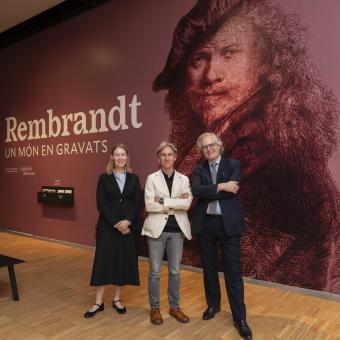
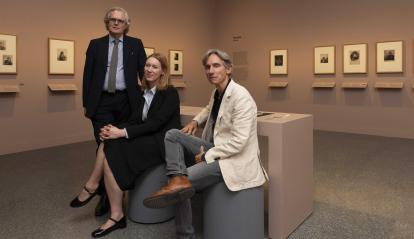
The director of CaixaForum Valencia, Álvaro Borrás, and the British Museum’s Assistant Keeper of Dutch, Flemish and German Prints and Drawings before 1880, Olenka Horbatsch, today presented Rembrandt. A World in Prints, an exhibition focusing on one of the lesser-known facets of the Dutch master: his work as a printmaker and draughtsman, two fields in which he demonstrated remarkable technical creativity and narrative power.
This is the eleventh collaboration between the ”la Caixa” Foundation and the British Museum, resulting from the strategic partnership between the two institutions, which has brought a wide range of exhibitions to audiences in Spain: The Pillars of Europe. The Middle Ages in the British Museum, on medieval art and culture; Agon! Competition in Ancient Greece; Pharaoh. King of Egypt; Luxury. From the Assyrians to Alexander the Great; The American Dream. From Pop to the Present Day; The Human Image: Art, Identities and Symbolism; Egyptian Mummies: Rediscovering Six Lives; Venerated and Feared. Feminine Power in Art and Beliefs; Voices of the Pacific. Innovation and Tradition; and I Am Ashurbanipal, King of the World, King of Assyria.
Considered one of the greatest and most innovative artists of 17th-century Europe, Rembrandt is universally celebrated as a painter, but he was also an exceptional printmaker and draughtsman, endowed with a unique ability to capture the world around him with an intimate and expressive eye.
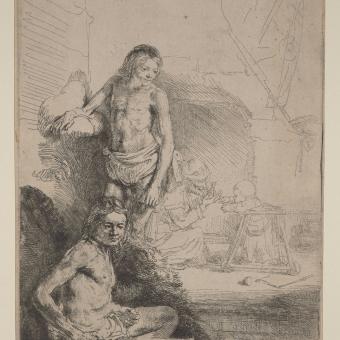
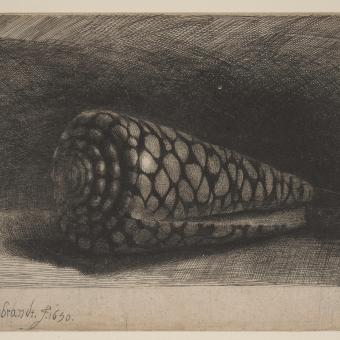
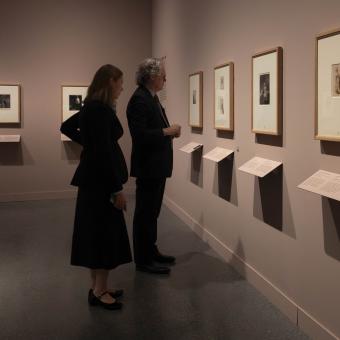
Rembrandt. A World in Prints brings together a total of 75 works, including 68 prints, one copper plate and six drawings. The exhibition consists primarily of prints, alongside a small, specially selected group of drawings, all drawn from the London museum’s outstanding collection.
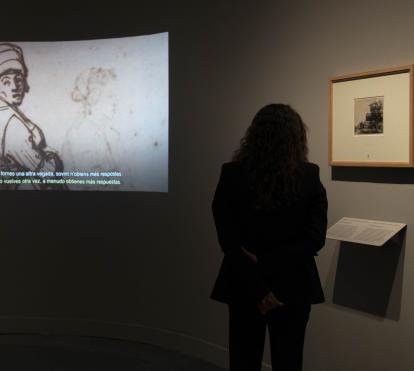
Six sections in which to rediscover Rembrandt
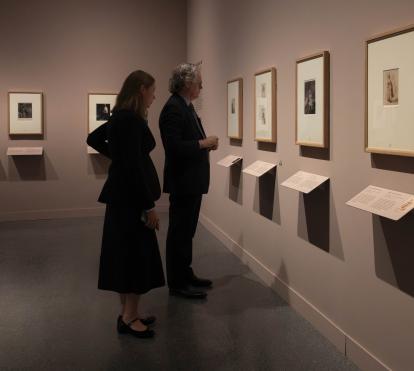
Rembrandt. A World in Prints presents an exceptional collection of prints and a carefully selected group of drawings offering a unique insight into the Dutch master’s artistic process. As well as providing a better understanding of how Rembrandt observed the world around him, the exhibition reveals his working methods and technical mastery of printmaking.
The exhibition therefore begins with an introductory section featuring a display case containing an engraved copper plate and various tools. These objects offer visitors a first glimpse of the artist’s technical ingenuity and creativity. Beyond this introductory section, the exhibition is organised into six thematic sections:
- Self-portraits
- Portraits
- Rembrandt’s women
- Drawings from life
- Landscape and nature
- Stories
from the Bible
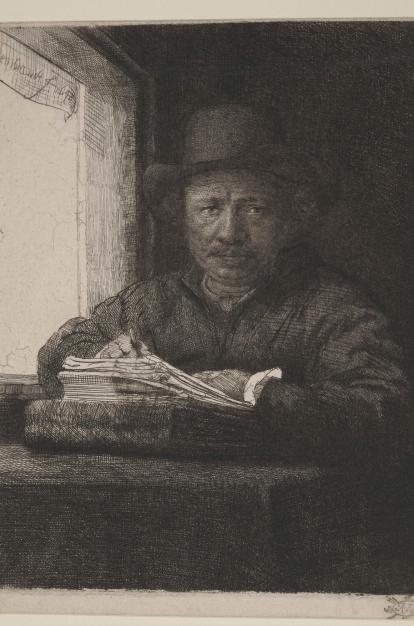
1. Self-portraits
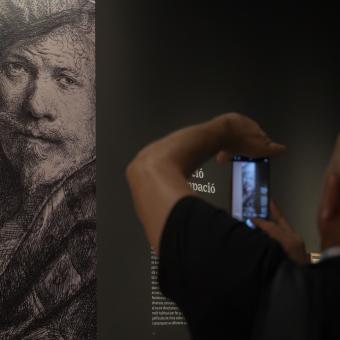
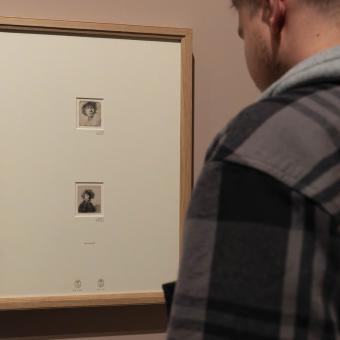
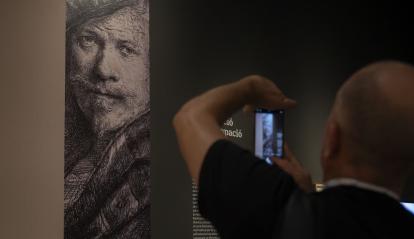
Rembrandt was the first artist to produce an extensive series of etched self-portraits over the course of his lifetime, created in different periods and depicting him in a wide variety of moods and attire.
Initially, the artist did not intend these prints for large commercial editions, but rather as studio exercises and technical experiments. He would subsequently refine the plates, removing rough areas, traces of ink or scratches. His later self-portraits reveal increasing artistic complexity and his complete mastery of printmaking techniques.
These intimate images were an important aspect of his creative experimentation, allowing him to shape and project his public image over time. Considered among his most personal works, they bring visitors face to face with Rembrandt and offer a glimpse of his social and artistic ambitions.
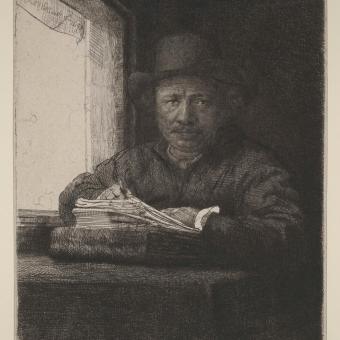
This section ranges from the meticulously detailed Self-Portrait Leaning on a Stone Sill (1639), in which the artist depicts himself in the manner of a Renaissance courtier, to the later Self-Portrait Drawing at a Window (1648), in which he portrays himself etching his own likeness onto a copper plate.
2. Portraits
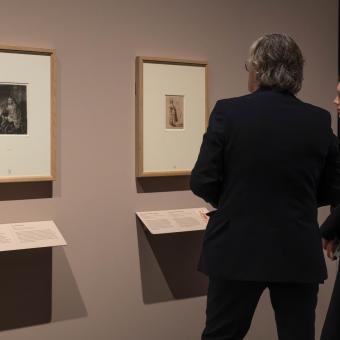
In the 17th century, portrait prints followed well-established conventions: the sitter was shown within a frame, with text beneath. Rembrandt broke with this tradition. Beyond capturing a physical likeness, his portraits evoked the personality of each model through dynamic poses, elaborate clothing and carefully constructed settings.
Rather than portraying royalty or the aristocracy, the artist depicted ministers, merchants, doctors and tax collectors whom he knew personally and who shared his innovative vision of portraiture. In this sense, the diversity of his clientele offers a representative snapshot of one section of Amsterdam society at the time.
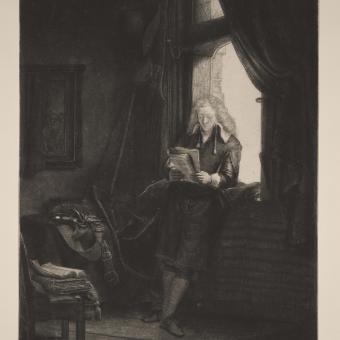
One of the most atmospheric portraits in the exhibition – and the focus of one of the interpretation tables – depicts his patron, the collector Jan Six, reading by a window. In this and other works by Rembrandt, a close friendship between artist and sitter is suggested.
3. Rembrandt’s women
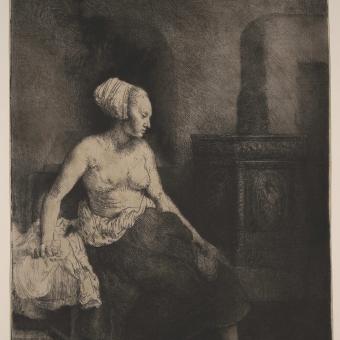
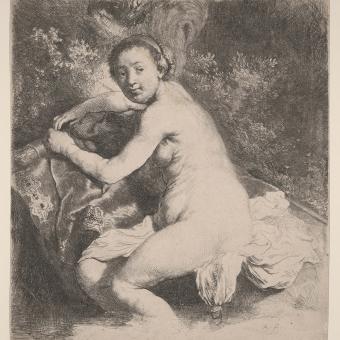
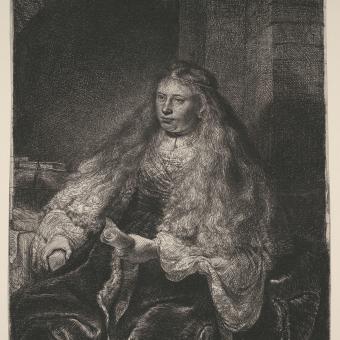
As was customary at the time, Rembrandt had his studio in his own home and drew the women in his innermost circle, both in formal sittings and in spontaneous domestic scenes. These depictions offer a rare glimpse into his personal life.
In 1634, he married Saskia van Uylenburgh, who appears frequently in his work, both in direct portraits and in the guise of figures from biblical and classical stories. She died prematurely, however, in 1642. Following her death, Rembrandt employed Geertje Dircx as a nursemaid to his son Titus, and in 1650 Hendrickje Stoffels, who would become his new maid, joined the household and became his companion until the artist’s death. Although there is not always documentary evidence to confirm their identities, both women are believed to appear repeatedly in the Dutch master’s prints and drawings.
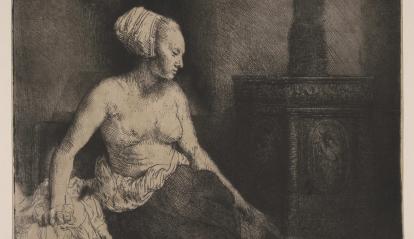
4. Drawings from life
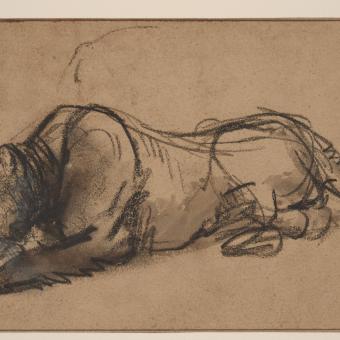
A keen observer of everyday life, Rembrandt drew inspiration from both the domestic sphere and the bustling streets of Amsterdam. He drew his models in his studio or at home, capturing movement in rapid pen-and-ink sketches and recreating the effects of light through delicately applied washes.
His etchings from the 1630s took the form of spontaneous “study sheets” drawn directly onto the plate, resulting in prints with the appearance of drawings. From the 1640s onwards, when he began taking on pupils in his studio, he organised life-drawing sessions as a fundamental part of his teaching, encouraging his pupils to work in his own style.
5. Landscape
and nature
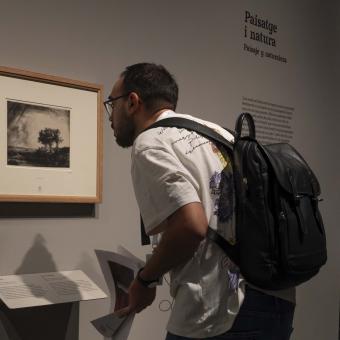
Like other northern European artists before him, Rembrandt drew inspiration from the landscapes of his homeland: thatched cottages, windmills and the course of the River Amstel as it flowed through Amsterdam populate his prints and drawings. He produced many of these works during long walks on the outskirts of the city, and those locations can still be identified today.
The exhibition allows visitors to trace his development in this genre, from highly detailed, technically precise prints to works from his final period, executed with much quicker, looser strokes that more closely resemble drawing. In these works, the artist sought to create atmosphere through effects of light in black and white. Alongside real views drawn directly from nature, the section also includes imaginary landscapes, meticulously composed in the studio.
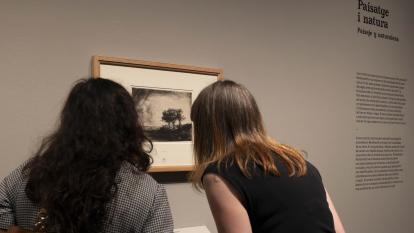
6. Stories
from the Bible
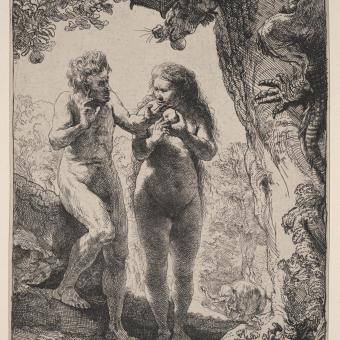
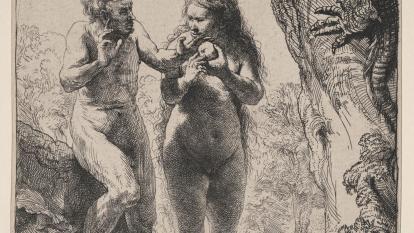
The Bible was a constant source of inspiration for Rembrandt, and some of his most notable works depict episodes from the Old and New Testaments.
The artist drew on his mastery of etching to create dramatic effects of light, imbuing the illumination in his religious scenes with symbolic meaning. He also brought gestures and emotions drawn from everyday life into these biblical narratives, offering a contemporary interpretation of familiar stories.
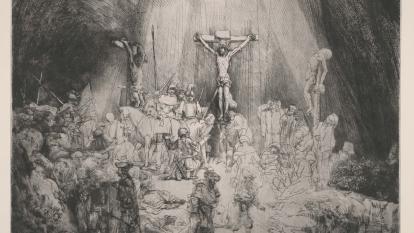
A stylistic progression can be traced through his religious prints, from dramatic treatment towards ever deeper introspection. The prints from the 1640s stand out for their extraordinary narrative power and brilliant use of light and shadow, while those depicting the Passion of Christ from the 1650s, towards the end of his life, are darker and more technically complex.
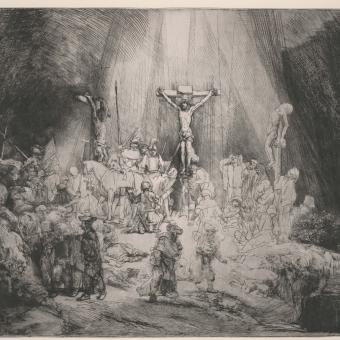
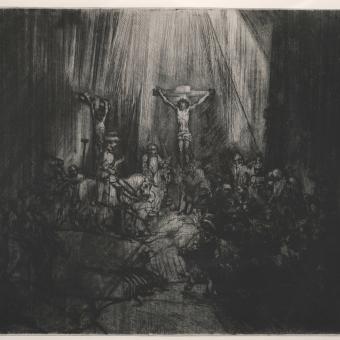
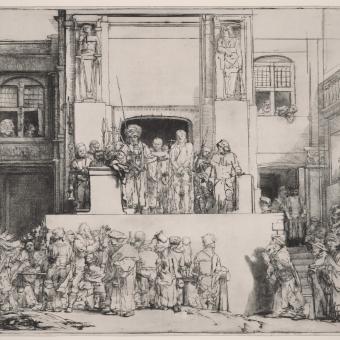
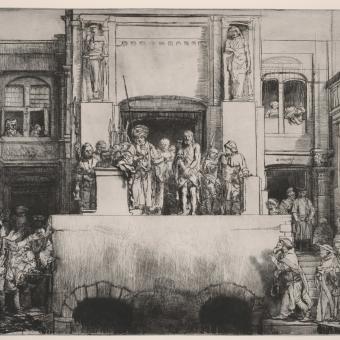
This final section of the exhibition culminates in an intimate space enclosed by velvet curtains, where two pairs of prints on biblical themes are displayed. These comprise two of his masterpieces, each accompanied by a variation: Christ Presented to the People (1655) and The Three Crosses (1653). Executed in drypoint, a technique that produces a velvety black line, these works represent the culmination of Rembrandt’s achievements as a printmaker.
Interpretation and accessibility project: Rembrandt. A World in Relief:
The large number of works brought together in the exhibition and the aim of making printmaking techniques accessible to a wide range of audiences form the starting point for Rembrandt. A World in Relief, a multi-layered interpretation project. A particular highlight is the three interpretation tables positioned throughout the exhibition, which allow visitors to experience some of Rembrandt’s expressive techniques through sight and touch.
Etching begins with a copper plate coated with an acid-resistant varnish. The interpretation activity invites visitors to explore the process of printing an etching and discover some of its expressive techniques through touch. These include, for example, the patterns created by scratching through the varnish to expose the copper beneath, and the possibility of polishing the plate to alter the resulting image.
These three activities bring these techniques closer to all audiences through experimentation with sight and touch.
Although the tactile tables were designed especially for visitors with visual impairments, this interpretation project is intended to appeal to all visitors, making the experience truly accessible to everyone.
At the first table, entitled Controlling Light, visitors learn how Rembrandt used light to structure his scenes. Using the Portrait of Jan Six (1647) as an example, visitors reconstruct the image of the art collector, placing smoother pieces over the lighter areas and rougher, denser pieces over the darker ones. Through this process, they discover that Rembrandt illuminated some objects more than others to reveal the personal interests of this wealthy Amsterdam merchant.
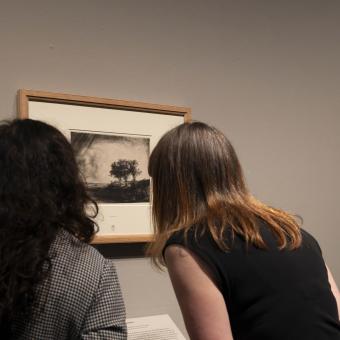
The second table, Freedom of Line, focuses on the landscape The Three Trees (1643) and shows how Rembrandt depicted an approaching storm using different types of line for each element: the rain, the still water of a pond, the clouds and the leaves of the trees, lending the scene a dramatic quality. The activity invites visitors to reconstruct the print and reflect on what each fragment and its linework convey.
The final table, Variations of State, uses Christ Presented to the People (1655) to explain the concept of a “state” in printmaking: the possibility of correcting errors on a plate by polishing it and reworking it, which also allows figures and other elements of the scene to be added or removed. Like a spot-the-difference game, the table invites visitors to compare two versions of the same print, in which Rembrandt removed a group of figures and altered the façade of the temple, and to consider how these changes affect the interpretation of the work.
Audiovisual creation, infographics and audio guide
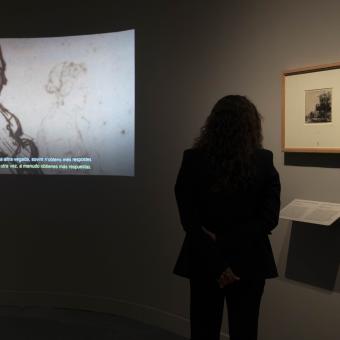
In addition to the three interpretation tables, the exhibition features other resources that enrich the visitor experience, including four newly created audiovisual pieces produced by the British Museum. The videos, two of which have been specially created for the exhibition, focus on Rembrandt himself, the technical process involved in creating a print, and the content of some of the exhibition’s key works.
In addition to the introductory texts for each section, all the exhibition labels include commentary to help visitors interpret the works. The exhibition also features a newly created infographic devoted to Christ Healing the Sick, or The Hundred Guilder Print (1648), one of Rembrandt’s most iconic works, which depicts Jesus at the centre surrounded by numerous figures. This resource provides a description of the different elements that make up the work and gradually reveals the print’s complex iconography, helping visitors to interpret it and adding a dynamic element to the exhibition.
Alongside these resources, visitors can also request an audio guide that departs from the traditional format. Rather than simply explaining the content of the prints, it explores themes that connect the Dutch master’s work with the present day. His self-portraits, for example, are compared – allowing for the obvious differences – with contemporary selfie culture. Similarly, the way he depicted the women in his life is brought into dialogue with contemporary interpretations of reality.