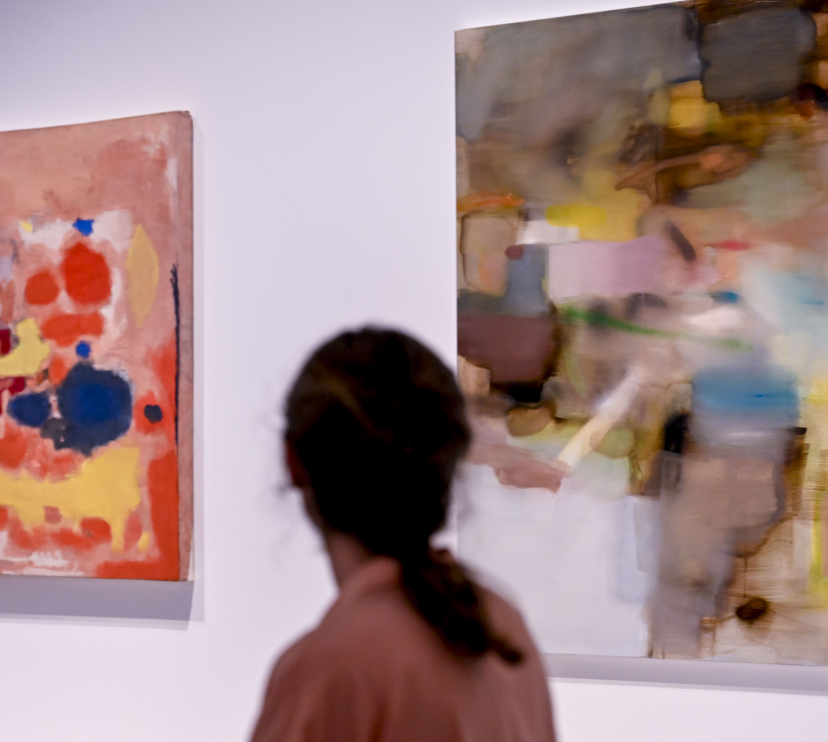
CaixaForum Barcelona surrenders to the poetry of blurring in art, starting with Monet
19.05.26
9 minutes readCaixaForum Barcelona explores the poetry of blurring as an aesthetic choice and a key to interpretation in modern and contemporary art. Taking Monet’s water lilies as the starting point for this collaboration between the Musée de l’Orangerie and the ”la Caixa” Foundation, the exhibition brings together 77 works by major artists, most of them contemporary.
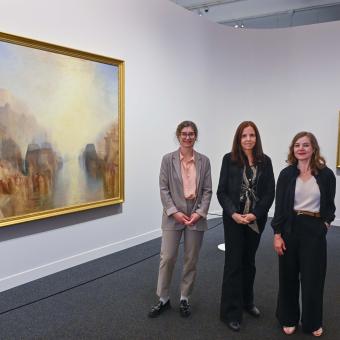
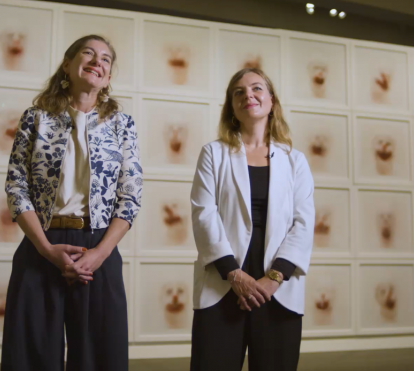
Mireia Domingo, director of CaixaForum Barcelona; Claire Bernardi, director of the Musée de l’Orangerie and curator; and Emilia Philippot, head of the Scientific and Collections Department at the Musée Rodin and also curator, present this Tuesday the exhibition Out of Focus. Another Vision of Art.
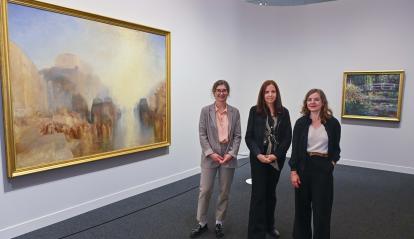
The result of a collaboration between the Musée d’Orsay, the Musée de l’Orangerie and the ”la Caixa” Foundation, the exhibition was on view at the Paris museum from April 2025 and at CaixaForum Madrid from September 2025. From 21 May, it can be visited at CaixaForum Barcelona, with a new staging and the addition of new works.
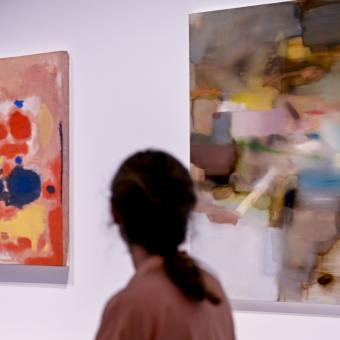
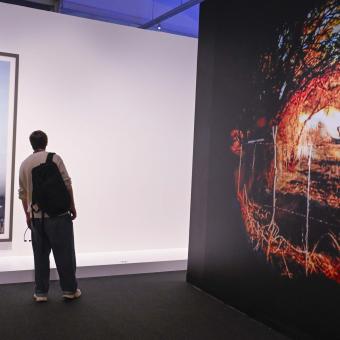
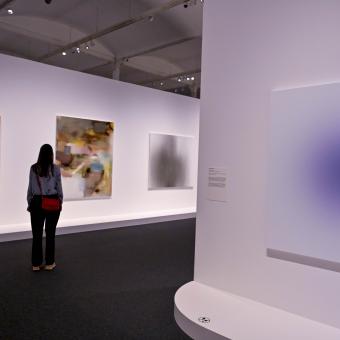
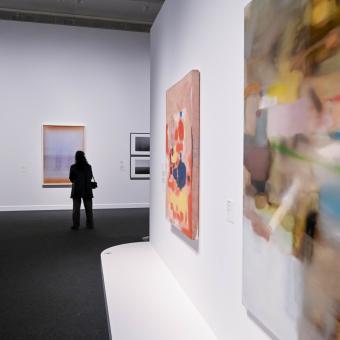
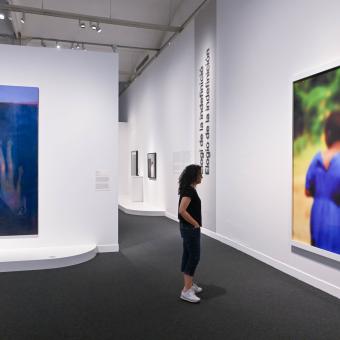
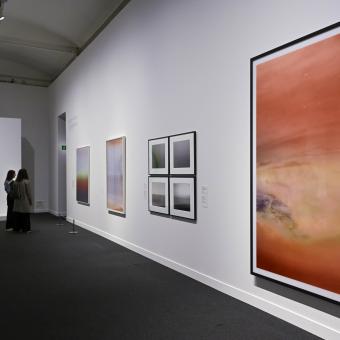
The exhibition, organised thematically rather than chronologically, brings together a total of 77 works of art by 58 artists, spanning a wide range of techniques and formats, including painting, works on paper, sculpture, photography and video. Both the Paris exhibition and the CaixaForum presentations include works from the ”la Caixa” Foundation Contemporary Art Collection.
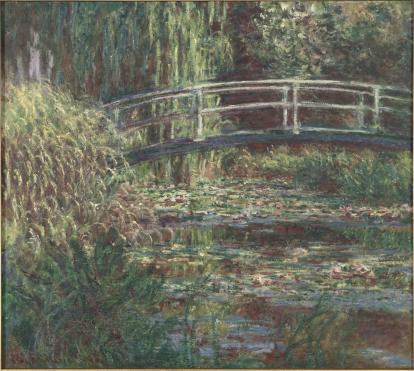
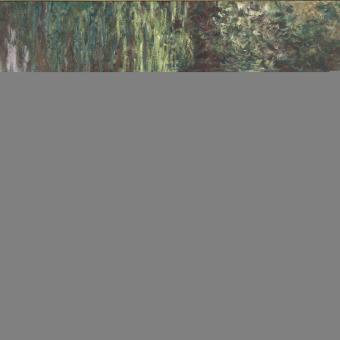
Monet’s Water Lilies series introduced the concept of blurring into modern art, using the hazy and the imprecise as expressive elements. This exhibition explores how that phenomenonmarked a new way of representing and understanding the world for later artists, particularly from 1945 to the present day.
Out of Focus. Another Vision of Art features works by artists such as Alberto Giacometti, Mark Rothko, Eva Nielsen, Claude Monet, Thomas Ruff, Alfredo Jaar, Christian Boltanski, Hans Haacke, Julia Margaret Cameron, Mame-Diarra Niang, Nan Goldin, Bill Viola and Pipilotti Rist, among others.
In addition, for its Barcelona presentation the exhibition includes a large-scale work by the English Romantic painter, watercolourist and printmaker Joseph Mallord William Turner, on loan from Tate.
The work, The Harbour of Brest: Quayside and Château (c. 1826–28), is an unfinished oil painting in which the artist captures the light on the water of the port of Brest, in Brittany. The outlines of the landscape and of the figures on the quayside are barely discernible, giving the painting an almost abstract quality.
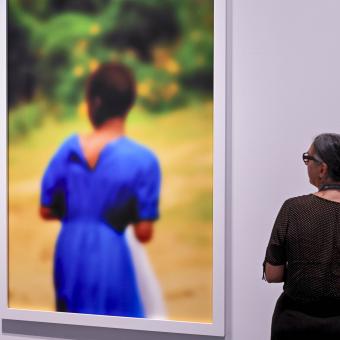
Also included in the exhibition at CaixaForum Barcelona are I.G. (790-3) (1993) by Gerhard Richter, which depicts the bare back of a woman with a blurred outline; the unsettling Le contour vaporeux d’une forme humaine (1896) by Odilon Redon, which sketches the ghostly silhouette of a seated woman with a threatening presence in the background; and Moonlight: The Pond (1906) by Edward Steichen, showing a forest reflected in a pond. Also newly featured are Soy corona en la frente de mi puerta: envidia al Occidente en mí el Oriente (from the La Alhambra series) (1984), one of Soledad Sevilla’s deconstructions of the courtyards of the Alhambra; the experimental X-ray work Radiographie positive d’une main de momie (1989) by Albert Londe; and the deliberately blurred Autoportrait flou (1982) by Hervé Guibert.
The exhibition includes works from around 50 lenders – private collections, galleries, museums, foundations, artists and individuals – and brings together a dozen pieces from the ”la Caixa” Foundation Contemporary Art Collection. These include works by Gerhard Richter and Soledad Sevilla, as well as pieces by artists such as Roni Horn, Hiroshi Sugimoto, Pedro G. Romero and Perejaume, some of which were already shown in the exhibition’s debut at the Musée de l’Orangerie in Paris and in its presentation at CaixaForum Madrid.
Monet’s Water Lilies series, long regarded as the paragon of abstract painting, has also been a precursor of the large-scale immersive installations that would follow. Yet the blurred, out-of-focus effect that characterises the vast expanses of water on the canvases – initially attributed to a visual impairment Monet may have suffered – had never been fully examined. Today, by contrast, this artistic technique is recognised as a deliberate aesthetic choice and serves as the guiding thread running through the exhibition.
Starting from the aesthetic roots of blurring in the 19th and early 20th centuries, and tracing the intellectual, scientific, social and artistic upheavals that shaped Impressionism, the exhibition explores how blurring – initially defined as a loss of sharpness – turns out to be a privileged means of capturing a world where instability prevails and visibility becomes clouded.
Five major thematic sections
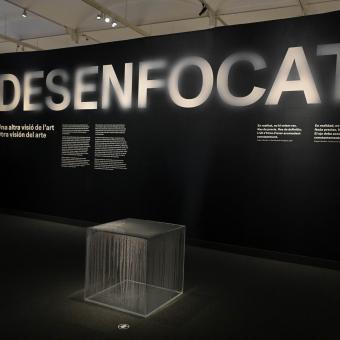
The exhibition is divided into five major thematic sections, preceded by two singular works. Condensation Cube (1963–1967) by Hans Haacke uses an acrylic cube and the surrounding atmosphere to represent the constant change of any organism in its interaction with its surroundings. Real Time Analog Digital Clock (2009) by Maarten Baas presents a false digital clock in which a man manually indicates the time, painting and erasing the digits every minute. These two works lead into the sections that follow, which explore a range of themes:
- Preface: The exhibition places
visitors at the roots of the out-of-focus aesthetic, beyond the modern period. At the end of the 19th century, Impressionism marked a
true turning point that would lead to the dissolution of form. By exploring
their inner selves, these artists used blurring to reveal what the clarity of
vision normally conceals from our consciousness. The works brought together in
this exhibition evoke the different facets of that foundational moment.
In the Barcelona presentation, this first section includes Turner’s unfinished oil painting The Harbour of Brest: Quayside and Château (c. 1826–28), in which the diffuse light on the water already hints at the dissolution of form that would come to characterise Impressionism. The exhibition opens with Monet’s Le Bassin aux nymphéas, harmonie rose, which invites a dialogue between contemporary art and the liquid reflections of his pond.
- On the brink of the visible: The first section proposes approaching blurring as an
effect that challenges our ways of perceiving. From the limits of the visible
explored through scientific imagery to the disruption of traditional artistic
references, artists play with vagueness rather than with the opposition between
representation and non-representation. In this space, paintings by Gerhard
Richter, Mark Rothko, Wojciech Fangor, Hans Hartung, Soledad Sevilla, Perejaume
and Claire Chesnier, among others, coexist with photographs by Hiroshi
Sugimoto, Thomas Ruff, Laure Tiberghien, Vincent Dulom and many others.
- The erosion of certainties: The second section explores the way blurring,
initially defined as a loss of sharpness, turns out to be a privileged means of
capturing a world where instability prevails and visibility becomes clouded.
Visitors are placed in a new realm in which artists propose alternative
approaches, treating their materials as transient, disordered, mobile,
unfinished and uncertain. This is expressed through works such as the striking
photographs by Thomas Ruff, Luc Tuymans, Miriam Cahn, Nicolas Delprat, Alfredo
Jaar, Christian Boltanski, Zoran Mušič, Krzysztof Pruszkowski, Philippe Cognée,
Joana Hadjithomas and Khalil Joreige, Bracha Lichtenberg Ettinger, Estefanía
Peñafiel Loaiza and Pedro G. Romero.
- In praise of vagueness: The
third section focuses on the work of artists who, recognising a profound
upheaval in the order of the world, opt for the indeterminate, the indistinct
and the allusive. The diffuse becomes a search for identity. In this section,
works by Gerhard Richter, Pipilotti Rist, Alberto Giacometti, Christian
Boltanski, Eva Nielsen, Mame-Diarra Niang, Óscar Muñoz, Bill Viola, Thomas
Lélu, Roni Horn and Antoine d’Agata, among others, are brought together.
- Uncertain futures: The final section offers an exploration of the manner
in which blurring reveals instability while at the same time creating the
conditions for a renewed sense of wonder. The artists Léa Belooussovitch, Nan
Goldin, Y. Z. Kami, Maarten Baas and Mircea Cantor take centre stage in this
closing chapter.
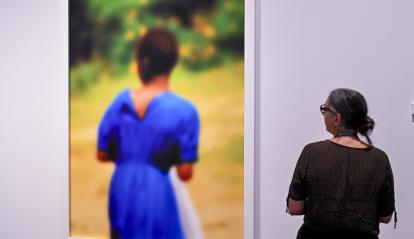
On the brink of the visible
The human mind insists on clarifying confusion. Symptomatic of our unease in the face of an uncertain reality, the “what is…?” has replaced the “why?” of our childhood. Yet this need to structure reality carries the risk of limiting its meaning. Blurring, on the other hand, draws on our experience, which spreads out over time and reaches into our innermost depths.
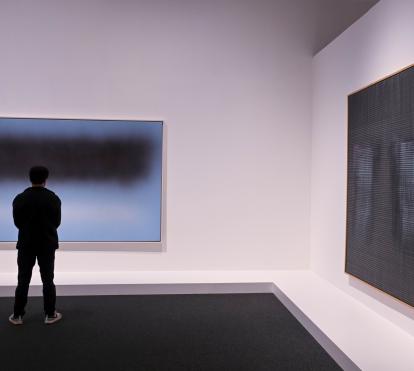
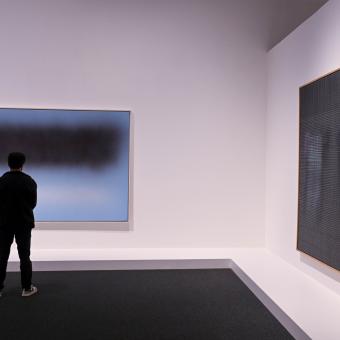
Artists use this effect to question our modes of perception, inviting us to return to the very source of our gaze and encouraging us to move beyond a single reading of reality. Some explore the limits of the visible by revisiting the vocabulary of scientific imagery, from the perception of the infra-thin to the immensity of the cosmos (Gerhard Richter or Thomas Ruff).
Others alter traditional reference points of representation, playing with indistinctness rather than the opposition between figuration and abstraction (Mark Rothko, Hiroshi Sugimoto, Hans Hartung). And some challenge the viewer, cleverly sharpening their visual acuity by evoking the circularity of the retina in their target-like works (Wojciech Fangor, Ugo Rondinone, Vincent Dulom).
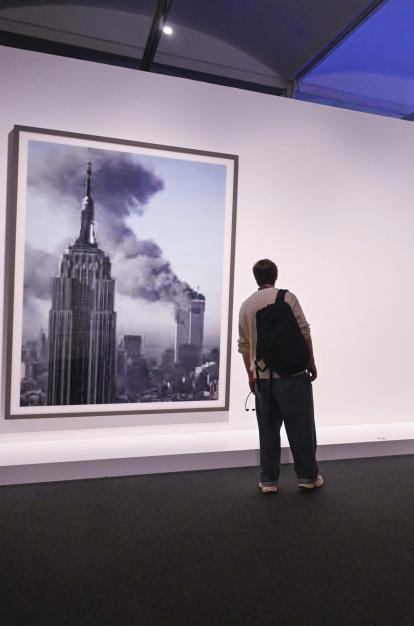
The erosion of certainties
It is in the aftermath of the Second World War that the explicitly political dimension of the aesthetics of blurring begins to fully unfold. Faced with the erosion of certainties, artists from Zoran Mušič to Gerhard Richter confront the profound upheaval of the world order and adopt blurring as a necessary strategy.
Following the discovery of the concentration camps, confronted with the impossibility of representing the unrepresentable, blurring dissolves a reality that the gaze cannot bear. It also compels us to reflect, forcing us to focus on the image and to face that reality head-on. By questioning the status and value of the image, artists put forward a vision that is at once both poetic and disenchanted of the tragedies that shaped the history of the twentieth century, through to the most current crises.
Blurring thus reveals its blinding power as a mechanism of forgetting, but it also constitutes another way of bringing to light the atrocities of history as disseminated by media images.
In praise of vagueness
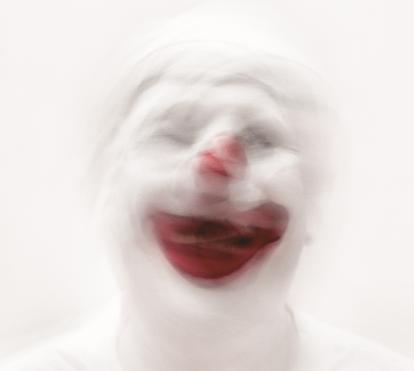
The world is a blur, no matter how hard we try to define its contours. Its expanses and durations are constantly being stretched out, making it impossible to focus on anything definitive, like the mirages captured by Bill Viola, which hint at the extent to which our senses can be deceived. Identity, too, is blurred and constantly changing, revealing all or some of its facets to others and to ourselves (Oscar Muñoz, Hervé Guibert, Bertrand Lavier). Between the uncertain memory of the past (Eva Nielsen) and the refusal of a frozen representation of the present (Mame-Diarra Niang), blurring becomes a quest for identity.
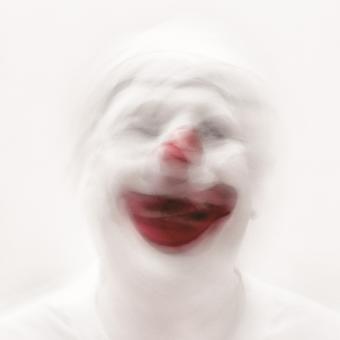
The result of a certain technical naivety, but also a guarantee of the spontaneity of the captured moment, blurring in amateur photography reflects life in its fullest reality (Sébastien Lifshitz Collection). It makes it possible to convey the most intimate places, those that are hardest to explain, and thus to show what often escapes the eye. At times, the vagueness inherent in blurring reveals the animal side of the human being (Roni Horn, Pipilotti Rist).
Uncertain futures
Y.Z. Kami’s relationship with spirituality, approached through sacred places and gestures, offers one possible response to contemporary uncertainties. Captured during the lockdowns of 2020, Nan Goldin’s bouquet highlights the beauty and transience of everyday life in turmoil in a world losing its bearings.
The question of time, whether marked by Maarten Baas’s false digital clock or by the unpredictable future foretold by Mircea Cantor, is presented as an object of contemplation and existential reflection. Paradoxically, blurring becomes both a symptom and a condition for renewed motivation, a sign of unease and a space for the reinvention of what is possible.
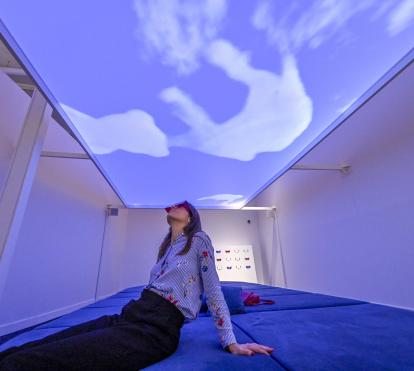
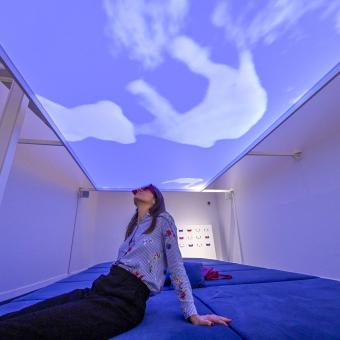
The exhibition features a mediation and contemplation area titled Re-view. Looking at the sky with different eyes, which invites people to recline in a comfortable, open setting and re-examine a sky filled with evocative clouds. Through artistically modified glasses that distort vision, visitors are encouraged to look at things more imaginatively.
The sky has been created using generative AI, and the glasses will allow them to see in different ways: with alternative colours, iridescent light, through a lens that focuses closer or farther away, or with increased blurriness, for example. All of this emulates the visual capabilities of real animals as well as imagined ones, so that visitors can experience multiple ways of seeing.
Musée de l’Orangerie
The Musée de l’Orangerie is located in the heart of Paris, in the Tuileries Garden, bordered by the Seine and overlooking Place de la Concorde.
Among its collections is the Water Lilies cycle, Claude Monet’s monumental work, which was presented to the public when the museum opened in 1927. Displayed across two vast oval rooms, the Water Lilies form the ambitious project of a painter who sought to capture every variation of light in his garden at Giverny. Known throughout the world, this masterpiece invites endless contemplation.
In the 1960s, the Musée de l’Orangerie also became home to the Les Arts à Paris collection, comprising works by Renoir, Cézanne, Matisse, Picasso, Modigliani, Rousseau and Soutine, among others. This collection reflects the full artistic effervescence of the late 19th and early 20th centuries.
![Henri Matisse, Le Rêve [The Dream], May 1935. Centre Pompidou, Paris. Musée national d’art moderne / Centre de création industrielle AM 1979-106.](https://imagenes-mediahub.fundacionlacaixa.org/files/image_354_278/files/fp/uploads/2025/08/26/68ada56c233a2.r_d.806-1000-2196.jpeg)
- Imágenes
- Videos
- Audios
Barcelona02.09.25An immersive ode to nature, Matisse, blurring in art, and a mammoth, all in the new season at CaixaForum Barcelona and CosmoCaixa
In the 2025–2026 season, CaixaForum Barcelona will host exhibitions exploring the reach and influence of French painter Henri Matisse; the cultures and traditions of the inhabitants of the Pacific Islands; artists who have embraced the technique of blurring, taking inspiration from Claude Monet’s Water Lilies series; and an immersive ode to nature.
Read more